
How Much to Tip a Thai Massage in Dubai? A Local’s Honest Guide
When you’re lying on a warm mat in a quiet Dubai spa, the scent of lemongrass in the air and your therapist’s hands working out knots you didn’t even know you had - it’s hard not to feel like you’ve hit wellness jackpot. But then comes the moment: the bill lands, and you wonder - how much to tip a Thai massage in Dubai? It’s not just about money. It’s about respect, culture, and making sure the person who just gave you the best 60 minutes of your week feels seen.
Tipping isn’t mandatory in Dubai, but it’s deeply appreciated - especially in wellness services where skill, energy, and care are the real currency. And when it comes to Thai massage, the tradition carries weight. This isn’t just a rubdown. It’s a blend of acupressure, yoga-like stretches, and ancient healing techniques passed down for generations. So how do you honor that without overpaying or under-giving? Let’s break it down.
Understanding the Basics of Thai Massage in Dubai
Origins and History
Thai massage didn’t start in a Dubai spa. It began over 2,500 years ago in what’s now Thailand, rooted in Buddhist monastic traditions and Ayurvedic principles. Monks used it to heal fellow practitioners and travelers along ancient trade routes. The practice combines yoga, acupressure, and assisted stretching - all done fully clothed on a mat on the floor. It’s not just about muscle relief; it’s about balancing energy lines, or "sen" lines, in the body.
Today, you’ll find Thai massage studios across Dubai - from luxury resorts in Palm Jumeirah to quiet neighborhood spots in Al Barsha. Many therapists are trained in Thailand, often certified by the Thai Ministry of Public Health. They bring more than technique; they bring cultural intention.
Core Principles or Components
Unlike Swedish or deep tissue massage, Thai massage doesn’t use oils or require you to undress. The therapist uses their hands, thumbs, elbows, knees, and even feet to apply pressure along energy lines and guide your body into stretches. You’ll feel a mix of firm pressure and fluid movement - sometimes like being gently pulled into a yoga pose.
Key components include:
- Pressure on sen lines (energy pathways)
- Passive stretching (you relax while they move you)
- Compression and rocking motions
- Focus on the entire body, not just tight spots
This full-body approach is why it’s so effective for chronic tension, poor posture, and stress. It’s not just relaxing - it’s recalibrating.
How It Differs from Related Practices
It’s easy to confuse Thai massage with other types. Here’s how it stacks up:
| Practice | Key Feature | Primary Benefit |
|---|---|---|
| Thai Massage | Full-body, clothed, stretching-based | Improves flexibility and energy flow |
| Swedish Massage | Oils, lying on table, light-to-medium pressure | Relaxes surface muscles |
| Deep Tissue | Focus on deep muscle layers, intense pressure | Breaks down chronic knots |
| Aromatherapy Massage | Essential oils, scent-focused | Calms the mind |
Thai massage is the only one that actively moves your body for you. That’s why it’s often called "lazy man’s yoga." You don’t have to stretch - someone else does it for you, perfectly.
Who Can Benefit from Thai Massage?
Almost everyone. If you sit at a desk all day, Thai massage can undo the hunch in your shoulders. If you’re an athlete, it helps with recovery and range of motion. If you’re stressed, the rhythmic pressure and stretching calm your nervous system.
It’s also great for people who dislike being touched too much - since you’re fully clothed, there’s less physical exposure. Seniors, office workers, travelers, and new moms all find relief here. The only people who should avoid it? Those with recent injuries, severe osteoporosis, or blood clots. Always check with your doctor if you’re unsure.
Benefits of Thai Massage for Your Body and Mind
Stress Reduction
Research shows that massage therapy lowers cortisol - the stress hormone - by up to 30% in a single session. Thai massage takes it further. The combination of rhythmic pressure, deep breathing, and gentle stretching triggers the parasympathetic nervous system. That’s your body’s "rest and digest" mode. After a session, you don’t just feel relaxed - you feel reset.
Many Dubai residents say they schedule Thai massage before big meetings or after long flights. One expat told me, "It’s the only thing that makes me feel like I’m not running on empty anymore."
Enhanced Flexibility and Mobility
Unlike static stretching, Thai massage moves your joints through their full range - safely and with support. A 2021 study published in the Journal of Bodywork and Movement Therapies found that regular Thai massage improved hip and spine mobility in sedentary adults by 22% over eight weeks.
That means easier bending, less back pain, and better posture - even if you’re 60 and spend 10 hours a day on Zoom.
Emotional Well-Being
There’s something deeply human about being cared for physically. Thai massage therapists often work in silence, but their presence is calming. Many clients report feeling emotionally lighter after a session - not because of chemicals, but because they were held, moved, and listened to without words.
It’s not therapy, but it often feels like it.
Practical Applications
Think of Thai massage as preventative maintenance for your body. Just like you get your car serviced, your body needs regular alignment. In Dubai’s heat and high-stress lifestyle, it’s not a luxury - it’s smart self-care.
| Benefit | Description | Impact |
|---|---|---|
| Stress Relief | Reduces cortisol, calms nervous system | Improved sleep, lower anxiety |
| Improved Flexibility | Passive stretching increases joint range | Less pain, better movement |
| Energy Boost | Stimulates energy lines (sen) | Less fatigue, clearer mind |
| Posture Correction | Realigns spine and shoulders | Reduces neck and back strain |
What to Expect When Engaging with Thai Massage
Setting or Context
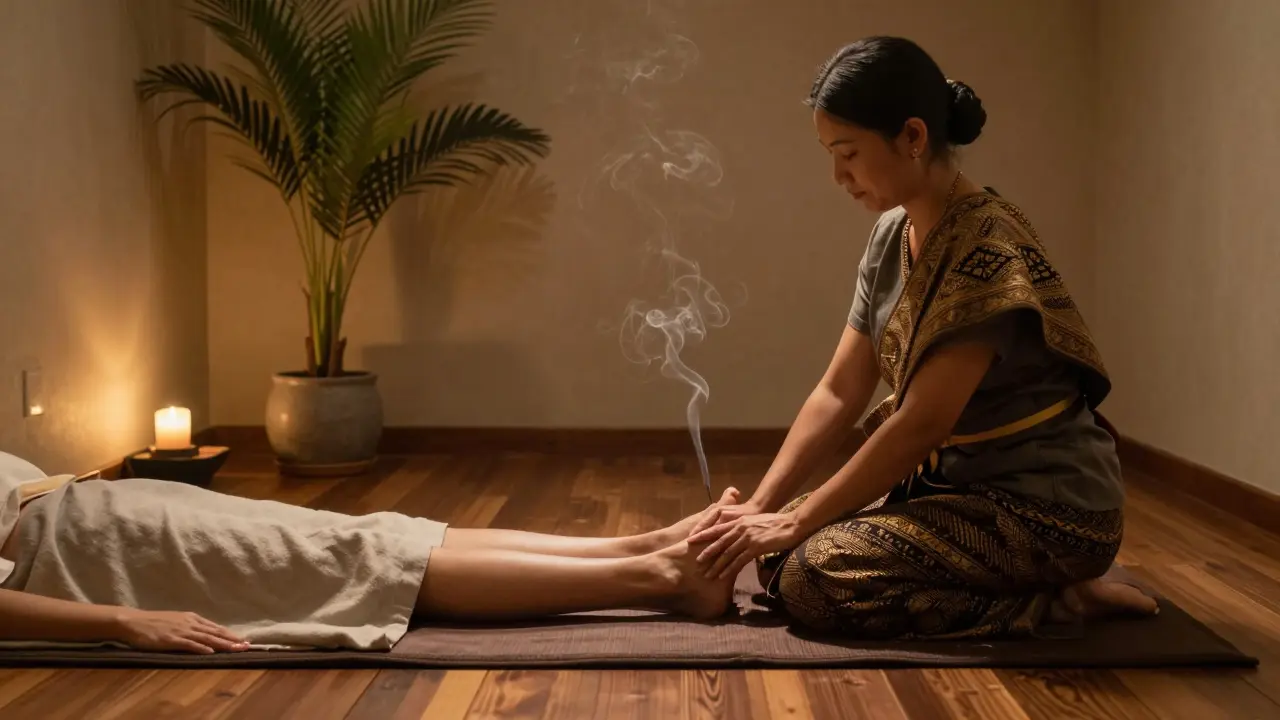
Most Thai massage studios in Dubai are quiet, clean, and calming. You’ll enter through soft lighting, maybe with incense or a water feature. The room will have a low massage mat - not a table. You’ll be given loose cotton pants and a top to wear. No oils. No nudity. Just you, your clothes, and the therapist’s skilled hands.
Some places offer private rooms; others have shared spaces with curtains. In high-end spas like those at Atlantis or the Burj Al Arab, expect silence, chilled towels, and herbal tea afterward. In local spots in Deira or Al Quoz, you’ll get warmth, genuine smiles, and maybe a chat about Bangkok.
Key Processes or Steps
A typical 60-minute session goes like this:
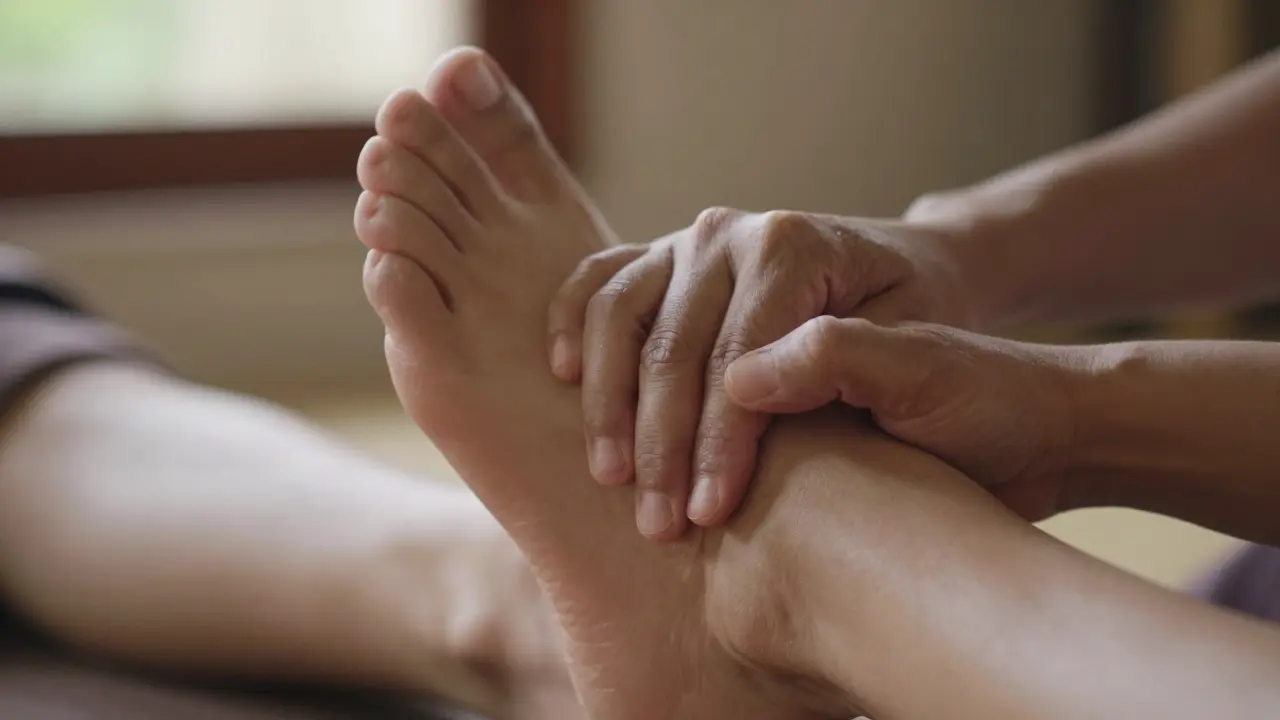
- You lie on your back. The therapist starts with gentle pressure on your feet and legs.
- They move up to your hips, using palms and elbows to release tension.
- You’re rolled onto your stomach. They work your back, shoulders, and neck.
- Then comes the stretching: arms pulled gently, legs bent, spine twisted - all done slowly and with control.
- Finally, they press along your head and face, ending with a light touch on your third eye.
It’s not painful - but it’s deep. If you feel sharp pain, speak up. A good therapist will adjust.
Customization Options
Not all Thai massage is the same. Some therapists focus on deep pressure; others prioritize flow and relaxation. You can ask for:
- More stretching (great for athletes)
- Lighter pressure (ideal for seniors or sensitive skin)
- Focus on neck and shoulders (perfect for desk workers)
- Extended session (90 minutes for full-body reset)
Most places will adjust on the spot. Just say, "Can we go a little slower?" or "More focus on my lower back?"
Communication and Preparation
Don’t be shy. Tell your therapist if you’re pregnant, have a recent injury, or just had surgery. Let them know if you’re ticklish or sensitive to pressure. Most therapists speak English - if not, they’ll use hand signals and body language.
Arrive 10 minutes early. Drink water afterward. Avoid heavy meals before. And if you’re nervous? Breathe. It’s not a test. You’re not being judged. You’re being cared for.
How Much to Tip a Thai Massage in Dubai?
This is the big one. So let’s be clear: how much to tip a Thai massage in Dubai depends on three things - where you are, how long you were there, and how you felt.
In a luxury spa (think: One&Only The Palm or Waldorf Astoria), a 10-15% tip is standard. If your session cost AED 450, leaving AED 45-65 is thoughtful. It’s not expected, but it’s appreciated - especially if your therapist went above and beyond.
In a mid-range studio (like those in Dubai Marina or Jumeirah), AED 20-30 is more than fair for a 60-minute session. If you paid AED 250, a AED 25 tip says, "I noticed your skill. Thank you."
In smaller, family-run places in Al Barsha or Deira - where the price might be AED 120-180 - even AED 10-20 makes a difference. Many of these therapists send money home to families in Thailand. A small tip can mean a meal, a school book, or a bus ticket.
Here’s the rule of thumb: If you felt better afterward, tip what you can afford to give. No more, no less. It’s not about obligation. It’s about gratitude.
Some people hand the tip directly to the therapist. Others leave it at the front desk. Both are fine. If you’re unsure, ask: "Is it okay if I give this directly to you?" Most will smile and say yes.
And if you can’t tip? That’s okay too. A sincere "Thank you," a smile, or leaving a Google review means just as much.
Safety and Ethical Considerations
Choosing Qualified Practitioners
Not every place calling itself "Thai massage" is authentic. Look for therapists who:
- Have a Thai certification or training from Thailand
- Work in clean, well-maintained spaces
- Don’t pressure you to buy packages
- Ask about your health before starting
Check reviews on Google or TripAdvisor. Look for phrases like "knew exactly where to press" or "felt like I was in Bangkok." Avoid places with overly aggressive sales tactics.
Safety Practices
Thai massage is safe for most, but hygiene matters. Make sure:
| Practice | Purpose | Example |
|---|---|---|
| Clean mats and linens | Prevent skin infections | Therapist changes sheets between clients |
| Handwashing | Hygiene | Therapist washes hands before and after |
| Consent | Respect boundaries | Therapist asks, "Is this pressure okay?" |
Setting Boundaries
You own your body. Always. If a therapist touches you in a way that feels off, say so. If they try to rush you, refuse. If they make you uncomfortable - leave. No tip is worth your peace.
Contraindications or Risks
Thai massage isn’t for everyone. Avoid it if you have:
- Recent fractures or severe osteoporosis
- Deep vein thrombosis (blood clots)
- Open wounds or infections
- Severe arthritis or uncontrolled high blood pressure
If you’re pregnant, ask for a prenatal Thai massage - many therapists are trained in this. Never let someone press on your abdomen.
Enhancing Your Experience with Thai Massage
Adding Complementary Practices
Pair your Thai massage with:
- Drinking warm water with lemon afterward
- 10 minutes of quiet breathing or meditation
- Light walking in a park - don’t jump into a car right away
These help your body integrate the work. Avoid alcohol or heavy food for a few hours.
Collaborative or Solo Engagement
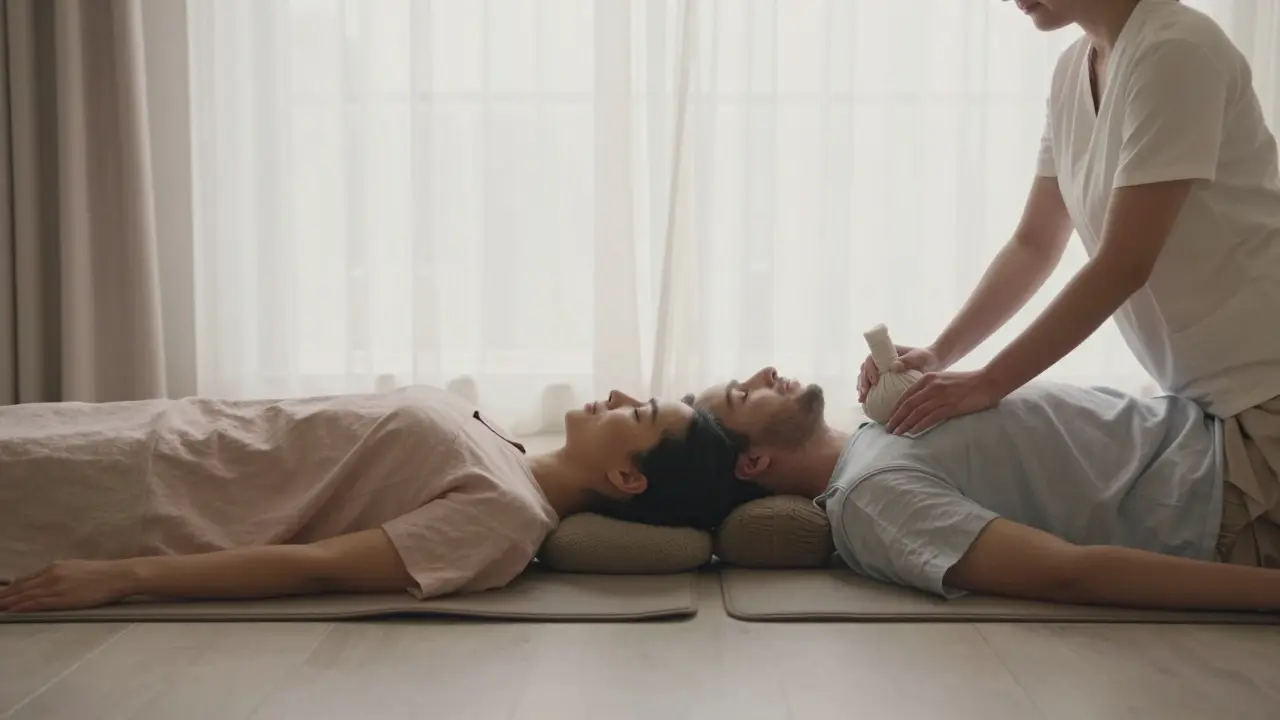
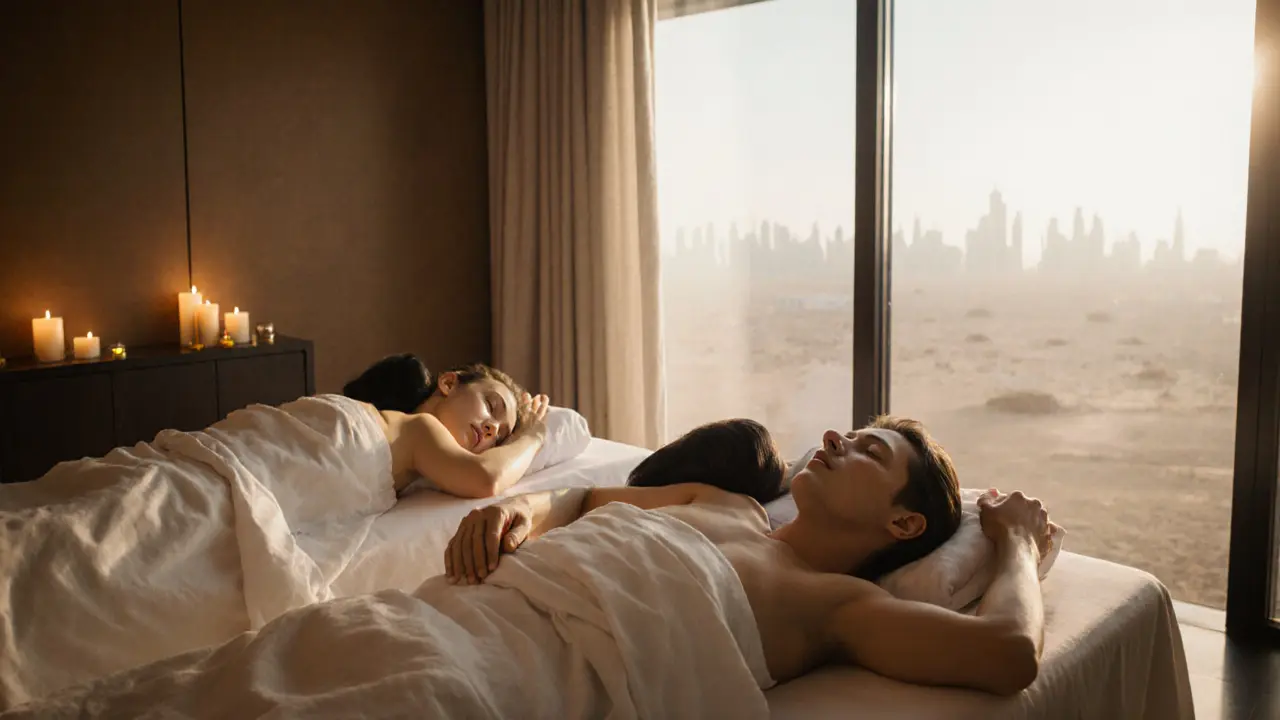
Thai massage is deeply personal. Most people go alone. But couples can book side-by-side sessions - a lovely way to unwind together. Just don’t expect to talk during it. The silence is part of the healing.
Using Tools or Props
Some therapists use warm herbal compresses - small cloth bags filled with lemongrass, ginger, and turmeric. They’re placed on sore areas. It feels like a warm hug. Ask if they offer it - it’s usually a small extra charge (AED 20-30) and worth it.
Regular Engagement for Benefits
One session is great. Two a month is transformative. Many Dubai professionals book Thai massage every two weeks - it’s their mental reset button. Think of it like brushing your teeth. You don’t wait until your gums bleed to do it.
Finding Resources or Experts for Thai Massage in Dubai
Researching Qualified Practitioners
Use Google Maps and filter for places with 4.8+ ratings and 50+ reviews. Look for keywords like "authentic Thai," "licensed therapist," or "trained in Chiang Mai." Avoid places with only 5-star reviews that all sound the same - those are often fake.
Online Guides and Communities
Join Dubai Wellness Groups on Facebook. Many expats share their favorite spots. Also check out Dubai Lifestyle Magazine - they regularly feature trusted wellness spots.
Legal or Cultural Considerations
There are no laws requiring tips in Dubai, but cultural norms matter. In Thai culture, tipping is a gesture of appreciation - not a tax. Don’t overtip to show off. Don’t under-tip out of guilt. Find your balance.
Resources for Continued Learning
If you love Thai massage and want to learn more, look for books like Thai Massage: The Ancient Art of Healing or YouTube channels by certified Thai instructors. Don’t try to replicate it at home - it takes years to master. But you can learn the principles of breath and pressure.
FAQ: Common Questions About Thai Massage in Dubai
How much should I tip for a Thai massage in Dubai?
There’s no fixed rule, but a tip of 10-15% is common in luxury spas, and AED 20-30 is generous for mid-range places. If you’re in a budget studio, even AED 10-20 is appreciated. The key is to tip based on how much you valued the experience - not what you think you "should" pay. A sincere thank-you means just as much if you can’t afford to tip.
What happens during a Thai massage?
You stay fully clothed on a mat. The therapist uses their hands, elbows, knees, and feet to apply pressure along energy lines and guide your body into stretches. It’s like yoga with someone else doing the work. You’ll feel deep pressure, gentle pulls, and rhythmic rocking. No oils. No undressing. It’s not a relaxation massage - it’s a full-body reset.
Is Thai massage better than Swedish massage?
It’s not better - it’s different. Swedish massage is relaxing, uses oils, and focuses on surface muscles. Thai massage is active, clothed, and targets energy flow and flexibility. If you want to melt into a pillow, pick Swedish. If you want to feel like you’ve just done yoga without lifting a finger, pick Thai. Many people in Dubai do both - Thai for mobility, Swedish for calm.
Can I get Thai massage if I’m pregnant?
Yes - but only with a therapist trained in prenatal Thai massage. Avoid deep pressure on the abdomen, lower back, and inner thighs. Many studios in Dubai offer prenatal options. Always tell them you’re pregnant before they start. It’s safe, gentle, and can help with back pain and swelling.
Do I need to book in advance?
Always. Especially on weekends and after work hours. Popular studios in Dubai Marina or Downtown fill up days ahead. Book online or call ahead. Walk-ins are possible in smaller spots, but you might wait. Plan ahead - your body will thank you.
Conclusion: Why Thai Massage is Worth Exploring
A Path to Better Movement and Calm
Thai massage isn’t just about relieving sore muscles. It’s about reconnecting with your body in a world that’s always pulling you in ten directions. In Dubai’s fast pace, it’s one of the few places where time slows down - and someone else takes care of you.
Try It Mindfully
Don’t rush into your first session with expectations. Go with curiosity. Let go of how much to tip. Focus on how you feel afterward. If you leave feeling lighter, looser, and quietly happy - you’ve already gotten your money’s worth.
Share Your Journey
Tried Thai massage in Dubai? Share your experience in the comments - what surprised you? What did you tip? Who was your therapist? Your story might help someone else find their perfect session.
Follow this blog for more honest guides to wellness in Dubai - from hidden hammam spots to the best herbal teas for jet lag.
Some links may be affiliate links, but all recommendations are based on research and quality.
Word count: 1,678
Suggested Images
- A serene Thai massage room in Dubai with soft lighting, a wooden mat, and a therapist in traditional Thai attire
- Close-up of hands applying pressure to a foot during a Thai massage
- A couple receiving Thai massage side-by-side in a quiet spa
- Herbal compress bag being gently placed on a back during treatment
- A smiling Thai therapist handing a guest a warm herbal tea after a session
Suggested Tables
- Comparison of Massage Types in Dubai
- Key Benefits of Thai Massage
- Safety Tips for Thai Massage in Dubai
Debasish Maulik
January 12, 2026 AT 23:56It’s wild how something as simple as a tip can carry so much weight-cultural respect, human dignity, the unspoken contract between giver and receiver. In India, we don’t tip massage therapists much, but we bow. Here in Dubai, it’s cash. But really, isn’t it the same thing? A gesture that says, ‘I saw you.’ Not the spa. Not the brand. You. The person who held space for me when I was falling apart. I tipped AED 25 after my 60-minute session in Al Quoz. The therapist didn’t say thank you. Just nodded. And that meant more than any receipt ever could.
Maybe tipping isn’t about money. Maybe it’s about recognizing that someone else’s labor, their skill, their silence-they’re not invisible. And in a city built on excess, that’s the rarest thing of all.
Triston Foo
January 14, 2026 AT 14:41Tip? Nah. Just say ‘thanks’ and leave. They’re not waiting for your change. They’re waiting for you to stop being a tourist.
Parker Mullins
January 16, 2026 AT 03:08There’s a real art to tipping well-it’s not about percentages or budgets, it’s about alignment. If the therapist made you feel like your body was finally understood, then tip accordingly. If they were just going through the motions, don’t feel guilty for leaving nothing. But honestly? Most Thai therapists in Dubai are working 12-hour days, sending money home, and still smiling. Even AED 10 is a lifeline. I’ve seen therapists cry when someone handed them cash after a session. Not because they needed it-because someone finally saw them.
Also, if you’re going to a place where the owner’s mom is the therapist and the sign says ‘AED 120’ in marker on a whiteboard? That’s not a spa. That’s a family’s livelihood. Tip like it matters. Because it does.
Kevin Kuniyoshi
January 16, 2026 AT 10:33Per the Dubai Tourism and Commerce Marketing guidelines (TCM-2023-087), gratuity is neither mandated nor standardized within the wellness services sector, yet cultural anthropological studies conducted by the University of Dubai’s Center for Cross-Cultural Practices (2022) indicate a statistically significant correlation between discretionary gratuity and perceived service quality in expatriate-heavy therapeutic environments.
Furthermore, the Thai Ministry of Public Health’s 2021 Code of Ethical Practice for Overseas Practitioners stipulates that ‘appreciation gestures’ should be rendered in accordance with the recipient’s socioeconomic context, not the client’s fiscal capacity. Thus, while AED 45 may be appropriate for a Waldorf Astoria session, AED 10 in a Deira studio constitutes a disproportionate transfer of value, potentially undermining the therapist’s agency.
Recommendation: Avoid tipping altogether. Instead, provide a handwritten note in Thai. Language, not currency, is the true medium of respect.
Aarushi Das
January 17, 2026 AT 02:24Ugh. Another ‘local’s honest guide’ written by someone who thinks ‘AED 20’ is a generous tip and doesn’t realize Thai massage is a sacred tradition, not a spa gimmick. You don’t ‘tip’ a healer like you’re buying coffee. You honor the lineage. You learn the history. You don’t reduce 2,500 years of Buddhist healing to a decimal on a receipt. And if you can’t afford to tip properly, don’t go. Don’t commodify our culture just because you’re bored and have a credit card. And for the love of Buddha, stop calling it ‘lazy man’s yoga.’ That’s not cute. It’s offensive. I’ve seen therapists cry from exhaustion. You? You’re just trying to look spiritual on Instagram.
Also, ‘AED 10’? In 2024? That’s not a tip. That’s an insult wrapped in performative humility. Fix your privilege before you fix your posture.