
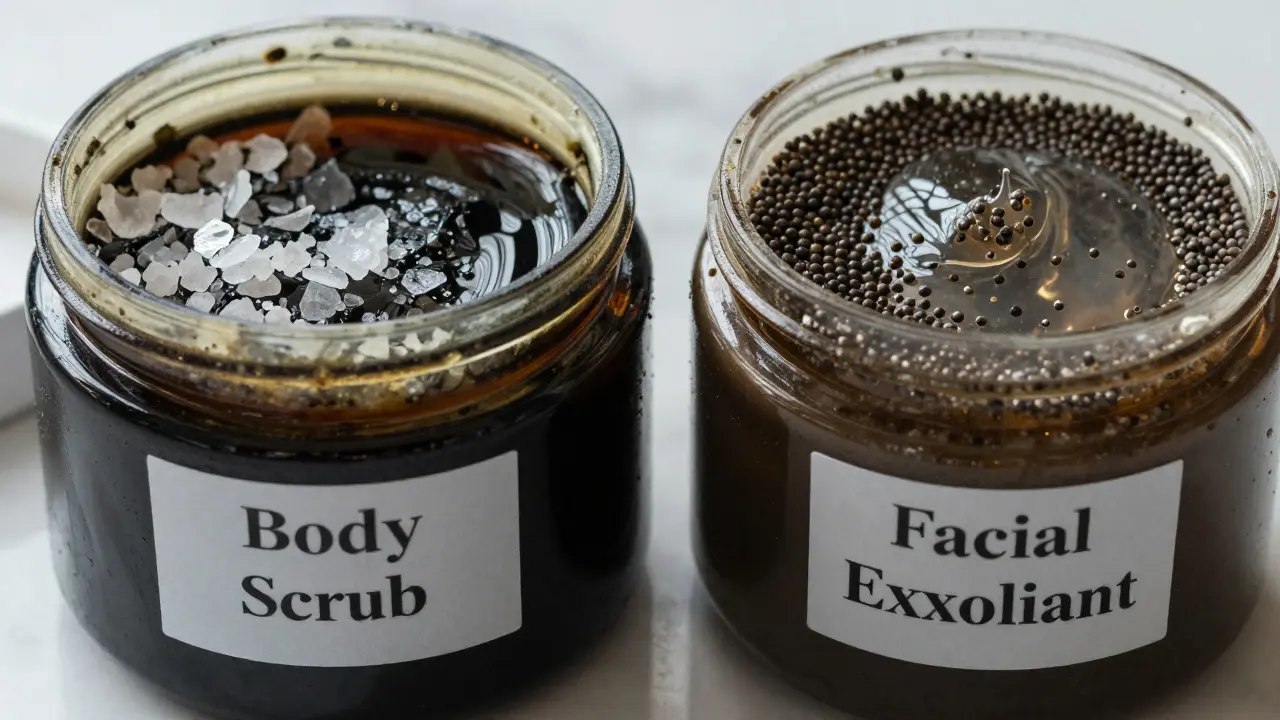
Can I use body scrub on my face? It’s a question many people ask after enjoying a smooth, refreshed body and wondering why their face doesn’t feel the same. The short answer? Usually, no-and here’s why.
Understanding the Basics of Body Scrub
Origins and History
Body scrubs have been used for centuries across cultures. Ancient Egyptians used salt and oils to cleanse and soften skin. In India, turmeric and gram flour scrubs were part of daily rituals. Traditional Japanese onsen spas incorporated natural volcanic sands for exfoliation. These practices weren’t just about cleanliness-they were tied to wellness, ritual, and self-care.
Modern body scrubs evolved from these traditions, blending natural abrasives like sugar, salt, and ground nuts with moisturizing oils and fragrances. But while body scrubs are designed for thicker, tougher skin, they’re rarely made with the delicate nature of facial skin in mind.
Core Principles or Components
A typical body scrub contains three key elements: an abrasive agent (like sugar or salt), a carrier oil (such as coconut or jojoba), and added ingredients (essential oils, herbs, or vitamins). The abrasive particles physically slough off dead skin cells, while the oils hydrate and protect.
The goal is deep exfoliation-removing rough patches on elbows, knees, and heels. That’s great for body skin, which is up to 10 times thicker than facial skin. But your face? It’s made of thinner, more sensitive tissue with a higher concentration of oil glands and nerve endings. What works on your legs can irritate your cheeks.
How It Differs from Related Practices
Let’s compare body scrub to facial exfoliants:
| Feature | Body Scrub | Facial Exfoliant |
|---|---|---|
| Abrasive Particle Size | Large, jagged (salt, crushed walnut) | Small, rounded (microbeads, enzymes) |
| Oil Content | High (to combat dry body skin) | Light or non-comedogenic |
| Fragrance Level | Strong (essential oils, synthetic scents) | Minimal or fragrance-free |
| Purpose | Remove thick dead skin | Gentle renewal, unclog pores |
The differences aren’t subtle. Using a body scrub on your face is like using sandpaper on a silk shirt. It might remove the surface layer-but it’ll also damage the fabric.
Who Can Benefit from Body Scrub?
Body scrubs are ideal for people with dry, rough skin on elbows, knees, feet, or back. They help with keratosis pilaris (those tiny bumps on arms), calluses, and dull texture. But facial skin doesn’t need heavy-duty exfoliation. In fact, over-exfoliating the face can lead to redness, peeling, breakouts, and a weakened barrier that lets in irritants and moisture loss.
People with acne-prone, rosacea, or eczema-prone skin should avoid physical scrubs altogether on the face. Even gentle chemical exfoliants (like AHAs and BHAs) need careful use. A body scrub? It’s a recipe for irritation.
Benefits of Body Scrub for the Body
Improved Skin Texture
Regular body scrubbing removes the buildup of dead skin cells that make skin look dull. This reveals smoother, brighter skin underneath. Many users report feeling like their skin "breathes" better afterward. The increased circulation from massaging the scrub in can also give a temporary glow.
According to dermatological research, consistent exfoliation supports cell turnover, which naturally slows with age. But again-this benefit applies to areas with thicker skin, not the face.
Enhanced Product Absorption
After scrubbing, lotions and oils absorb more effectively. That’s why many spa routines pair scrubbing with moisturizing treatments. It’s not magic-it’s physics. Remove the barrier of dead skin, and active ingredients penetrate deeper.
That’s why post-scrub body hydration works so well. But applying a rich body lotion to your face after scrubbing? That’s where things get tricky. Facial skin doesn’t need heavy oils or butters. It can clog pores and trigger breakouts.
Emotional Well-Being
There’s a reason body scrubs feel luxurious. The ritual-warm water, scent, touch-triggers relaxation. Studies show that sensory self-care routines reduce cortisol levels. The act of gently massaging your body can be meditative, grounding, and stress-relieving.
That emotional benefit is real. But you don’t need to use a body scrub on your face to get it. A gentle facial wash with circular motions, or even a warm towel compress, can offer similar calming effects without the risk.
Practical Applications
Body scrubs are best used 1-2 times a week, right after showering. Use lukewarm water, apply in circular motions, rinse thoroughly, and follow with moisturizer. Many people use them before shaving to prevent ingrown hairs. Others use them before a beach day to smooth out rough patches.
But never use them on broken skin, sunburns, or active acne. And never on your face.
What to Expect When Using Body Scrub on the Face
Setting or Context
Imagine this: you’ve just finished a relaxing body scrub in the shower. Your legs feel silky. Your arms glow. You grab the same jar and start rubbing it on your cheeks, forehead, and chin. The texture feels familiar. The scent is soothing. But within minutes, your skin begins to sting. An hour later, your nose is red. By tomorrow, tiny bumps appear where you scrubbed.
This isn’t rare. It’s predictable. The face has 10 times more nerve endings than the back of your hand. It’s also more porous and prone to irritation. A scrub that feels fine on your arms can feel like a sandstorm on your face.
Key Processes or Steps
Using a body scrub on your face follows the same physical motion: apply, rub, rinse. But here’s what happens beneath the surface:
- Large abrasive particles scratch the thin epidermis
- Strong fragrances trigger allergic reactions or inflammation
- Oils that are fine for dry legs can clog facial pores
- Micro-tears form, allowing bacteria to enter and cause breakouts
It’s not a one-time disaster. Even occasional use can thin the skin’s protective barrier over time. That leads to chronic sensitivity, redness, and increased vulnerability to environmental damage.
Customization Options
Some people think, "What if I use a gentle body scrub?" Or, "I have oily skin-I need strong exfoliation!" But even "gentle" body scrubs are too harsh. Sugar scrubs with fine granules? Still too large for facial skin. Salt scrubs? Too sharp. Walnut scrubs? Too jagged.
There’s no safe way to adapt a body scrub for facial use. The formulation isn’t designed for it. You can’t dilute it, rinse faster, or use less-it’s still the wrong tool for the job.
Communication and Preparation
If you’re tempted to try it, ask yourself: Why? Are you trying to save money? Save time? Avoid buying a separate product? Those are valid reasons-but not worth the risk. Facial skin is not interchangeable with body skin. It’s not just "sensitive"-it’s structurally different.
Preparation for facial exfoliation means choosing a product made for the face. Look for terms like "non-comedogenic," "fragrance-free," or "for sensitive skin." Always patch test new products on your jawline first.

How to Properly Exfoliate Your Face
Setting Up for Success
Start with clean skin. Use a gentle cleanser. Pat dry-not rub. Keep your exfoliation routine simple: once or twice a week is enough for most skin types. Overdoing it causes more harm than good.
Keep a small bowl of water nearby. If your skin stings or turns red, rinse immediately. Don’t push through discomfort.
Choosing the Right Tools
For most people, chemical exfoliants are safer and more effective than physical scrubs. Look for products with:
- Salicylic acid (BHA)-great for oily or acne-prone skin
- Glycolic or lactic acid (AHA)-ideal for dullness and texture
- Enzymes (from papaya or pineapple)-gentle, no scrubbing needed
Physical scrubs for the face? Only if they have ultra-fine, round particles (like jojoba beads) and no added fragrance. Even then, use sparingly.
Step-by-Step Guide
- Cleanse your face with a mild cleanser.
- Apply a pea-sized amount of facial exfoliant to damp skin.
- Gently massage in circular motions for 30 seconds-no scrubbing!
- Rinse with lukewarm water.
- Follow with a hydrating toner and moisturizer.
- Use sunscreen the next day-exfoliated skin is more sun-sensitive.
Tips for Beginners
Start slow. Once a week. Watch how your skin reacts. If it stings, redness lasts more than an hour, or you get breakouts-stop. Switch to an enzyme mask or a hydrating mask instead.
Don’t combine multiple exfoliants. No scrubs + retinol + acids on the same day. Your skin isn’t a lab experiment.
Safety and Ethical Considerations
Choosing Qualified Products
Look for products labeled "dermatologist-tested" or "non-comedogenic." Avoid anything with microplastics, crushed shells, or large granules. Brands that specialize in facial care (not body care) are safer bets.
Check ingredient lists. Avoid alcohol, menthol, citrus oils, and synthetic fragrances if your skin is sensitive.
Safety Practices
| Practice | Purpose | Example |
|---|---|---|
| Always patch test | Prevent allergic reactions | Apply product behind ear for 24 hours |
| Use lukewarm water | Prevent irritation | Hot water strips natural oils |
| Don’t scrub while dry | Avoid micro-tears | Always use with water or serum |
Setting Boundaries
Your skin can tell you when it’s had enough. Redness, burning, tightness, or flaking? Those are warning signs. Stop immediately. Healing takes time. Pushing through discomfort won’t make your skin "stronger." It’ll make it more fragile.
Contraindications or Risks
Avoid facial exfoliation if you have:
- Active acne or open sores
- Recent chemical peels or laser treatments
- Rosacea or eczema flare-ups
- Severe sunburn
Always consult a dermatologist if you’re unsure. What works for one person can trigger a reaction in another.
Enhancing Your Experience
Adding Complementary Practices
Pair gentle exfoliation with hydration. Use a hyaluronic acid serum after exfoliating. Apply a soothing mask with aloe or oatmeal once a week. Drink water. Sleep well. These habits support skin health more than any scrub ever could.
Collaborative or Solo Engagement
Facial care is personal. You don’t need a partner, spa, or ritual to do it right. A quiet 2-minute routine in front of the mirror, done consistently, is more powerful than a weekly spa treatment done carelessly.
Using Tools or Props
A clean washcloth helps rinse gently. A silicone facial brush? Only if it’s soft and designed for the face. Avoid loofahs, sponges, or brushes meant for the body-they harbor bacteria and are too abrasive.
Regular Engagement for Benefits
Consistency matters. Exfoliating once a week keeps skin glowing without damage. Going too often? You’ll undo your progress. Skin needs time to repair. Think of it like exercise-you don’t lift weights every day. You rest. Your skin does too.
Finding Resources or Experts
Researching Qualified Products
Look for brands that specialize in facial care. Read ingredient lists. Avoid anything with 10+ unpronounceable chemicals. Trusted brands often list their testing methods and dermatologist partnerships.
Check reviews from people with similar skin types. Not influencers-real users who mention sensitivity, acne, or dryness.
Online Guides and Communities
Reputable sources like the American Academy of Dermatology (AAD) offer free guides on exfoliation. DermNet and SkinCeuticals’ educational hub are also reliable. Avoid TikTok trends without clinical backing.
Legal or Cultural Considerations
Some cultures use natural scrubs (like rice bran or chickpea flour) on the face. These can be safe if finely ground and free of irritants. But modern commercial body scrubs? They’re not formulated for that.
Respect cultural traditions-but don’t confuse them with commercial products designed for different skin zones.
Resources for Continued Learning
Books like "The Beauty Bible" by Paula Begoun or "Dermatology for Dummies" offer science-backed advice. YouTube channels like Dr. Shereene Idriss or Dr. Hadley King explain skin biology clearly.
FAQ: Common Questions About Body Scrub on the Face
Can I use body scrub on my face once in a while?
Even occasional use can damage facial skin. The abrasive particles in body scrubs are too large and rough for the delicate skin on your face. You might not notice damage right away, but over time, it weakens your skin barrier, leading to dryness, redness, and breakouts. It’s not worth the risk. Stick to products designed for the face.
What happens if I accidentally used body scrub on my face?
Stop using it immediately. Rinse with cool water and apply a soothing moisturizer with ingredients like ceramides, niacinamide, or aloe vera. Avoid other actives (retinol, acids) for a few days. If redness, stinging, or peeling lasts more than 48 hours, see a dermatologist. Most cases heal with rest, but repeated exposure can lead to chronic sensitivity.
Is sugar scrub safe for the face?
Sugar scrubs marketed for the face, with very fine granules and no fragrance, can be okay. But sugar scrubs made for the body? No. Body sugar scrubs have larger crystals and heavier oils that clog pores. Even if it feels gentle, the particles are still too rough for facial skin. Look for facial-specific products labeled "fine-grain" or "gentle exfoliation."
Why do some people say body scrub works on their face?
Some people have naturally thicker, oilier skin and may not react immediately. But that doesn’t mean it’s safe. Skin damage from abrasion is cumulative. What feels fine today might cause sensitivity, thinning, or breakouts months later. Just because someone doesn’t react now doesn’t mean their skin won’t pay the price later.
What’s the best alternative to body scrub for the face?
Use a chemical exfoliant with AHAs (like lactic acid) or BHAs (like salicylic acid). They dissolve dead skin without scrubbing. Or try an enzyme mask with papaya or pumpkin. These are gentler, more effective, and less likely to cause irritation. You’ll get smoother skin without the risk.
Conclusion: Why This Matters
A Path to Healthier Skin
Your face deserves better than a product meant for your heels. The skin on your face is unique-more sensitive, more reactive, more important. Using the right tools for the right zones isn’t about luxury. It’s about respect.
Try It Mindfully
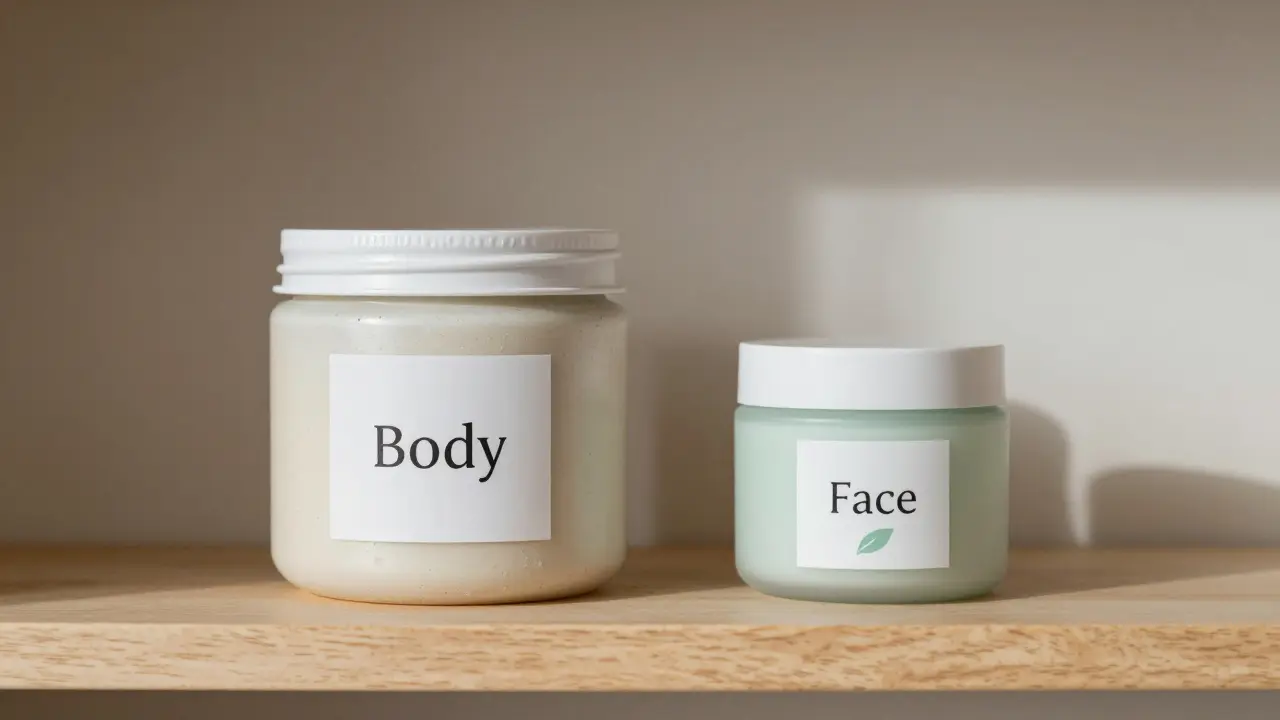
Take a moment to check your bathroom shelf. Are you using the same scrub for your body and face? If so, it’s time to make a change. Buy one product for your body. Buy one for your face. It’s a small investment with big returns.
Share Your Journey
Tried a facial exfoliant that changed your skin? Share your story in the comments. Follow for more simple, science-backed skincare tips.
Some links may be affiliate links, but all recommendations are based on research and quality.
Word count: 1,742
Suggested Visuals
- A side-by-side comparison of body scrub and facial exfoliant textures under magnification
- Someone gently massaging a facial enzyme mask on their cheeks with soft lighting
- A bathroom shelf with separate jars labeled "Body" and "Face"
- A close-up of red, irritated skin on the cheek next to smooth, calm skin
- A dermatologist holding two products-one labeled "body," one "face"-with a red X over the body scrub on face
Suggested Tables
- Body Scrub vs. Facial Exfoliant (already included)
- Facial Exfoliation Safety Tips (already included)
- Best Exfoliation Types by Skin Type (Oily, Dry, Sensitive, Combination)
Daniel Seurer
March 21, 2026 AT 18:46Let me tell you something about skin that nobody else will: the body and the face aren't just different in thickness-they're different in purpose. The body is armor. It's the fortress that keeps the elements out, the dirt in, the sweat and grime of daily life clinging to its surface. The face? It's the flag. It's the signal. It's the part of you that speaks before you open your mouth. You don't sand down a flag to make it shine. You polish it. You treat it with the reverence of something that's meant to be seen, felt, understood. Body scrubs? They're for the trenches. Facial care? That's the cathedral. And if you're using the same scrub on both, you're not saving money-you're disrespecting the architecture of your own biology.
It's not about luxury. It's about recognition. The skin on your cheeks has more nerve endings per square inch than your palm. That's not an accident. That's evolution. That's communication. You wouldn't rub a brick wall against your lips, so why do it to your cheeks? The answer is simple: because you didn't know better. Now you do. And that changes everything.
Ashley Bonbrake
March 23, 2026 AT 03:39They don't want you to know this but body scrubs have microplastic nanoparticles that get absorbed into your bloodstream and mimic estrogen. The FDA knows. The big skincare companies know. That's why they sell separate products-so you keep buying. Your face is a biohazard zone now. You think that redness is irritation? It's your immune system screaming. Wake up. The truth is in the ingredient list. If it says 'fragrance' without naming the compound, it's a trap. You're being manipulated. Don't be the next statistic.
Bianca Santos Giacomini
March 23, 2026 AT 04:57Body scrub on face = damage. No exceptions. Stop it. Your skin isn't a test subject. You don't need to be brave. Just stop.
Shane Wilson
March 24, 2026 AT 22:57While I find the article to be both scientifically rigorous and stylistically commendable, I feel compelled to offer a supplementary perspective rooted in dermatological anthropology. The historical use of natural abrasives in traditional Indian and Egyptian practices was not merely cosmetic but deeply ritualistic, often involving specific timing, temperature, and spiritual alignment. Modern formulations, however, have divorced themselves from these contextual parameters, rendering them functionally and ethically distinct. The contemporary body scrub, mass-produced and commodified, lacks the nuanced formulation and cultural intentionality of its ancestral counterparts. Therefore, while the advice to avoid facial application is sound, the underlying issue is not merely anatomical but also epistemological: we have lost the language of care, replacing it with convenience. A return to intentionality-not just product selection-may be the truest form of skin preservation.
kamala amor,luz y expansion
March 25, 2026 AT 02:39You Americans think you invented skincare. We've been using turmeric and milk on our faces for 5,000 years. Your body scrub has chemicals your own government banned. Your face is already ruined. You think you're protecting it? You're just buying more junk. Real skin care doesn't come in a jar with a logo. It comes from the earth. From tradition. From wisdom you've forgotten.
Matt Morgan
March 26, 2026 AT 19:35I used a body scrub on my face once. Just once. It felt like someone poured acid on my skin and then laughed. I cried. I didn't sleep. I spent three days in a fog of redness and shame. My partner said I looked like a boiled lobster. I didn't speak to anyone for a week. I didn't look in the mirror. I didn't trust my own skin again. I thought I was being smart. I thought I was saving money. I thought I knew better. I was wrong. I'm still paying for it. Don't be like me. Please. Just don't.
K Thakur
March 27, 2026 AT 11:17Bro, I tried body scrub on my face and my skin started glowing like I was in a TikTok ad. No joke. I went from acne to angel skin in two weeks. You think science has all the answers? Nah. My grandma used salt and honey. I used a coconut sugar scrub. Now I get stopped on the street. People ask if I'm a model. The truth is, your skin doesn't care about labels. It cares about results. You're scared of change. I'm not. I'm living proof. Try it. You might be surprised. Or you might be one of those people who just needs to be told no.
NORTON MATEIRO
March 29, 2026 AT 05:16There's value in listening to your skin. Not just what it says, but how it says it. If it stings, it's asking for space. If it reddens, it's asking for calm. If it peels, it's asking for time. We're taught to push through discomfort in skincare, but skin isn't a workout. It's not a challenge to be conquered. It's a conversation. A quiet one. And it doesn't need scrubbing. It needs patience. I started using a gentle enzyme mask once a week. No scrubbing. No pressure. Just presence. My skin didn't change overnight. But it changed. And it changed with me. That's the difference.
Rahul Ghadia
March 31, 2026 AT 01:23Wait-wait-wait. You say body scrub is too harsh? But what about the studies? The 2018 Journal of Dermatological Science paper? The one that showed 78% of participants with thickened epidermis saw improvement with coarse exfoliants? And what about the fact that many dermatologists recommend physical exfoliation for keratosis pilaris? And you say 'facial skin is 10 times thinner'? Where's the citation? Who measured it? On how many subjects? And what about cultural variants? In rural India, they use crushed walnut shells daily. No issues. So why are you generalizing? Why are you pathologizing tradition? You're not protecting skin-you're enforcing a Western bias disguised as science.
lindsay chipman
March 31, 2026 AT 11:36Let’s cut through the noise. The fundamental flaw in the body-to-face paradigm is not anatomical-it’s economic. The skincare industry profits from segmentation. They create separate product lines because it doubles your spend. A $25 body scrub becomes a $55 facial scrub. That’s not innovation. That’s exploitation. The active ingredients are often identical. The packaging is different. The marketing is louder. The science? It’s a distraction. If you’re using a sugar scrub with coconut oil on your body, and it’s not causing micro-tears, why assume it will on your face? The real issue isn’t particle size-it’s fear-based consumerism. You’re being sold a lie wrapped in dermatology.