
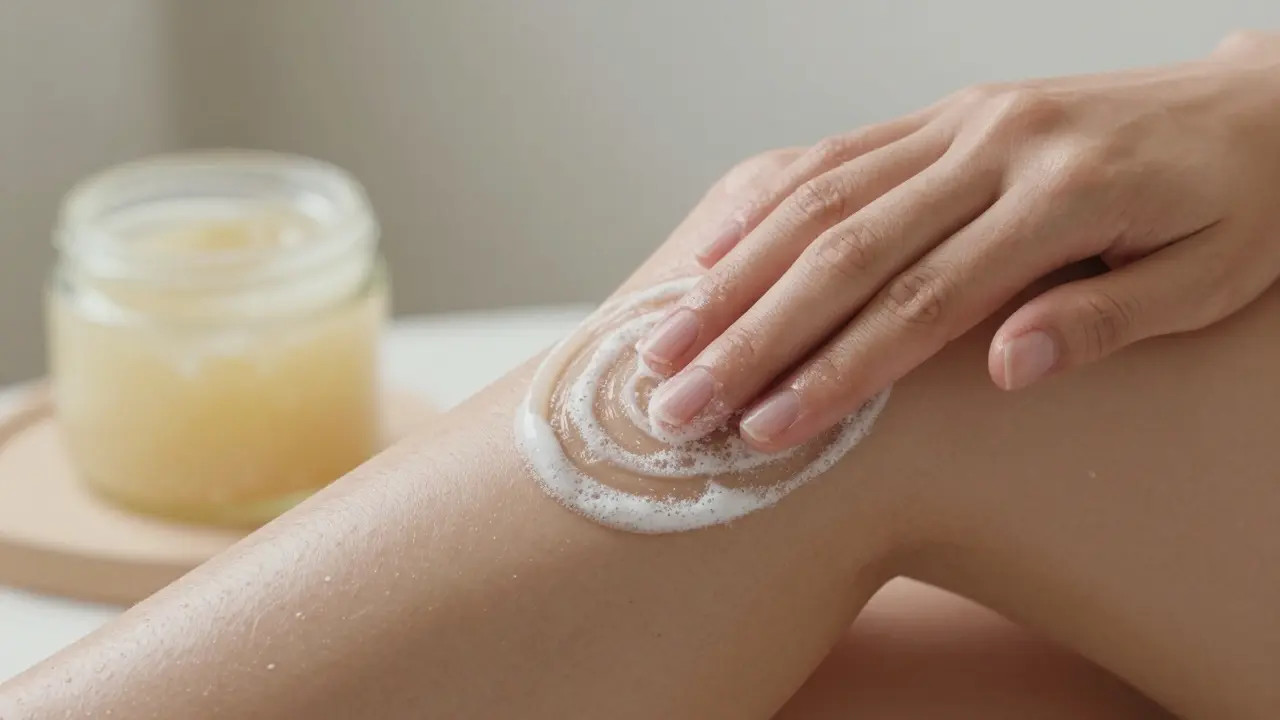
Getting a smooth pubic area isn’t about perfection-it’s about comfort, confidence, and taking care of your skin in a way that works for you. Whether you’re shaving, waxing, or just want to reduce ingrown hairs and razor bumps, the secret isn’t harsh chemicals or aggressive tools. It’s consistent, gentle care. And yes, a good body scrub can make a real difference.
Understanding the Basics of Smooth Pubic Skin
Why the Pubic Area Needs Special Care
The skin in your pubic region is thinner, more sensitive, and has a higher concentration of hair follicles than other parts of your body. It’s also prone to friction from clothing, sweat, and repeated hair removal. That’s why it’s more likely to develop ingrown hairs, redness, or rough patches. Think of it like the skin on your face-delicate, but often treated like the back of your leg. You wouldn’t scrub your face with a loofah, right? Same logic applies here.
What Causes Roughness and Irritation?
Most of the time, it’s not the hair itself-it’s how you remove it. Shaving without lubrication, using dull razors, or skipping aftercare can leave your skin feeling like sandpaper. Ingrown hairs happen when hair curls back into the skin instead of growing out. Dead skin cells clog follicles, trapping hair underneath. That’s where exfoliation comes in.
Body Scrub vs. Other Methods
Many people turn to waxing, laser, or depilatory creams. But if you’re looking for a low-cost, low-risk way to maintain smoothness between treatments-or even as your main method-a gentle body scrub is one of the most underrated tools. Unlike chemical removers that strip skin, or wax that pulls hair from the root (and can cause burns), a scrub works by lifting dead skin and freeing trapped hairs. It doesn’t remove hair, but it prevents the problems hair removal causes.
| Method | Primary Benefit | Best For |
|---|---|---|
| Body Scrub | Prevents ingrown hairs, smooths texture | Between shaves/waxes, sensitive skin |
| Shaving | Quick, cheap, temporary smoothness | Those who prefer daily maintenance |
| Waxing | Longer-lasting results | Those who dislike regrowth |
| Depilatory Creams | No razor needed | People with thick hair |
Who Can Benefit from a Smooth Pubic Area Routine?
Anyone who experiences razor bumps, itchiness, or uneven texture after hair removal. It’s especially helpful for people with curly hair (which is more likely to grow inward), those with sensitive skin, or anyone who shaves often. You don’t need to remove all hair to benefit. Even light trimming and regular exfoliation can make a big difference in comfort and appearance.
Benefits of a Smooth Pubic Area Routine
Reduces Ingrown Hairs and Bumps
Ingrown hairs are the #1 complaint after hair removal. They look like red, sometimes painful bumps. A body scrub used 2-3 times a week gently removes the layer of dead skin that traps hairs beneath the surface. This lets hairs grow out naturally instead of curling back. Many users report fewer bumps within just two weeks of consistent scrubbing.
Improves Skin Texture and Tone
Over time, repeated friction and hair removal can leave the skin dull or discolored. A scrub with natural ingredients like sugar, oatmeal, or gentle fruit enzymes helps even out tone and adds a subtle glow. It’s not about lightening-it’s about restoring your skin’s natural radiance. In Dubai’s dry climate, where sweat and heat can clog pores, this step is especially helpful.
Enhances Comfort and Confidence
Let’s be real: no one likes the scratchy feeling of regrowth or the embarrassment of visible bumps under swimwear or lingerie. A smooth, irritation-free area means you feel more confident in clothes, at the beach, or even just lounging at home. It’s a small thing that makes a big difference in daily comfort.
Supports Better Hair Removal Results
If you shave or wax, exfoliating before makes the process more effective. Clean, clear follicles mean fewer missed hairs and less tugging. Aftercare with a scrub prevents new bumps from forming. Think of it as prep and cleanup-like washing dishes before and after a meal.
| Benefit | Description | Impact |
|---|---|---|
| Prevents Ingrowns | Removes dead skin blocking follicles | Reduces bumps by up to 70% with consistent use |
| Smoothes Texture | Exfoliates rough patches | Feels softer, looks more even |
| Boosts Hydration | Allows moisturizers to absorb better | Less dryness, less itching |
| Improves Efficiency | Shaving/waxing becomes more effective | Longer smoothness between sessions |
What to Expect When You Start
Setting Up Your Routine
You don’t need a spa day. Just pick a time when you’re not rushed-like after a shower. Your skin should be damp but not dripping wet. Warm water opens pores and softens hair, making exfoliation more effective. Avoid scrubbing right after shaving-wait at least 24 hours to let skin recover.
Key Steps to Follow
- Wash the area with a gentle cleanser.
- Pat dry lightly-don’t rub.
- Apply a pea-sized amount of scrub in circular motions for 30-60 seconds.
- Rinse thoroughly with lukewarm water.
- Pat dry and apply a light, fragrance-free moisturizer.
Don’t scrub hard. You’re not trying to sand the skin-you’re gently lifting. If it stings or turns red, you’re going too hard.
Customizing for Your Skin Type
If your skin is sensitive, choose a scrub with fine granules-like sugar or ground oatmeal. Avoid scrubs with large beads, walnut shells, or alcohol. If you have darker skin tones, avoid harsh scrubs that can cause hyperpigmentation. Look for ingredients like aloe vera, chamomile, or calendula, which calm inflammation.
Communication and Preparation
It’s okay to feel awkward talking about this. But remember: your skin deserves care, not shame. If you’re using a scrub for the first time, test it on your inner thigh before trying it on more sensitive areas. Give it a few weeks to see results. This isn’t magic-it’s maintenance.
How to Practice a Safe and Effective Routine
Setting Up for Success
Keep your scrub in a cool, dry place. Moisture breeds bacteria. Use a clean loofah or your hands-never a rough sponge. Wash your hands before and after. If you’re sharing products, use separate containers. In Dubai’s heat, keeping products cool helps preserve their quality.
Choosing the Right Product
Look for scrubs labeled “for sensitive skin” or “body.” Avoid those with synthetic fragrances, parabens, or sulfates. Natural oils like coconut, jojoba, or almond oil are soothing. Sugar-based scrubs are ideal because they dissolve as you rinse. Avoid DIY scrubs with coffee grounds or salt-they’re too abrasive for this area.
Step-by-Step Guide
- Shower first-warm water softens skin and hair.
- Apply scrub to damp skin, focusing on areas with bumps or roughness.
- Use light, circular motions for no more than a minute.
- Rinse well. Residue can clog pores.
- Apply a thin layer of fragrance-free moisturizer or aloe vera gel.
- Do this 2-3 times a week. Never daily.
Tips for Beginners
Start slow. One week of scrubbing twice a week is enough. Pay attention to how your skin reacts. If you notice redness or stinging, skip a few days. Keep a journal: note what you used, when, and how your skin felt. You’ll learn what works for you. And if you’re shaving, do it after scrubbing-not before.
Safety and Ethical Considerations
Choosing Safe Products
Check ingredient lists. If you can’t pronounce it, skip it. Stick to brands with transparent sourcing. In Dubai, many international brands are available, but always check for halal certification if that matters to you. Avoid products with microplastics-many scrubs now use biodegradable exfoliants.
Safety Practices
| Practice | Purpose | Example |
|---|---|---|
| Use clean hands | Prevents infection | Wash hands before and after |
| Don’t scrub cuts | Avoid irritation | Wait until skin heals |
| Replace scrub containers | Prevent bacteria buildup | Every 3-6 months |
Setting Boundaries
If you’re using a scrub after waxing or laser, wait at least 48 hours. If you’re pregnant, have eczema, or are on acne medication, talk to your doctor first. Your skin’s needs change with hormones, health, and environment.
Contraindications
Avoid scrubs if you have active rashes, open sores, or recent sunburn. Don’t use on skin treated with retinoids or chemical peels. If you’re unsure, skip it. There’s no rush. Skin heals faster when you’re gentle.
Enhancing Your Experience
Adding Complementary Practices
After scrubbing, apply a light moisturizer with ceramides or hyaluronic acid. These help repair your skin barrier. You can also use a cooling gel with aloe vera if you feel any warmth. Avoid oils that clog pores-like heavy coconut oil-unless your skin is very dry.
Collaborative or Solo Engagement
This is personal. Some people like to do it alone as part of a self-care ritual. Others prefer help from a partner. If you’re doing it together, make sure both of you are comfortable. Communication is key. Never pressure someone into a routine they’re not ready for.
Using Tools or Props
A soft washcloth or silicone exfoliating glove can help if you don’t want to use your fingers. But your hands are fine. No need for fancy tools. Keep it simple.
Regular Engagement for Benefits
Like brushing your teeth, this is maintenance. Do it consistently, not just before a date or vacation. The goal isn’t to be hairless-it’s to feel comfortable in your skin every day.
Finding Resources or Experts
Researching Qualified Products
Look for brands recommended by dermatologists or labeled “dermatologist-tested.” In Dubai, pharmacies like Life Pharmacy or Boots carry high-quality skincare lines. Read reviews that mention sensitive skin. Avoid influencers who push extreme routines.
Online Guides and Communities
Check reputable sites like the American Academy of Dermatology (AAD) or the British Association of Dermatologists. They have clear guidelines on body care. Reddit threads can be helpful, but cross-check advice with medical sources.
Legal or Cultural Considerations
In the UAE, personal care is private. There’s no shame in caring for your body. But public discussions are rare. That’s okay. Your routine is yours. Respect your boundaries and those of others.
Resources for Continued Learning
Books like The Skin Care Answer Book by Dr. David Bank offer practical advice. YouTube channels like Dr. Shereene Idriss have clear, science-backed tutorials. No need to overcomplicate it.
FAQ: Common Questions About Getting a Smooth Pubic Area
What should I expect when I start using a body scrub on my pubic area?
You shouldn’t feel pain. Mild tingling is normal if the scrub has natural ingredients like citrus or ginger, but burning or redness means you’re overdoing it. After the first few uses, you’ll notice fewer bumps and softer skin. It takes 2-4 weeks to see real improvement. Don’t expect instant results-this is about long-term health, not quick fixes.
How often should I scrub my pubic area?
Twice a week is ideal for most people. Once a week is fine if your skin is very sensitive. Never scrub daily-it strips natural oils and can cause irritation. Always skip the day after shaving or waxing. Let your skin rest. If you notice dryness or flaking, cut back to once a week and add more moisturizer.
Can I use a regular body scrub on my pubic area?
Not always. Many body scrubs contain harsh ingredients like menthol, peppermint, or large exfoliants that can irritate sensitive skin. Look for products labeled “for intimate areas” or “gentle exfoliation.” Sugar-based scrubs with soothing oils are safest. If in doubt, patch test on your inner thigh first.
Does scrubbing help with razor bumps?
Yes, but only if done correctly. Razor bumps happen when hairs get trapped under the skin. A gentle scrub lifts dead skin cells, freeing those hairs. It won’t stop them completely-especially if you have curly hair-but it reduces them significantly. Combine it with a sharp razor, shaving cream, and moisturizing after. That’s the full routine.
Is it safe to use a scrub if I have a skin condition like eczema?
Only if approved by your dermatologist. Eczema-prone skin is easily irritated. Scrubs-even gentle ones-can trigger flare-ups. Instead, focus on moisturizing with fragrance-free creams and avoid hair removal during flare-ups. If you do exfoliate, use a chemical exfoliant with lactic acid (not physical scrub) and only once a month. Always patch test first.
Conclusion: Why This Matters
A Path to Comfort and Confidence
Getting a smooth pubic area isn’t about beauty standards-it’s about feeling good in your own skin. Whether you shave, wax, or leave it natural, taking care of the skin underneath makes a difference. It’s not glamorous, but it’s necessary.
Try It Mindfully
Start slow. Be patient. Listen to your skin. You don’t need to do everything perfectly-just consistently. A gentle scrub, a moisturizer, and a little time are all you need.
Share Your Journey
Tried a new scrub? Noticed a change? Share your experience in the comments. You never know who might be looking for the same answer.
Some links may be affiliate links, but all recommendations are based on research and quality.
Word count: 1,678
Suggested Visuals
- A close-up of a woman’s hand gently applying a sugar-based scrub to her inner thigh (to show technique)
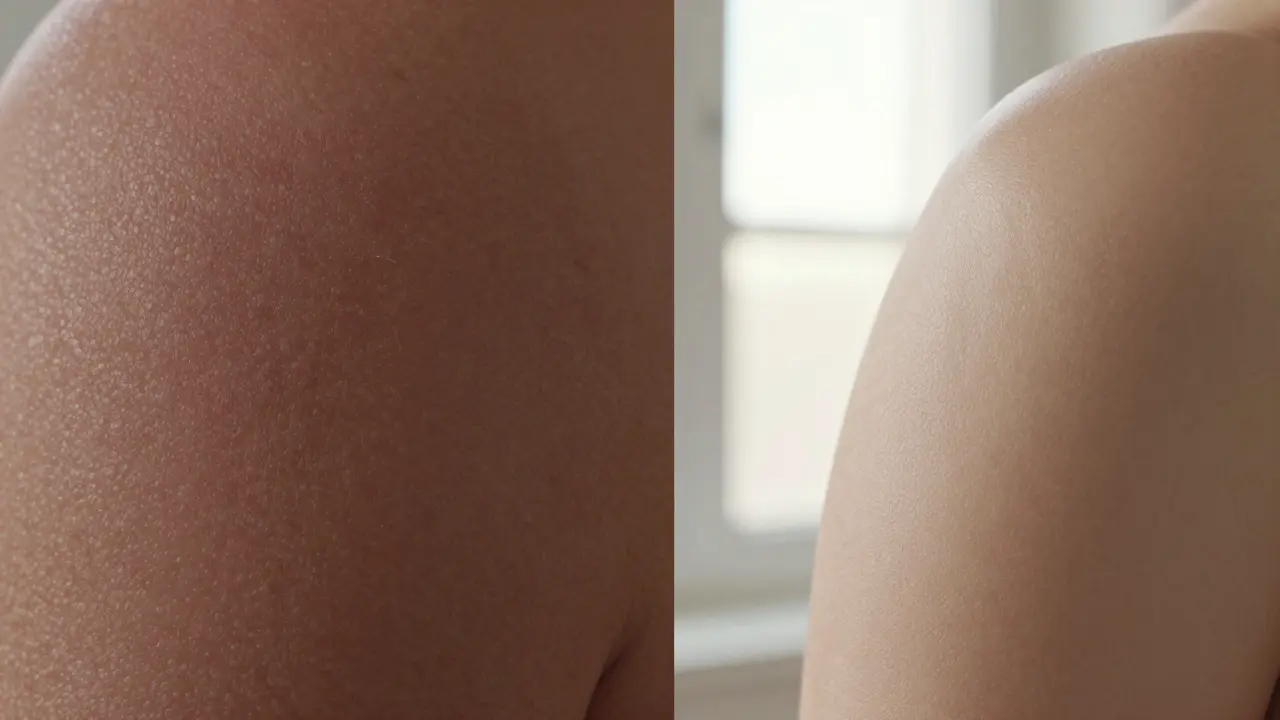
- A side-by-side image: one side showing rough skin with bumps, the other smooth, glowing skin
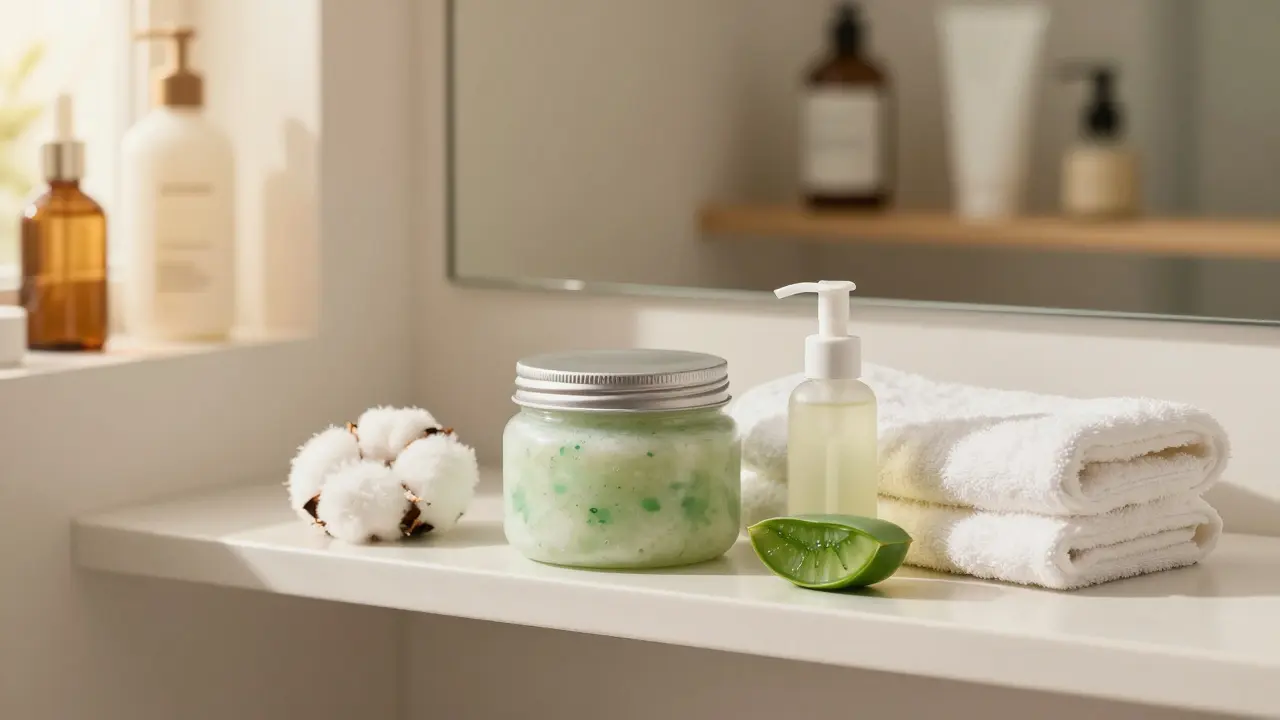
- A small bathroom shelf with a jar of body scrub, a clean towel, and a moisturizer (lifestyle shot)
- A person relaxing in a robe after a shower, with soft lighting (to convey self-care)
- A simple infographic: “3 Steps to Smooth Skin” (scrub, rinse, moisturize)
Suggested Tables
- Comparison of Pubic Skin Care Methods (already included)
- Key Benefits of Regular Exfoliation (already included)
- Essential Safety Tips (already included)
Nelly Todorova
March 6, 2026 AT 17:36So I tried this scrub thing after reading your post and holy crap it actually worked. No more razor bumps for two weeks straight. I used the Sugar & Oatmeal one from Lush and now my bikini line feels like silk. I didn’t believe it either until I saw it in the mirror. No joke, I’ve been doing this for 6 months now and I’m never going back to just shaving. Also, don’t even think about using coffee grounds. That was a mistake. One time. Never again.
Also, I started doing this after showers and it’s become my little ritual. Like, I light a candle, put on that one playlist, and just… breathe. Weird? Maybe. But it’s mine.
Also also, I told my sister about it. She’s 19 and had no idea this was a thing. Now she’s obsessed. Family dynamic changed. You’re welcome.
Richard Jahnke
March 6, 2026 AT 18:14This entire post is a textbook example of modern American overindulgence in personal aesthetics. We live in a society where men are told to shave their faces and women are told to shave their legs, armpits, and now-apparently-their pubic region. This is not hygiene. This is conformity disguised as self-care.
There is no biological necessity for this routine. No medical organization recommends it. Yet here we are, marketing sugar scrubs like they’re miracle cures. This isn’t skincare. It’s consumerism with a bow.
Let me be clear: natural body hair is not a flaw. It is not unclean. It is not unattractive. It is biology. And if you feel the need to remove it for comfort or confidence, that’s your choice. But don’t pretend this is about health. It’s about aesthetics-and the beauty industry is cashing in.
Gail Ingram
March 7, 2026 AT 06:13Hey Richard, I hear you-and I think you’ve got a really valid point about societal pressure. But I also think Nelly’s comment shows something beautiful: personal autonomy.
Not everyone who uses a scrub is doing it because they’re told to. Some of us do it because it makes us feel grounded, comfortable, or even just a little more connected to our bodies. And that’s okay.
I’m a nurse, and I’ve seen so many patients-especially after surgery or chemo-who rediscover their skin through gentle routines like this. It’s not about beauty standards. It’s about reclaiming agency over your own body, however small that act may seem.
There’s room for both: to honor natural hair and to honor personal care rituals. They’re not mutually exclusive. Maybe the real issue isn’t the scrub-it’s the shame we’ve been taught to feel about either choice.
Zafer Sagar
March 7, 2026 AT 06:54As someone from Mumbai who grew up in a household where body hair was never discussed, let alone touched, I found this post both fascinating and deeply humanizing.
Here in India, the idea of exfoliating the pubic area would be considered absurd-almost scandalous. Yet here in the comments, I see women and men sharing their routines with such openness, and it’s beautiful. Not because it’s universal, but because it’s personal.
I started experimenting with a homemade sugar scrub using coconut oil and cardamom (yes, cardamom-it’s calming and antibacterial) after reading this. I use it once a week, only after showers. My skin feels smoother, and oddly, I feel more at peace with my body.
This isn’t about Western trends. It’s about listening to your skin. And if you’re doing it gently, with intention, then it’s sacred. Not because it’s trendy-but because it’s yours.
Also, avoid lemon in scrubs. I tried it once. Felt like I’d been kissed by a wasp. Lesson learned.
kamal redha
March 9, 2026 AT 06:19Just wanted to say how much I appreciate the tone of this entire thread. It’s rare to see such a mix of perspectives without hostility. Richard raises an important cultural critique, Gail offers a compassionate counterpoint, Nelly shares her lived experience, and Zafer brings in a global lens-and somehow, we’re all still here, talking, not yelling.
I’ve been using a scrub for about a year now, mostly because I have curly hair and razor burn was killing me. I didn’t even know what an ingrown hair was until I got one that looked like a tiny pimple with a hair curling back into it. I thought it was a zit. Took me three weeks to realize it wasn’t going away.
Now I use a sugar scrub with jojoba oil every Sunday night. I’ve stopped shaving every day. I trim now. It’s been a game-changer. I used to hate looking in the mirror after a shower. Now? I just smile. Not because I’m ‘perfect’-but because I’m not fighting my skin anymore.
Also, if you’re using a scrub and your skin feels tight or dry afterward, try a thin layer of pure aloe vera gel. No fragrance. Just the green stuff from the plant. It’s like a hug for your skin.
And if you’re nervous about trying it? Start on your inner thigh. Just like the post says. No rush. No pressure. Just you and your skin. That’s all that matters.
connor dalton
March 9, 2026 AT 13:52One thing I’ve noticed after trying this for a few weeks is that the real benefit isn’t smoothness-it’s awareness.
Before I started scrubbing, I never paid attention to how my skin felt after shaving. I just did it, rinsed, and moved on. Now, I notice texture, redness, even how my clothes feel against my skin. It’s made me more mindful about everything-what I wear, how I hydrate, even how I move.
I’m not saying everyone needs to do this. But if you’re curious, maybe just try it once. See how your skin reacts. No expectations. No goals. Just observation.
And if it doesn’t do anything? That’s fine too. You didn’t lose anything. You just learned something about yourself.
Kari Watkins
March 10, 2026 AT 06:19OMG I’M CRYING. THIS IS THE MOST RELATABLE THING I’VE READ SINCE I FOUND OUT MY DOG IS A THERAPIST. I DID THIS FOR THE FIRST TIME LAST WEEK AND NOW I FEEL LIKE A NEW PERSON. MY SKIN IS SOFT. LIKE, BUTTERY. I’M WEARING SHORTS AGAIN. I’M WEARING WHITE PANTS. I’M LIVING. 💕
Also, I used the one from Herbivore and it smells like a spa made by angels. I’m not even kidding. I’ve started leaving it on my bathroom counter like a trophy. My roommate asked if I’m dating again. I said, ‘No, I’m just dating myself now.’ She cried. I cried. We hugged. It was a moment.
PS: I tried the aloe vera gel and now I’m addicted. I put it on my face too. I think I’m turning into a plant.