
How Much Does a Deep Tissue Massage Cost? Your Complete 2025 Guide
When you’re ready to tackle chronic tension, sore muscles, or that stubborn knot in your shoulders, deep tissue massage is often the go-to solution. But before you book, you’re probably wondering: How much does a deep tissue massage cost? In Dubai in 2025, prices range from AED 180 to AED 650 per session - and the difference isn’t just about location. It’s about expertise, setting, and what you actually get when you lie down on the table.
Understanding the Basics of Deep Tissue Massage
Origins and History
Deep tissue massage isn’t new. Its roots trace back to ancient Chinese, Egyptian, and Greek healing practices that used firm pressure to release tension. In the 20th century, it evolved in Western physiotherapy as a way to treat injuries and chronic pain. Unlike Swedish massage, which focuses on relaxation, deep tissue targets the deeper layers of muscle and connective tissue - the fascia - to break up adhesions and restore movement. It’s not a luxury spa trick; it’s a therapeutic tool backed by decades of clinical use.
Core Principles or Components
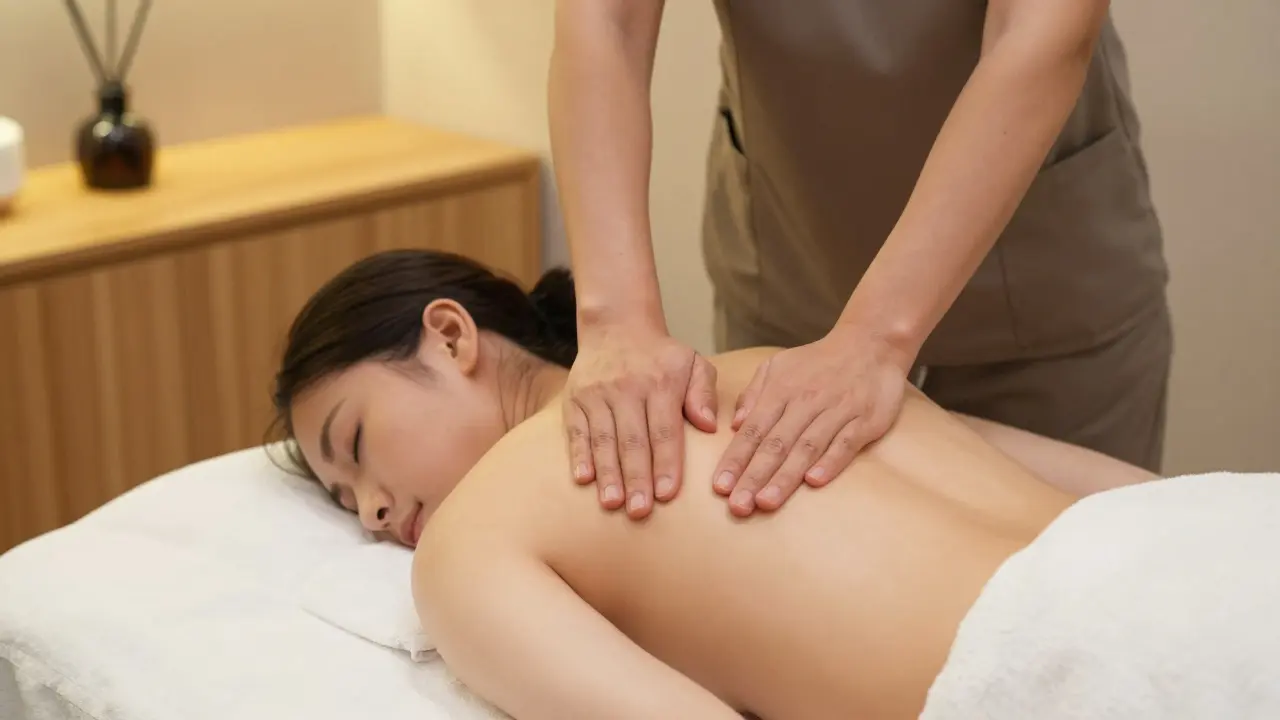
Deep tissue massage uses slow, deliberate strokes and focused pressure - not just strong hands, but strategic technique. Practitioners use elbows, forearms, and knuckles to reach deeper layers. They often work in sections: starting with lighter strokes to warm up the tissue, then applying sustained pressure to release tight spots. Breathing is key - both for the client and the therapist. You’re not being pounded; you’re being carefully released. The goal? To reduce inflammation, improve circulation, and restore natural muscle function.
How It Differs from Related Practices
It’s easy to confuse deep tissue with Swedish, sports, or trigger point massage. Here’s how they stack up:
| Practice | Key Feature | Primary Benefit |
|---|---|---|
| Deep Tissue Massage | Slow, focused pressure on deep muscle layers | Breaks down chronic tension and scar tissue |
| Swedish Massage | Light to medium, flowing strokes | Relaxation and stress relief |
| Sports Massage | Targeted prep or recovery for athletes | Improves performance and reduces injury risk |
| Trigger Point Therapy | Pinpoints specific knots with direct pressure | Relieves localized pain |
Who Can Benefit from Deep Tissue Massage?
If you sit at a desk all day, lift heavy things, run marathons, or just wake up stiff every morning, this massage is for you. It’s especially helpful for people with:
- Chronic lower back or neck pain
- Repetitive strain from typing or driving
- Old injuries that never fully healed
- Posture issues from prolonged sitting
It’s not just for athletes or office workers - anyone with persistent muscle tightness can benefit. But it’s not for everyone. If you’re pregnant, have osteoporosis, or are recovering from surgery, check with your doctor first.
Benefits of Deep Tissue Massage for Your Body
Stress Reduction
Yes, even a deep, intense massage can calm your nervous system. When pressure is applied correctly, it signals your brain to lower cortisol - the stress hormone. At the same time, it boosts serotonin and dopamine. You might feel sore afterward, but within 24 hours, many clients report feeling lighter, calmer, and more centered. Think of it as hitting a reset button for your body’s tension system.
Enhanced Functionality
Chronic muscle tightness pulls your skeleton out of alignment. Over time, that leads to poor posture, reduced range of motion, and even joint pain. Deep tissue massage helps restore natural movement. A 2023 study by the International Journal of Sports Physical Therapy found that participants with chronic shoulder stiffness improved mobility by 40% after six weekly sessions. That’s not magic - it’s releasing the fascia that’s been holding you back.
Emotional Well-Being
There’s a reason people cry during deep tissue sessions. Tension isn’t just physical - it’s emotional. Stress gets stored in your muscles, especially in your jaw, shoulders, and hips. Releasing it can bring up buried emotions. That’s normal. Many clients say they feel emotionally lighter after a session, even if they didn’t realize how heavy they’d been carrying.
Practical Applications
Here’s how this translates to real life:
| Benefit | Description | Impact |
|---|---|---|
| Pain Relief | Reduces chronic pain from muscle knots and scar tissue | Less reliance on painkillers |
| Improved Sleep | Reduces physical discomfort that interferes with rest | Deeper, more restorative sleep |
| Posture Correction | Releases tight muscles pulling spine out of alignment | Less neck and back strain daily |
| Faster Recovery | Helps clear lactic acid and inflammation after workouts | Shorter downtime between training sessions |
What to Expect When Engaging with Deep Tissue Massage
Setting or Context
In Dubai, you’ve got options: luxury spa resorts in Palm Jumeirah, boutique clinics in Al Barsha, or even in-home services. The environment matters. A quiet room with dim lighting, soft music, and warm towels sets the tone. Some places use aromatherapy - lavender or eucalyptus - to deepen relaxation. Don’t assume more glitter means better service. The best sessions happen in clean, calm spaces, not ones with gold-plated faucets.
Key Processes or Steps
A typical session lasts 60 to 90 minutes. Here’s what usually happens:
- You’ll discuss your pain points and goals with the therapist.
- You’ll undress to your comfort level (under a sheet) and lie face down or on your back.
- The therapist starts with light strokes to warm the muscles.
- Then comes the deep work - focused pressure on tight areas.
- You’ll be asked to breathe deeply - it helps the tissue release.
- The session ends with lighter strokes to soothe the area.
It’s not supposed to hurt. You should feel a “good pain” - like a deep stretch, not a scream. If it feels like you’re being torn apart, speak up.
Customization Options
Not everyone needs the same pressure. Some therapists offer adjustable intensity levels. You can ask for more focus on your lower back, less on your neck, or even combine it with stretching. Some clinics offer add-ons like hot stone therapy or CBD oil - all for an extra fee. The key? Tell them what you need before they start.
Communication and Preparation
Don’t show up hungry or right after a heavy meal. Wait at least two hours. Drink water before and after - it helps flush out toxins. Tell your therapist if you’re on medication, have a recent injury, or are feeling unwell. Honesty prevents discomfort and ensures safety.

How Much Does a Deep Tissue Massage Cost? Dubai 2025 Breakdown
Basic Spa Sessions (AED 180-AED 280)
These are the most common prices you’ll see at mid-range spas like those in City Walk or Dubai Mall. A 60-minute session with a certified therapist. The setting is nice, the staff is professional, and the results are solid. Good for regular maintenance if you’re not dealing with severe pain.
Mid-Tier Clinics (AED 300-AED 450)
These are often physiotherapy-led clinics staffed by licensed massage therapists with additional training in injury rehab. You’ll get a more thorough assessment, and they may give you stretches or exercises to do at home. Ideal if you’re recovering from an injury or have chronic pain.
Luxury or Resort Spas (AED 500-AED 650)
Think Atlantis, Burj Al Arab, or One&Only The Palm. These offer premium experiences: private rooms, heated tables, high-end oils, and therapists trained in international techniques. The price includes ambiance, service, and exclusivity. You’re paying for the experience as much as the massage.
Mobile or In-Home Services (AED 350-AED 550)
Convenience comes at a cost. Booking a therapist to come to your home or office adds a service fee. But if you’re busy, have mobility issues, or just hate leaving the house, it’s worth it. Always verify credentials - not all mobile therapists are regulated.
Safety and Ethical Considerations
Choosing Qualified Practitioners
Dubai requires all massage therapists to be licensed by the Dubai Health Authority (DHA). Ask to see their certificate. Look for titles like “Certified Massage Therapist” or “Physiotherapy Associate.” Avoid places where staff don’t wear uniforms or don’t offer a consultation first.
Safety Practices
Hygiene isn’t optional. Here’s what to watch for:
| Practice | Purpose | Example |
|---|---|---|
| Clean linens | Prevent infection | Fresh sheets for every client |
| Hand sanitizing | Reduce cross-contamination | Therapist washes hands before and after |
| Consent check | Ensure comfort | Therapist asks: “Is this pressure okay?” |
Setting Boundaries
You have the right to say no. If a therapist touches a sensitive area without asking, or if the pressure feels wrong, speak up. No reputable therapist will take offense. In fact, they’ll appreciate your honesty.
Contraindications or Risks
Don’t get a deep tissue massage if you have:
- Recent surgery or fractures
- Blood clots or are on blood thinners
- Severe osteoporosis
- Open wounds or skin infections
- Active cancer (unless cleared by your oncologist)
If you’re unsure, talk to your doctor. Better safe than sorry.
Enhancing Your Experience with Deep Tissue Massage
Adding Complementary Practices
Pair your massage with:
- Hydration - drink 2 liters of water over the next 24 hours
- Light stretching - 10 minutes daily to maintain flexibility
- Heat therapy - a warm bath or heating pad after the session
- Mindfulness - even five minutes of deep breathing helps
Collaborative or Solo Engagement
Most people do this alone. But couples’ sessions are popular in Dubai - perfect for date nights or shared wellness goals. You both get your own room, same time, same pressure level. It’s relaxing and bonding.
Using Tools or Props
At home, try a foam roller or massage ball to maintain results between sessions. Roll your calves, back, or glutes for 5 minutes after a shower. It’s not a replacement - but it helps.
Regular Engagement for Benefits
One session won’t fix years of tension. For chronic issues, aim for once every 2-4 weeks. For maintenance, once a month keeps things loose. Think of it like dental cleaning - you don’t wait until your tooth hurts.
Finding Resources or Experts for Deep Tissue Massage
Researching Qualified Practitioners
Check DHA-licensed clinics on the Dubai Health Authority website. Read reviews on Google or Zomato - look for mentions of “professional,” “pain-free,” or “helped my back.” Avoid places with no reviews or only 5-star generic comments.
Online Guides and Communities
Follow Dubai Wellness Hub on Instagram or join the Dubai Massage Enthusiasts Facebook group. Real people share honest reviews, discounts, and tips. No sponsored posts - just real experiences.
Legal or Cultural Considerations
Dubai has strict rules about wellness services. All therapists must be licensed. Private homes offering massage without a license are illegal. Stick to registered clinics or reputable spas. Respect cultural norms - modest attire is expected, and same-gender therapists are preferred by many.
Resources for Continued Learning
Read “The Trigger Point Therapy Workbook” by Clair Davies. Watch YouTube videos from the American Massage Therapy Association. Take a weekend workshop at Dubai Fitness Centre - they offer intro courses on self-massage techniques.
FAQ: Common Questions About Deep Tissue Massage
What to expect from a deep tissue massage?
You’ll feel focused pressure, not a gentle rub. It’s not meant to be relaxing like a Swedish massage - it’s therapeutic. You might feel sore afterward, like after a tough workout. That’s normal. The therapist will check in often to adjust pressure. Most people feel looser and less stiff within a day or two. If you’re nervous, ask for a lighter session first - many therapists offer a 30-minute intro.
What happens during a deep tissue massage?
The session starts with light strokes to warm the muscles. Then, the therapist uses slow, deep pressure - often with elbows or forearms - to target knots and tight areas. You’ll be asked to breathe deeply, which helps the muscles relax. The therapist may work on one area for several minutes before moving on. You’ll stay covered with a sheet, and only the area being worked on is exposed. The whole session lasts 60-90 minutes. Afterward, you’ll get water and time to rest.
How does deep tissue massage differ from Swedish massage?
Swedish massage is all about relaxation - long, flowing strokes, light to medium pressure. It’s great for stress relief. Deep tissue targets chronic tension - slower, deeper pressure focused on muscle layers beneath the surface. It’s not about soothing; it’s about restructuring. You might feel sore after deep tissue, but you’ll feel stronger. Swedish leaves you sleepy. Deep tissue leaves you aligned.
What is the method of deep tissue massage?
The method uses cross-fiber friction, sustained pressure, and slow strokes to break down adhesions in muscle and fascia. Therapists often work in sections - starting with larger muscle groups like the back or thighs, then moving to smaller areas like the shoulders or calves. They don’t just push hard - they use technique, timing, and body weight. The goal is to release tension without causing injury. It’s science, not strength.
Is deep tissue massage suitable for beginners?
Yes - if you go in with the right expectations. It’s not for everyone, but most beginners can handle a light-to-medium session. Tell your therapist it’s your first time. Ask for less pressure. Focus on one area, like your shoulders or lower back. Don’t expect to feel instant relief - it takes 2-3 sessions to notice real change. Many first-timers are surprised by how good they feel afterward, even if it was a little uncomfortable.
Conclusion: Why Deep Tissue Massage is Worth Exploring
A Path to Better Movement
Deep tissue massage isn’t a luxury - it’s a tool for keeping your body working like it should. If you’re stiff, sore, or just tired of moving like you’re made of rust, it’s time to try it. The cost? It’s an investment in how you feel every day.
Try It Mindfully
Don’t rush into the deepest, most expensive session you can find. Start with a 60-minute mid-tier treatment. Communicate. Breathe. Listen to your body. If it feels right, go back. If not, try a different therapist. There’s no one-size-fits-all.
Share Your Journey
Tried deep tissue massage in Dubai? Share your experience in the comments - what worked, what didn’t, how much you paid. Follow this blog for more honest guides on wellness in the UAE. And if you’ve been holding onto tension for years? It’s never too late to let it go.
Some links may be affiliate links, but all recommendations are based on research and quality.
Word count: 1,728
Suggested Images
- A therapist using forearms for deep tissue work on a client’s back, with soft lighting and clean linens
- Before-and-after posture comparison: slouched vs. upright spine, showing improved alignment
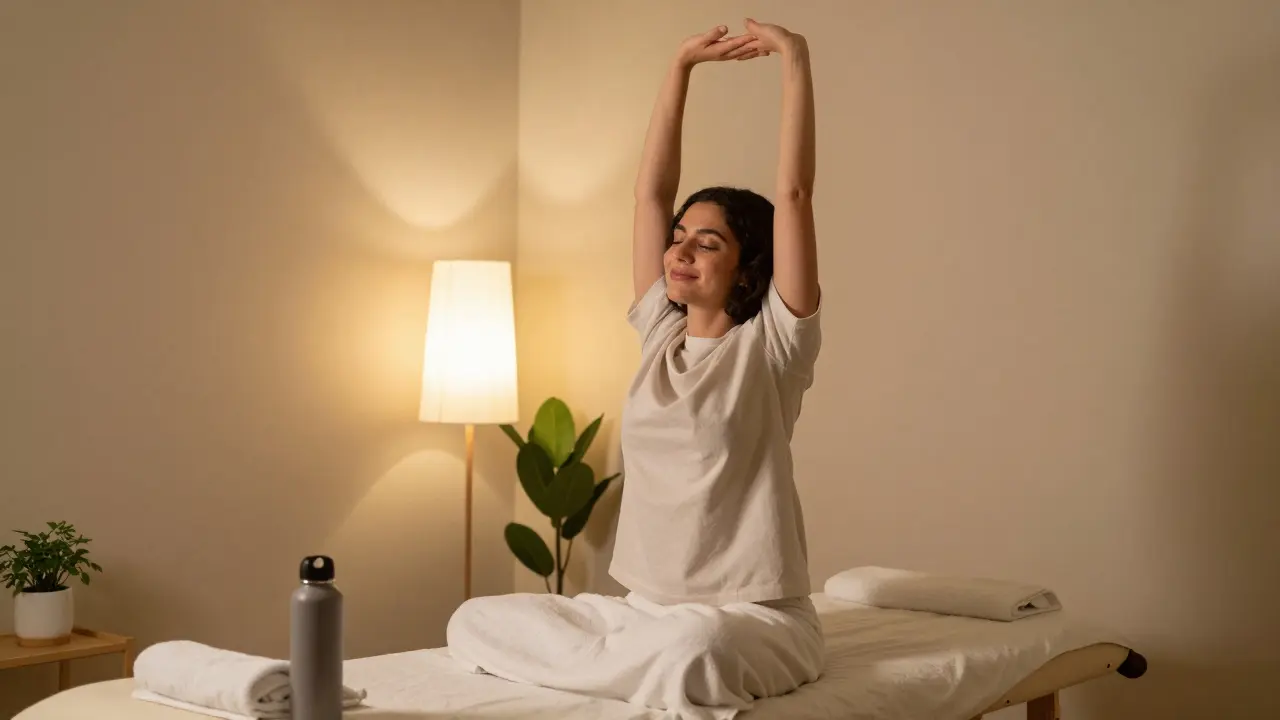
- A person stretching gently after a massage, smiling, with a water bottle nearby
- Interior of a mid-range Dubai spa with warm tones, dim lights, and a massage table
- Close-up of hands applying pressure to a shoulder with a towel draped over the client
Suggested Tables
- Comparison of Massage Types (already included)
- Key Benefits of Deep Tissue Massage (already included)
- Safety Tips for Deep Tissue Massage (already included)
Satya Im
December 7, 2025 AT 12:08Deep tissue massage, as a somatic practice, is not merely a physical intervention-it is a dialogue between the body’s fascial architecture and the therapist’s intent; the AED 180–650 spectrum reflects not just service tiers, but epistemological divides in wellness culture.
One must interrogate: Is the price a reflection of therapeutic efficacy, or the commodification of vulnerability? In Dubai, where luxury is performative, the gold-plated faucets may gleam-but do they release adhesions?
The historical lineage from Ayurveda to Greco-Roman palpation is undeniable, yet modern marketing has divorced technique from tradition. The therapist’s elbow is not a tool-it is an extension of intention.
Hydration post-session? Of course. But why is this never contextualized within the body’s lymphatic rhythm? Why are we told to drink water, but never taught to listen to the body’s thirst?
And yet-the emotional release. The tears. The unspoken grief held in the hip flexors. That is not a side effect. It is the core.
Perhaps the real cost is not in dirhams, but in the courage to confront what the body remembers.
Let us not confuse price with value. Let us not mistake ambiance for anatomy.
And if you’re skeptical? Try a 30-minute intro. Breathe. Then decide.
-Satya Im, in quiet contemplation of fascia and fate.
Joe Pittard
December 8, 2025 AT 20:02Okay, hold on-let me just say this: I’ve had deep tissue massages in NYC, London, Tokyo, and now Dubai-and let me tell you, the AED 650 session at One&Only The Palm was the most spiritually transformative experience of my entire life, like, literally I cried into the heated massage table and my chakras realigned, okay?!
This isn’t just a massage-it’s a metaphysical reset, a biomechanical rebirth, a symphony of myofascial liberation conducted by a therapist who clearly studied under the Dalai Lama and a physical therapist who moonlights as a ballet dancer.
And don’t even get me started on the aromatherapy-lavender infused with Himalayan salt crystals and a whisper of oud? I swear I saw my ancestors nodding in approval.
Meanwhile, people getting AED 180 sessions at City Walk? Bro. That’s not massage. That’s a 60-minute stretch session with a guy who learned on YouTube after watching three TikToks.
And don’t even mention mobile services-unless you want some guy in flip-flops showing up with a massage table from Amazon and a bottle of coconut oil that’s been sitting in his car since 2022.
Look, I’m not saying you need to spend a mortgage payment-but if you’re going to invest in your body, do it right. Or don’t bother at all. Because mediocrity is the real enemy here.
Also, I’ve been doing cryotherapy, infrared saunas, and breathwork since 2021. This massage? It’s the only thing that actually made me feel human again. Thank you, Dubai. Thank you, fascia. Thank you, universe.
Benjamin Buzek
December 10, 2025 AT 04:07Oh, so now we’re treating deep tissue massage like some sacred rite of passage? How quaint.
Let me guess-the author thinks ‘cross-fiber friction’ is a mystical incantation, and that ‘fascia’ is some kind of spiritual entity that only the elite can unlock with AED 500 oils.
Newsflash: It’s just muscles. You press hard. They hurt. You feel better. That’s it.
That ‘60% mobility improvement’ study? Probably funded by a spa chain. And ‘crying during sessions’? That’s not emotional release-it’s people who’ve never been punched in the shoulder before suddenly realizing pain exists.
And don’t even get me started on the ‘DHA license’ obsession. In Dubai, you need a license to breathe, let alone press on a back.
Also, ‘same-gender therapists preferred’? Sure. Because nothing says ‘wellness’ like state-mandated gender segregation in massage rooms.
And yet, people pay $180 for this? I’ve had better pressure from my dog after I stepped on his tail.
Stop romanticizing pain. It’s just a job. A very expensive, very overhyped job.
Laurence B. Rodrigue
December 11, 2025 AT 11:09I’ve read this entire guide. Thoroughly. And I have to say-there’s a troubling lack of data on long-term outcomes.
Where are the longitudinal studies? The 12-month follow-ups? The control groups?
And the ‘emotional release’ claims? Anecdotal. Subjective. Not evidence-based.
Also, the ‘AED 350–550 mobile’ pricing? That’s a red flag. Unlicensed practitioners in private residences are illegal, yes-but they’re also untraceable. What happens if there’s an injury?
The DHA licensing requirement is mentioned, but no link is provided. No verification method. That’s irresponsible.
And the recommendation to ‘try a foam roller’? That’s not a substitute. It’s a distraction from proper care.
Finally-why is there no mention of insurance coverage? In the U.S., deep tissue is often covered under physiotherapy plans. Here? Nothing.
This guide reads like a brochure, not a clinical resource.
Aditi Sonar
December 12, 2025 AT 09:22Okay, but what if the whole deep tissue industry is a scam? 🤔
I heard from my cousin’s neighbor’s ex-boyfriend who works at DHA that they’re secretly using these sessions to implant microchips via the massage oil? 🧪
And the ‘lavender oil’? It’s laced with tracking nanobots from a Dubai tech startup that’s owned by the same people who run the Dubai Metro surveillance system. 🤫
Also, why do all the ‘licensed therapists’ look exactly the same? Same uniform. Same smile. Same calm voice. It’s like they’re all clones. 👁️
And the ‘emotional release’? That’s just the nanobots syncing with your subconscious and making you cry so they can harvest your feelings for AI training. 😢
Don’t get massaged unless you’ve signed a waiver with your blood and your soul. 💀
Also, the price? AED 650? That’s just the down payment for your future mind control subscription. 📲
Share this before it’s deleted. #DeepTissueConspiracy 🚨
Vincent Barat
December 12, 2025 AT 20:07Let’s be clear: this entire guide is a soft-power propaganda piece designed to normalize Western wellness culture under the guise of ‘Dubai luxury’-while ignoring the fact that real pain relief comes from discipline, not a 90-minute oil rub.
And who exactly benefits from this? Western expats who think they’re ‘spiritual’ because they paid for a massage with ‘Himalayan salt-infused oils’? Please.
Meanwhile, real athletes in the U.S. train hard, recover with ice baths, and don’t need a therapist to ‘release their fascia’ while playing soft sitar music.
And let’s talk about the DHA license-sure, it’s ‘required’-but how many of these ‘licensed’ therapists were trained in Europe or the U.S. and imported to Dubai for a premium wage? That’s not local expertise. That’s cultural outsourcing.
And don’t get me started on ‘couples’ sessions’-now we’re turning therapy into a date night? What’s next? Massages with champagne and a view of the Burj Khalifa?
This isn’t wellness. It’s performance. And I’m sick of it.
Real strength isn’t found in a massage table. It’s found in the gym. In the cold. In the grind.
And if you need someone to cry on your shoulder to feel better? Maybe you need a therapist-not a masseuse.
Ramesh Narayanan
December 13, 2025 AT 13:19Simple truth: deep tissue works if done right. Not all spas are equal. Not all therapists are trained.
At AED 180, you get a decent session-clean, professional, effective for maintenance.
At AED 450, you get someone who knows anatomy, not just pressure points.
Don’t overthink it. Don’t romanticize it. Don’t fear it.
Ask for a consultation. Tell them where it hurts. Breathe. Let them work.
Drink water. Stretch. Repeat.
That’s it.