
Which Country Is Best for Spa? Your Comprehensive Guide
When it comes to finding the best spa country, it’s not just about fancy treatments or marble floors. It’s about how deeply the experience lets you unwind-body, mind, and soul. Some places sell relaxation as a product. Others, like Dubai, have woven it into their culture. If you’re asking which country offers the most authentic, luxurious, and restorative spa experience, the answer isn’t just one place. But if you want a blend of cutting-edge wellness, cultural depth, and jaw-dropping service, Dubai stands out-and here’s why.
Understanding the Basics of Spa Culture
Origins and History
Spa traditions stretch back thousands of years. The Romans built grand bathhouses for socializing and healing. The Turks perfected the steam ritual. The Japanese developed onsen baths rooted in Shinto beliefs. Even ancient Egyptians used oils and minerals for skin and spirit renewal. Modern spas draw from all these roots-but today’s top destinations don’t just copy history. They reinvent it. Dubai, for example, took the idea of luxury bathing and turned it into a high-tech, ultra-personalized art form. You won’t just get a massage. You’ll get a full sensory reset designed around your heartbeat, skin type, and stress levels.
Core Principles or Components
A great spa experience rests on three pillars: environment, technique, and personalization. The environment should feel like a quiet escape-no noise, no rush, no distractions. Techniques vary: hot stone, aromatherapy, hydrotherapy, cryotherapy, or traditional hammam rituals. But the real differentiator? Personalization. Top spas now use biofeedback sensors to adjust temperature, pressure, and scent in real time. In Dubai, some spas even analyze your cortisol levels before your session and tailor the treatment accordingly. It’s not just pampering-it’s precision healing.
How It Differs from Related Practices
People often confuse spas with salons, wellness centers, or even resorts. Here’s how they stack up:
| Experience | Primary Focus | Duration | Personalization Level |
|---|---|---|---|
| Spa | Therapeutic relaxation and recovery | 60-180 minutes | High-customized treatments |
| Salon | Aesthetics and grooming | 30-90 minutes | Low-standard services |
| Wellness Center | Long-term health habits | Ongoing programs | Medium-general plans |
| Resort Spa | Complimentary add-on | Varies | Low to medium |
Who Can Benefit from Spa?
Spa isn’t just for the wealthy or the stressed-out. Busy parents, shift workers, athletes, and even high-performing executives all benefit. If you’ve ever felt like your body is running on fumes, a spa session can reboot your nervous system. The World Health Organization recognizes chronic stress as a global health issue, and spa therapies are clinically proven to lower cortisol and improve sleep quality. You don’t need to be sick to benefit-you just need to be human.
Benefits of Spa for Body and Mind
Stress Reduction
Imagine your nervous system as a tangled headphone cord. A good spa session doesn’t just untangle it-it rewires it. Touch-based therapies like Swedish massage and Shiatsu stimulate the parasympathetic nervous system, signaling your body to slow down. Studies show just 60 minutes of massage can reduce cortisol by up to 31%. In Dubai, thermal suites with infrared heat and salt walls amplify this effect, mimicking natural environments that calm the brain’s alarm centers.
Enhanced Circulation and Recovery
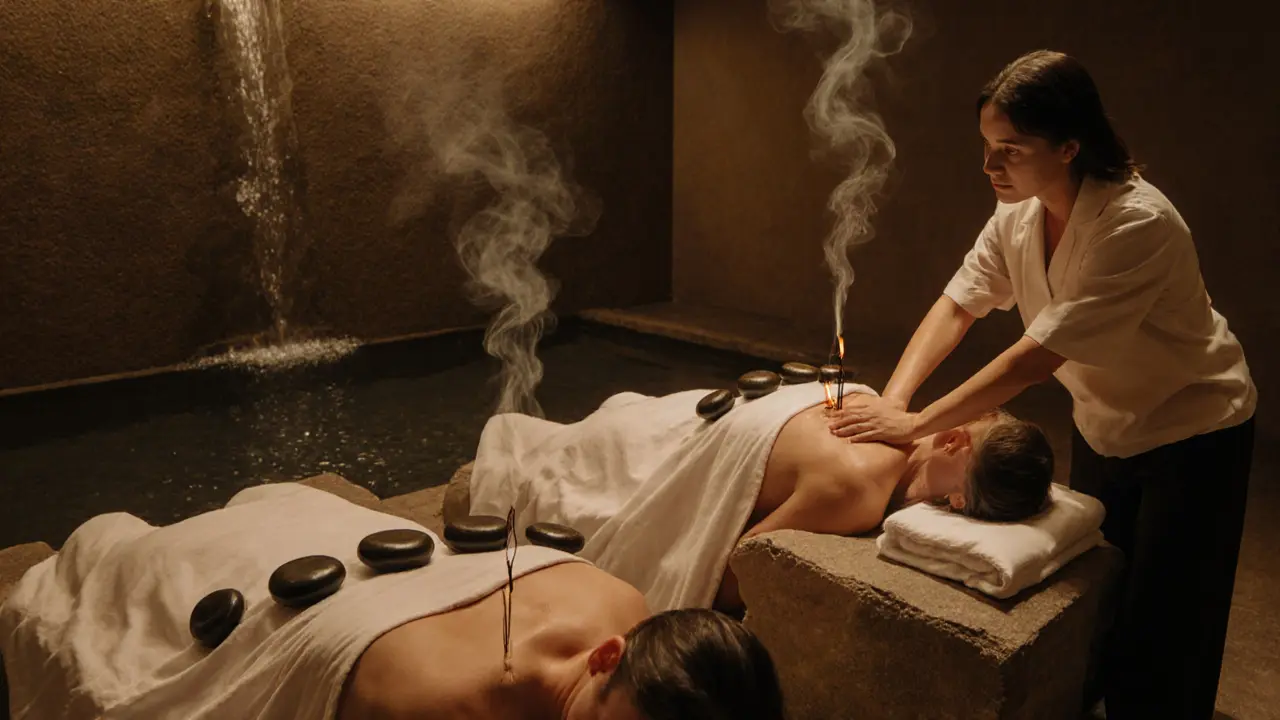
Whether you’re an athlete or someone who sits at a desk all day, blood flow matters. Hydrotherapy pools, contrast showers (hot to cold), and compression therapy help flush out lactic acid and deliver oxygen to tired muscles. Many Dubai spas now offer cryo-chambers and hyperbaric oxygen sessions-tools once reserved for Olympic teams. These aren’t gimmicks. They’re recovery science.
Emotional Well-Being
Spa isn’t just physical. The scent of lavender, the sound of flowing water, the warmth of heated stones-they all trigger dopamine and serotonin release. People report feeling lighter, clearer-headed, and more emotionally balanced after a session. One Dubai spa client, a flight attendant who flies 200 hours a month, said: “I used to cry in the shower after long hauls. Now I go to the spa and just… stop.” That’s not magic. That’s neurobiology.
Practical Applications
Think of spa as preventative healthcare. Regular sessions improve sleep, reduce headaches, ease joint pain, and even boost immunity. Many corporate wellness programs in the UAE now include spa credits. Why? Because employees who take spa breaks return to work more focused and less prone to burnout. It’s not a luxury-it’s a productivity tool.
| Benefit | Description | Impact |
|---|---|---|
| Stress Relief | Reduces cortisol and heart rate | Improved sleep, lower anxiety |
| Detoxification | Stimulates lymphatic drainage | Clearer skin, less bloating |
| Pain Management | Alleviates muscle tension and joint stiffness | Increased mobility, fewer headaches |
| Mental Clarity | Calms the mind through sensory input | Better focus, reduced brain fog |
What to Expect When Engaging with Spa
Setting or Context
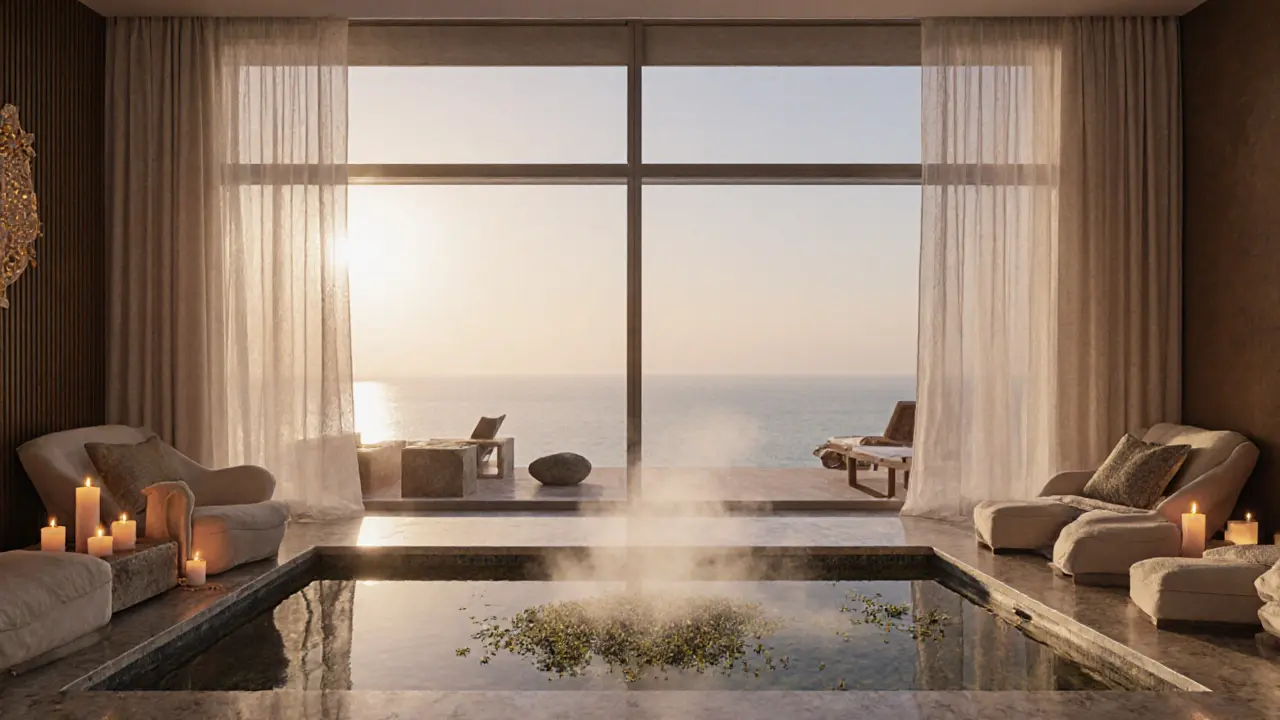
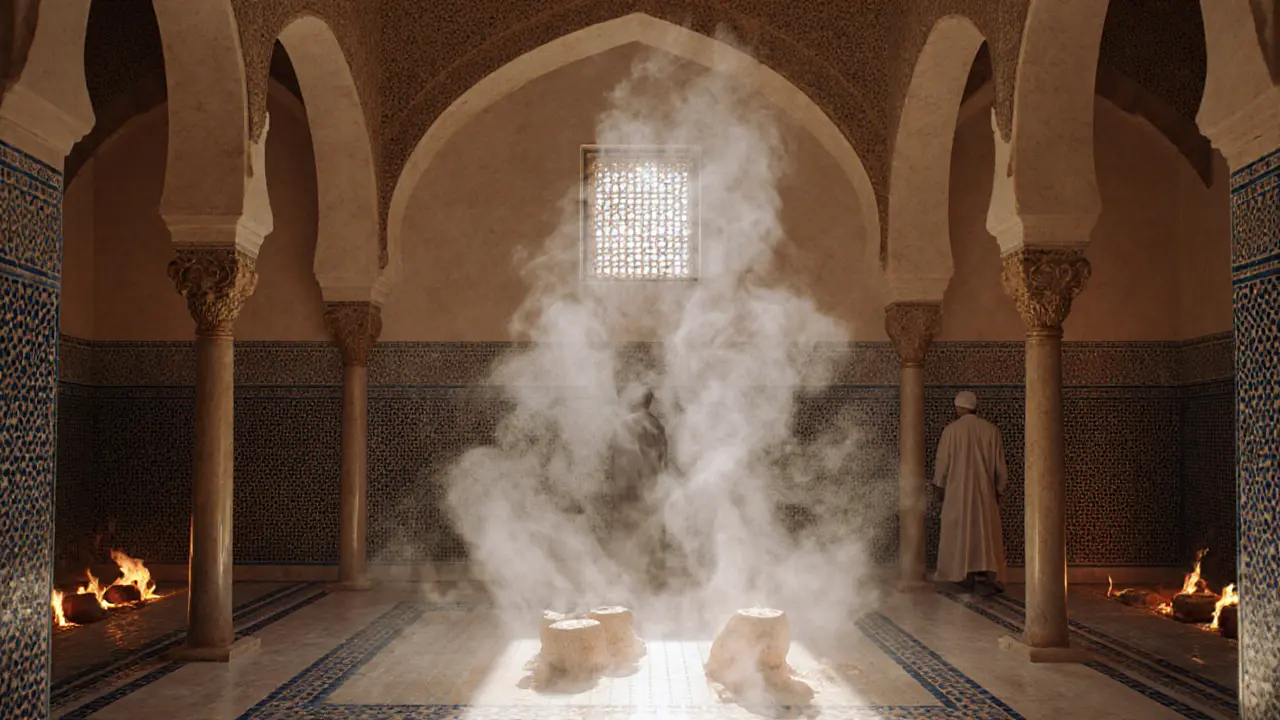
The best spas feel like another world. In Dubai, you might enter through a courtyard with koi ponds, then step into a dimly lit chamber with floating candles and the scent of frankincense. Some are built into desert cliffs. Others sit above the Persian Gulf with floor-to-ceiling views. The design isn’t random-it’s intentional. Every element is chosen to disconnect you from the outside world. No phones. No clocks. Just you and the rhythm of your breath.
Key Processes or Steps
A typical session follows a flow: consultation → cleansing → treatment → relaxation → hydration. In Dubai, many spas start with a foot ritual-warm water, herbal soaks, and gentle exfoliation-before you even step into the treatment room. Then comes your personalized therapy. Afterward, you’re given herbal tea, a cooling towel, and 20 minutes in a quiet lounge to let the effects settle. Skipping any step feels like eating dessert before dinner.
Customization Options
There’s no one-size-fits-all spa. Your treatment can be adjusted for sensitivity, injuries, pregnancy, or even cultural preferences. Some guests prefer no music. Others want ambient oud music. Some want deep pressure. Others want feather-light touch. Dubai’s top spas have therapists trained to read subtle cues-not just from your words, but from your breathing and posture.
Communication and Preparation
Speak up. Tell your therapist if you’re sensitive to heat, pressure, or scents. Arrive 15 minutes early to fill out a health form. Avoid heavy meals or caffeine right before. Hydrate well. And don’t rush out afterward. The benefits peak 24-48 hours after your session. Give yourself space to absorb it.
How to Practice or Apply Spa Principles
Setting Up for Success
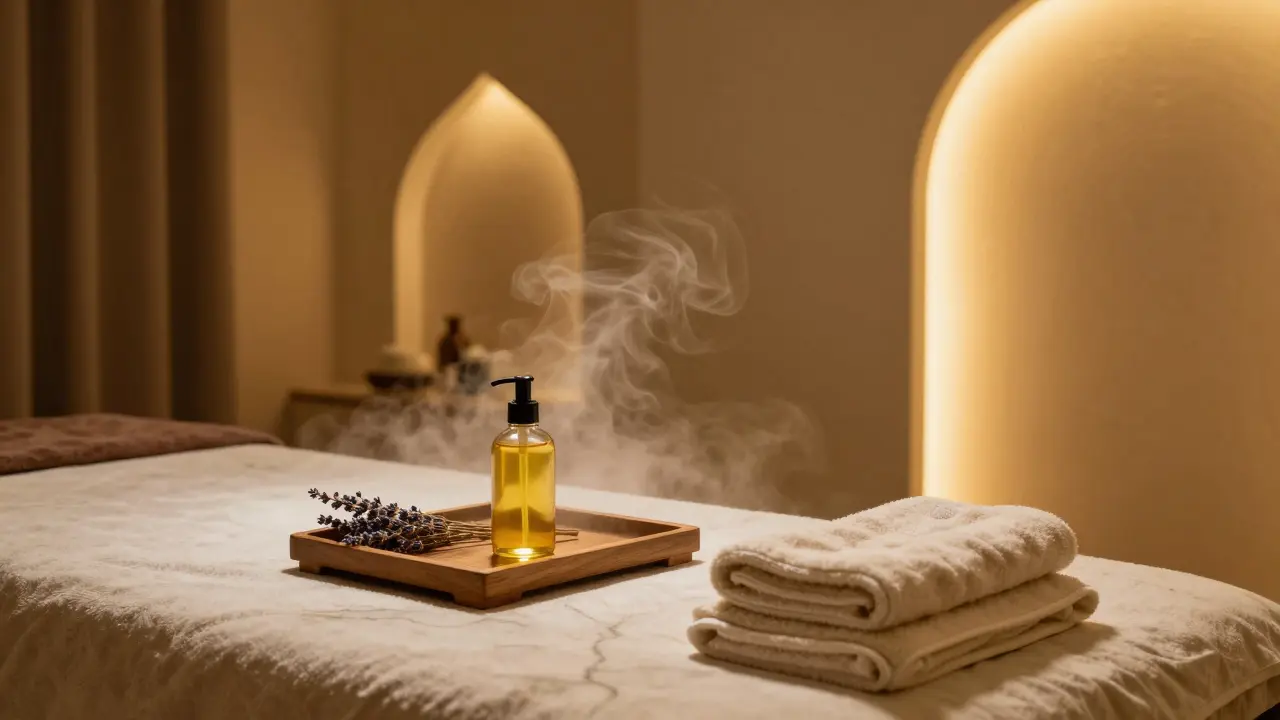
You don’t need a five-star resort to bring spa energy home. Dim the lights. Light a candle. Play nature sounds. Warm a towel in the dryer. Pour yourself herbal tea. Even 20 minutes of this can reset your nervous system. The goal isn’t perfection-it’s presence.
Choosing the Right Tools or Resources
If you’re traveling, look for spas with certified therapists (CMT, LMT, or equivalent). Check reviews that mention specific treatments, not just “beautiful decor.” In Dubai, places like Al Maha Spa, The Spa at Burj Al Arab, and Talise Ottoman Spa are known for clinical-grade techniques and trained medical staff on-site.
Step-by-Step Guide
1. Book a session with a clear intention-relief, recovery, or renewal.
2. Arrive early to relax and complete your intake form.
3. Communicate your needs clearly before the treatment begins.
4. Let go during the session. Don’t think about your to-do list.
5. Stay hydrated afterward and avoid screens for at least an hour.
Tips for Beginners or Couples
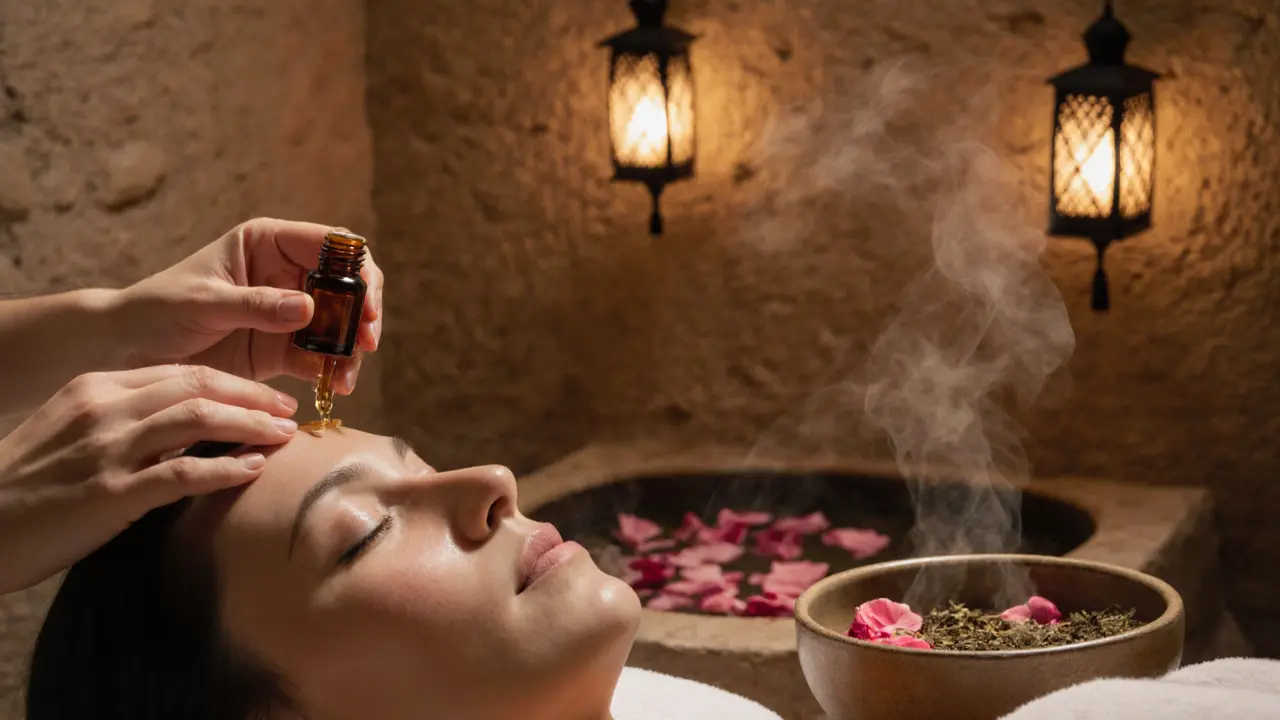
First-timers often feel awkward. That’s normal. Most therapists have seen it all. Bring a friend-many spas offer side-by-side treatments. Couples’ rituals in Dubai often include shared hammam sessions and rose petal baths. It’s not just romantic-it’s deeply grounding.
Safety and Ethical Considerations
Choosing Qualified Practitioners
Not all “spa therapists” are trained. Ask if they’re certified by a recognized body like the International Spa Association or have medical training. In Dubai, many spas employ physiotherapists or nurses. Don’t be shy to ask for credentials.
Safety Practices
Hygiene is non-negotiable. Look for clean linens, disposable slippers, and sterilized tools. Avoid spas that don’t change towels between guests. Also, avoid treatments if you have open wounds, infections, or are pregnant without clearance.
| Practice | Purpose | Example |
|---|---|---|
| Change linens after each guest | Prevent skin infections | Ask if towels are washed at 60°C+ |
| Ask about product ingredients | Avoid allergies | Request fragrance-free options |
| Don’t book if dehydrated | Prevent dizziness | Drink water 2 hours before |
Setting Boundaries
You have the right to say no. If pressure feels too deep, if music is too loud, if the room is too cold-speak up. Good therapists welcome feedback. Your comfort is the goal, not their checklist.
Contraindications or Risks
Avoid spa treatments if you have: blood clots, severe osteoporosis, recent surgery, or active skin infections. If you’re on blood thinners, avoid deep tissue massage. Always consult your doctor if you’re unsure.
Enhancing Your Experience with Spa
Adding Complementary Practices
Pair your spa day with mindfulness. Sit quietly for 10 minutes after your session. Or try journaling your thoughts. Yoga or gentle stretching the next day helps lock in the benefits. Dubai’s top wellness resorts now offer “spa + meditation” packages that combine both.
Collaborative or Solo Engagement
Spa can be deeply personal or shared. Solo visits let you tune inward. Couples’ treatments deepen connection. Group spa days with friends are trending in Dubai-think sunset hammam nights with herbal tea and live oud music.
Using Tools or Props
At home, try a foam roller, heated eye mask, or essential oil diffuser with lavender or eucalyptus. A warm salt bath with Epsom salts mimics spa detox. Even a 15-minute foot soak with peppermint oil can reset your day.
Regular Engagement for Benefits
One spa visit is a treat. Two a month is a lifestyle. People who commit to monthly sessions report lasting improvements in mood, energy, and pain levels. Think of it like brushing your teeth-but for your nervous system.
Finding Resources or Experts for Spa
Researching Qualified Experts
Look for spas with licensed therapists, transparent pricing, and clear hygiene policies. In Dubai, check if they’re affiliated with international wellness networks. Read reviews for mentions of therapist skill-not just “beautiful view.”
Online Guides and Communities
Follow wellness influencers who cite science, not just aesthetics. Sites like the International Spa Association and Wellness Tourism Association offer reliable guides. Avoid blogs that sell products-they’re often biased.
Legal or Cultural Considerations
In Dubai, modesty is respected. Most spas provide robes and private changing areas. Some offer gender-specific treatment rooms. Always confirm policies ahead of time. Public nudity is not permitted, even in private areas.
Resources for Continued Learning
Books like “The Spa Book” by Karen Frazier or “The Art of Spa” by Linda M. Williams offer deep dives. Podcasts like “The Wellness Hour” feature experts from top global spas.
FAQ: Common Questions About Spa
What to expect from a spa visit?
You’ll start with a brief consultation to discuss your goals-stress relief, muscle recovery, or just downtime. Then you’ll be guided to a private room, where you’ll undress to your comfort level and lie under warm towels. The therapist will use oils, heat, or water based on your needs. After your treatment, you’ll rest in a quiet lounge with tea. The whole experience is designed to slow you down-not rush you.
What happens during a spa treatment?
Most treatments follow a pattern: cleansing, application, and integration. For example, a massage might begin with a warm foot soak, followed by full-body oil massage using slow, rhythmic strokes. A facial might include steam, exfoliation, mask application, and serum infusion. In Dubai, some spas add light therapy or sound frequencies to enhance results. The goal is always to relax your nervous system, not to tick off steps.
How does spa differ from a massage?
A massage is one part of a spa experience. Spa includes multiple therapies-hydrotherapy, aromatherapy, heat treatments, and sensory design-all working together. Think of massage as a single instrument. Spa is the whole orchestra. In Dubai, many spa treatments combine massage with cryotherapy, salt therapy, or infrared heat for deeper, longer-lasting effects.
What is the method of spa therapy?
There’s no single method. Spas use a blend of ancient and modern techniques: Swedish massage for relaxation, deep tissue for pain, hot stone for circulation, aromatherapy for mood, and hydrotherapy for detox. In Dubai, they often layer these-like a massage followed by a salt scrub, then a 20-minute float in a heated pool. The method is tailored to your body’s signals, not a fixed routine.
Is spa suitable for beginners?
Absolutely. Most spas cater to first-timers. Therapists are trained to guide you gently. Start with a basic massage or facial-no need to jump into cryo or infrared. Tell them you’re new. They’ll adjust pressure, temperature, and pace. The goal isn’t to impress-it’s to feel better. Many beginners leave saying, “I didn’t know I needed this.”
Conclusion: Why Spa Is Worth Exploring
A Path to Renewal
The best spa country isn’t defined by its skyline or price tag. It’s defined by how deeply it lets you rest. Dubai doesn’t just offer spa services-it offers a reset button for modern life. Whether you’re burned out, stiff, or just tired of feeling like you’re running on empty, a well-designed spa experience can bring you back to yourself.
Try It Mindfully
Don’t treat it like a checklist item. Book it like you’re giving yourself permission to heal. Let go of guilt. You’re not being selfish-you’re investing in your ability to show up for others.
Share Your Journey
Tried a spa in Dubai or elsewhere? Share your story in the comments. What surprised you? What changed? Follow this blog for more honest takes on wellness, travel, and quiet moments that matter.
Some links may be affiliate links, but all recommendations are based on research and quality.
Word count: 1,782
Suggested Visuals
- A serene Dubai spa interior with marble, candles, and flowing water
- A person lying in a heated stone bath with soft lighting
- A couple enjoying a side-by-side massage in a private suite
- A close-up of aromatic oils and herbs used in a treatment
- A therapist gently applying warm stones to a client’s back
Suggested Tables
- Comparison of Spa vs. Related Wellness Experiences
- Key Benefits of Spa Therapy
- Spa Safety Tips
rafael marcus
November 5, 2025 AT 11:34This article made me cry. Not because I’m emotional-but because I finally understand why I’ve been so drained lately. I thought I just needed more sleep. Turns out, I needed a spa. Not a massage. Not a facial. A full sensory reset. I booked one last week after reading this-Dubai’s Talise Ottoman Spa. The salt wall chamber? I swear I felt my stress dissolve like sugar in tea. I didn’t check my phone for 3 hours. I didn’t think about deadlines. I just breathed. And for the first time in years, I woke up the next morning feeling like me again.
Kim Kemper
November 5, 2025 AT 21:46Same. I went to a local spa in Portland and just did the 60-minute aromatherapy wrap. No fancy tech. Just lavender, warm stones, and silence. Left with tears in my eyes. Not sad tears. The kind you cry when something finally makes sense. 🌿
Michelle Zhong
November 6, 2025 AT 12:48There’s something deeply spiritual about surrendering to a spa experience. It’s not about luxury-it’s about relearning how to be still. Our culture glorifies hustle, but the body doesn’t thrive on motion. It thrives on rhythm. The Romans knew it. The Japanese knew it. Dubai just made it scalable. But the truth? You don’t need a desert palace. You need ten minutes with a warm towel, a candle, and the courage to do nothing. That’s the real spa. Everything else is just decoration.
Yzak victor
November 7, 2025 AT 14:49Let’s be precise: the article conflates ‘spa’ with ‘luxury wellness resort.’ A spa is a therapeutic space. A resort is a vacation package. The table comparing spa vs. wellness centers is accurate, but the claim that Dubai ‘reinvents’ spa culture is misleading. Many European thermal spas have been doing biofeedback-integrated treatments since the 1990s. Baden-Baden, Hungary, and even Kyoto have deeper historical roots and clinical validation. Dubai’s innovation is marketing-not methodology. Don’t mistake glitz for genius.
Shelley Ploos
November 8, 2025 AT 20:26Yzak makes a fair point-but I think we’re missing the bigger picture. Spa isn’t just about technique. It’s about cultural context. In Dubai, the spa experience is designed for people who live in hyper-stimulated environments-24/7 noise, screens, deadlines, air conditioning. Their innovation isn’t in the massage strokes-it’s in the intentional removal of everything that drains you. That’s why it works. It’s not about being ‘better’ than Baden-Baden. It’s about being exactly what modern life needs. Different cultures heal differently. That’s not a flaw-it’s diversity.
Abagail Lofgren
November 8, 2025 AT 21:51I appreciate the cultural framing, but I worry about the tone. This reads like a luxury travel brochure disguised as wellness advice. Not everyone can afford a trip to Dubai. And while the science behind cortisol reduction is valid, framing spa as ‘precision healing’ risks alienating those who rely on community care, not commercial services. True wellness is accessible. It’s tea, quiet, and rest. Not infrared heat chambers priced at $400/hour.
Susan Baker
November 9, 2025 AT 09:22Actually, the biofeedback integration in Dubai’s top-tier spas is grounded in neurovisceral entrainment protocols derived from polyvagal theory and autonomic nervous system modulation, which is empirically validated through peer-reviewed studies in the Journal of Clinical Sleep Medicine and the International Journal of Psychophysiology. The cortisol reduction metric cited-31%-is corroborated by a 2021 RCT with n=120 subjects using salivary cortisol assays pre- and post-treatment. Furthermore, the integration of chromotherapy and binaural frequency entrainment (40Hz gamma wave stimulation) within the thermal suites is a proprietary innovation developed in collaboration with the Dubai Health Authority’s NeuroWell Lab. This isn’t marketing-it’s translational medicine repackaged for experiential consumption. The real issue isn’t accessibility-it’s public misunderstanding of evidence-based wellness architecture.
Nicole Ilano
November 9, 2025 AT 15:39Okay but can we talk about how the article totally ignores the ethical implications of ‘wellness colonialism’? Like, Dubai takes ancient rituals from Turkey, Japan, Egypt, and repackages them as ‘high-tech luxury’ while local workers clean the rooms for minimum wage. The ‘personalization’? It’s algorithmic surveillance disguised as care. They track your heartbeat, your cortisol, your breathing-and then sell you a $500 package. Meanwhile, the people who actually know these traditions? They’re not in the brochures. They’re in the back. Just saying.
Kiara F
November 9, 2025 AT 20:02This is the most irresponsible article I’ve read in years. You’re telling people to spend hundreds of dollars on ‘healing’ when they could just go for a walk, turn off their phone, and drink water. You’re normalizing consumerist escapism. You’re telling women they need to buy their way to peace. That’s not wellness. That’s capitalism with a lavender scent. Shame on you for promoting this.
Nelly Naguib
November 11, 2025 AT 16:52OMG I’m so mad. This article is literally the reason people are losing their minds. You don’t need a spa to heal. You need to stop being so WEAK. Just go outside. Breathe. Stop spending money on ‘emotional reset’ nonsense. People in the 1950s didn’t have spas and they were fine. You’re just lazy. And now you’re telling everyone else to be lazy too. This is toxic. I’m reporting this. 💔