
Are There Hammams in the United States? Here’s What You Need to Know
There are hammams in the United States-but not the kind you might picture from a trip to Marrakech or Istanbul. You won’t find them in every small town, but yes, authentic, traditional hammams exist across the U.S., quietly offering the same deep-cleansing, soul-soothing experience that’s been practiced for over a thousand years. If you’ve ever stepped into a steam room at a luxury hotel and wondered, "Is this the real thing?"-the answer is: sometimes. And if you’re looking for the full ritual-the black soap scrub, the hot stone massage, the quiet ritual of sweating and rinsing-you’ll need to know where to look.
Forget the generic "Turkish bath" labels on hotel spas. A real hammam is a ritual, not just a steam room. It’s a slow, sacred process that cleanses not just your skin, but your mind. And while it’s deeply rooted in North African and Middle Eastern traditions, it’s finding a home in the U.S.-not as a trend, but as a genuine wellness practice.
Understanding the Basics of Hammams
Origins and History
The hammam traces its roots back to Roman bathhouses, but it was the Islamic world that refined it into a spiritual and social ritual. By the 8th century, hammams were central to daily life across the Ottoman Empire, from Istanbul to Fez. They weren’t just for cleaning-they were places to socialize, heal, celebrate, and even conduct business. Women gathered after childbirth. Men met to discuss politics. Families celebrated before weddings.
In the U.S., hammams arrived with immigrant communities in the 1970s and 80s, especially in cities like New York, Detroit, and Los Angeles. But it wasn’t until the last decade that they began appearing in high-end spas, often run by practitioners trained in Morocco, Turkey, or Egypt. Today, you’ll find them in boutique wellness centers and luxury resorts, blending ancient technique with modern expectations.
Core Principles or Components
A traditional hammam has three main rooms, each with a different temperature:
- Hot room (sıcaklık): The steam room, where you sweat and loosen toxins.
- Warm room (ılık): The washing area, where you’re scrubbed with kese (a coarse glove) and rinsed with warm water.
- Cool room (soğuk): The relaxation zone, where you rest, drink mint tea, and let your body recover.
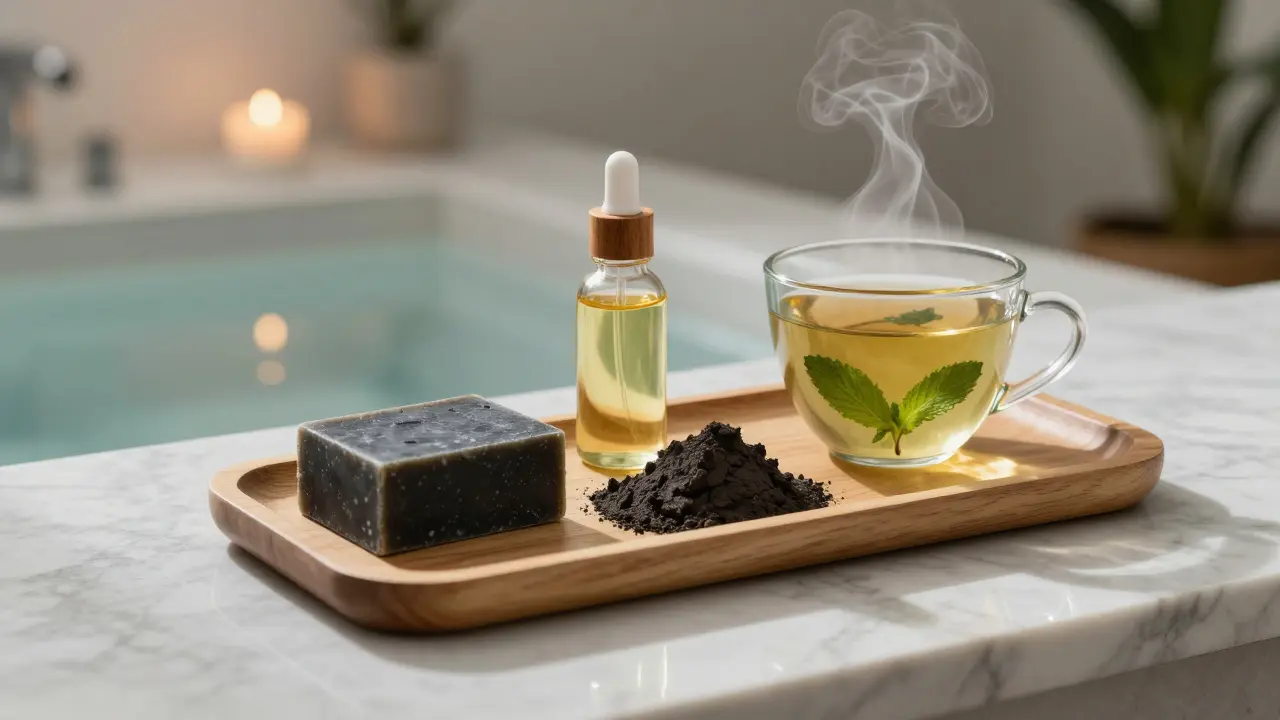
The ritual uses natural products: black soap made from olive oil and eucalyptus, argan oil for moisturizing, and sometimes rhassoul clay for detoxing. The scrub isn’t just exfoliation-it’s a full-body reset. Your skin feels like it’s breathing again.
How It Differs from Related Practices
People often confuse hammams with saunas or steam rooms. But they’re not the same.
| Practice | Key Feature | Primary Benefit |
|---|---|---|
| Hammam | Full-body scrub, wet heat, ritual pacing | Deep detox, skin renewal, mental calm |
| Sauna | Dry heat, high temperature, short sessions | Cardiovascular stimulation, muscle relaxation |
| Steam Room | Moist heat, no scrub, no ritual | Respiratory relief, light sweating |
A sauna heats you to 160-200°F with dry air. A steam room is humid but usually lacks the scrub, the oils, and the intentional rhythm. A hammam is a full sensory experience-touch, scent, temperature, silence.
Who Can Benefit from Hammams?
Almost anyone. Athletes use them to recover from intense workouts. People with acne or eczema find relief from the gentle exfoliation and natural oils. Those dealing with stress or burnout describe the experience as "like hitting a reset button." Even if you’ve never tried a spa before, a hammam is surprisingly accessible. You don’t need to be flexible, strong, or experienced. You just need to show up.
It’s especially helpful for people who feel stuck in their routines. The ritual forces you to slow down. No phones. No talking. Just warmth, steam, and the sound of water.
Benefits of Hammams for Body and Mind
Stress Reduction
The combination of heat, steam, and silence triggers your parasympathetic nervous system-the part of your body that says, "It’s safe to relax." Studies from the National Institutes of Health show that heat therapy can lower cortisol levels, the hormone tied to stress. In a hammam, you’re not just sweating-you’re letting go. Many people leave crying, not from pain, but from release.
Enhanced Skin Health
The kese scrub removes dead skin cells far more effectively than any loofah. Combined with argan oil and rhassoul clay, it balances oil production, unclogs pores, and improves circulation. People with psoriasis, keratosis pilaris, or chronic dryness report visible improvement after just two sessions. It’s not a miracle cure, but it’s one of the most natural, non-chemical ways to renew your skin.
Emotional Well-Being
There’s something deeply grounding about being cared for in silence. The practitioner doesn’t ask you how your week was. They don’t sell you anything. They just wash you, gently, with purpose. For many, this is the first time in months they’ve felt truly seen-without words. It’s no surprise that therapists and mindfulness coaches are starting to recommend hammams as part of mental health routines.
Practical Applications
Think of a hammam as a weekly reset for your body. Athletes use it after races. New parents use it to recover from sleepless nights. Office workers use it to shake off the mental fog of Zoom calls. You don’t need to go weekly, but even once a month can make a difference. It’s like a deep clean for your nervous system.
| Benefit | Description | Impact |
|---|---|---|
| Detoxification | Sweating opens pores and flushes impurities | Clearer skin, improved digestion |
| Improved Circulation | Heat expands blood vessels | Warmer extremities, reduced muscle stiffness |
| Relaxation Response | Triggers parasympathetic nervous system | Lower heart rate, better sleep |
| Self-Care Ritual | Creates space for stillness | Reduced anxiety, increased mindfulness |
What to Expect When Engaging with a Hammam
Setting or Context
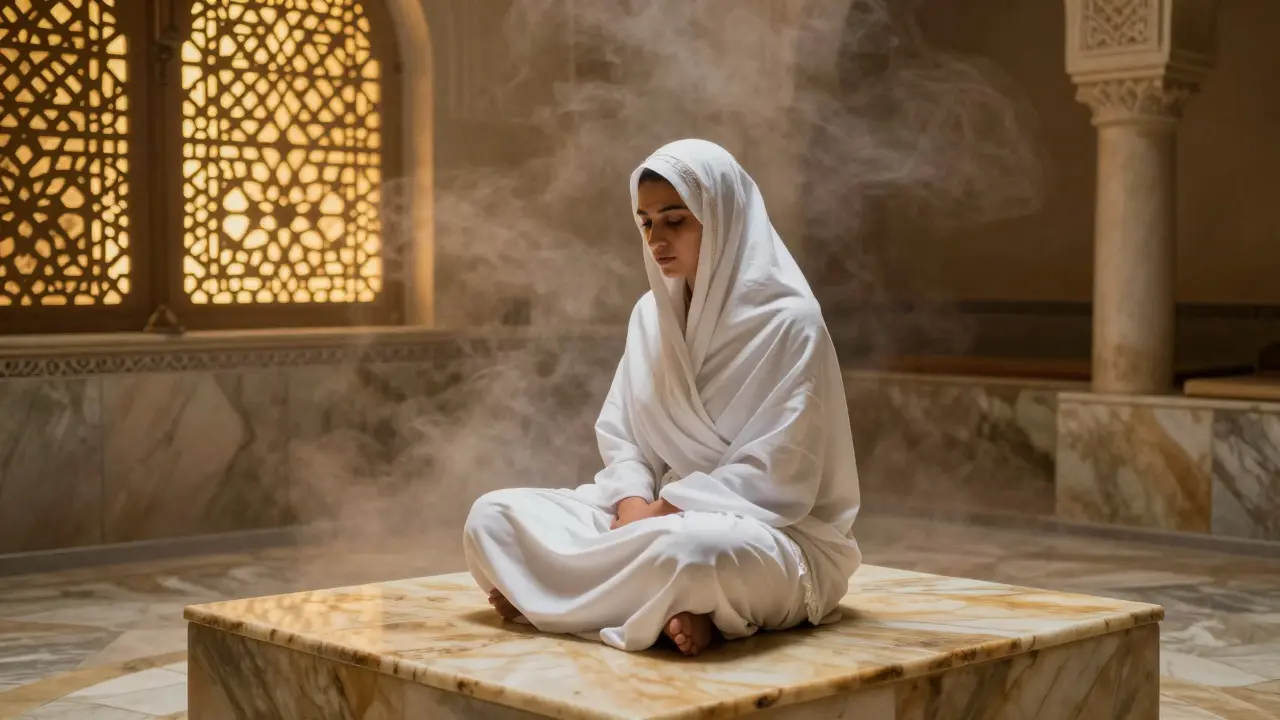
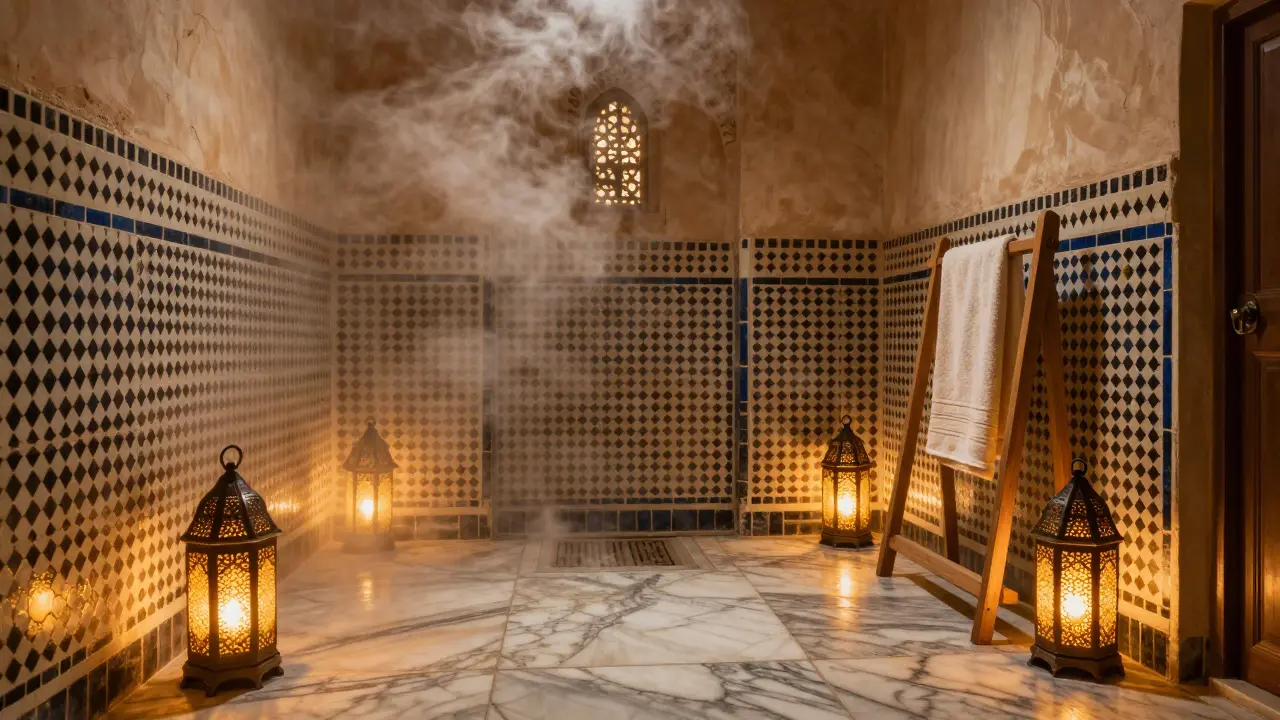
A good hammam feels like stepping into a marble cave. Think warm stone floors, low lighting, and the scent of eucalyptus and mint. There’s no loud music. No bright lights. The water is always just warm enough-not scalding. You’ll be given a peshtemal (a thin cotton towel), slippers, and sometimes a head wrap. You’ll be escorted to the hot room, where you’ll sit on a heated marble slab for 10-15 minutes to sweat.
Some places are luxurious-think candlelight and rose petals. Others are no-frills, community-run spaces in immigrant neighborhoods. Both are valid. The experience isn’t about the decor. It’s about the intention.
Key Processes or Steps
Here’s what happens in a typical 60-90 minute session:
- Steam: Sit quietly in the hot room for 10-15 minutes.
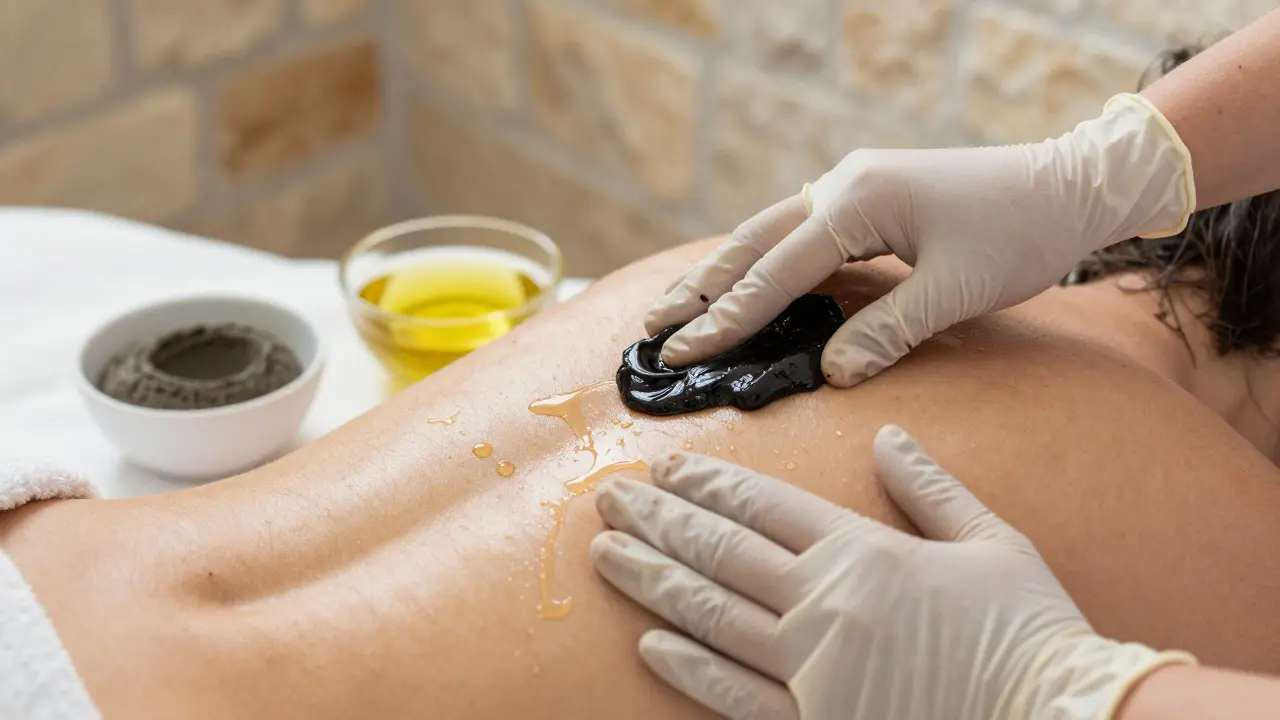
- Scrub: A therapist uses a kese glove to exfoliate your entire body-back, legs, arms, feet. It feels rough, but it’s not painful.
- Rinse: Warm water is poured over you, sometimes with a gentle massage.
- Oil: Argan or olive oil is massaged into your skin.
- Rest: You sip mint tea in the cool room for 15-20 minutes while your body cools down.
The whole thing feels like being gently cared for by someone who knows exactly what your body needs.
Customization Options
Most places let you choose your scrub intensity, oil type, or add-on treatments like a clay mask or hair treatment. If you’re sensitive to heat, ask for a shorter steam. If you have dry skin, request extra oil. You’re not expected to endure discomfort. This is your ritual.
Communication and Preparation
Don’t show up right after a big meal. Don’t drink alcohol beforehand. Wear nothing under your peshtemal-no swimsuit. You’ll be covered at all times, but the scrub is more effective on bare skin. Tell your therapist if you’re pregnant, have open wounds, or feel dizzy. They’ve seen it all.
How to Practice or Apply Hammams
Setting Up for Success
If you’re doing a home version, you can mimic the basics: run a hot shower, use a body scrub, then apply oil. But the real magic is in the ritual-the slowing down. Light a candle. Play no music. Breathe. That’s the hammam spirit.
Choosing the Right Tools/Resources
Look for places that use natural products and have trained staff. Ask if the therapist is certified by a Moroccan, Turkish, or Middle Eastern hammam school. Avoid places that use synthetic scrubs or charge extra for "premium" oils-authentic hammams use simple, traditional ingredients.
Step-by-Step Guide
First visit? Here’s how to make it smooth:
- Book a 60-minute session (not 30-you’ll feel rushed).
- Arrive 15 minutes early to relax.
- Drink water before and after.
- Let go of expectations. Don’t worry if you don’t feel "transformed"-just feel.
- Afterward, wear loose clothes. Don’t rush back into your day.
Tips for Beginners or Couples
First-timers often feel awkward. That’s normal. The staff won’t judge you. Couples can go together, but you’ll usually be in separate rooms. That’s part of the tradition-personal space, even in intimacy. If you’re nervous, ask for a female therapist. Most places will honor that request.
Safety and Ethical Considerations
Choosing Qualified Practitioners/Resources
Not all "hammams" are real. Some are just steam rooms with a fancy name. Look for places that mention their staff’s training. Ask: "Where did your therapist learn?" If they say "online course," walk away. Real training takes months, often in Morocco or Turkey.
Safety Practices
Hygiene matters. The scrubbing tools should be cleaned between clients. The floors should be rinsed after each use. If you see a dirty towel or a wet floor without drainage, reconsider.
| Practice | Purpose | Example |
|---|---|---|
| Hydrate before and after | Prevent dizziness | Drink 1-2 glasses of water |
| Don’t stay too long in heat | Avoid overheating | Limit steam to 15 minutes max |
| Communicate discomfort | Ensure safety | Say "slower" or "less pressure" |
Setting Boundaries
You have the right to say no. If you don’t want a massage, say so. If you don’t want your hair washed, say so. A good therapist will respect your limits without hesitation.
Contraindications or Risks
Don’t go if you have:
- Open wounds or recent surgery
- High blood pressure (without doctor approval)
- Pregnancy (first trimester)
- Heart conditions
- Severe asthma
If you’re unsure, check with your doctor. This isn’t a medical treatment-but it’s intense.
Enhancing Your Experience with Hammams
Adding Complementary Practices
Pair your hammam with yoga, journaling, or a quiet walk afterward. Many people find the calm lasts for days. Some even start meditating in the cool room before leaving.
Collaborative or Solo Engagement
Go alone for deep rest. Go with a partner for shared calm. But don’t talk during the session. Let the silence do the work.
Using Tools or Props
At home, try a kese glove (available online), natural black soap, and argan oil. You won’t get the full ritual, but you’ll get close.
Regular Engagement for Benefits
Once a month is ideal. Twice a month if you’re dealing with stress or skin issues. Don’t overdo it-your skin needs time to recover. Think of it like a deep clean for your body’s ecosystem.
Finding Resources or Experts for Hammams
Researching Qualified Experts/Resources
Look for spas that list their staff’s training. Places like Hammam Spa in New York, The Hammam in Los Angeles, or Hammam at the Spa at the Four Seasons in Miami have trained practitioners from Morocco. Check Google reviews for mentions of "authentic," "traditional," or "real scrub."
Online Guides and Communities
Reddit’s r/Hammam and YouTube channels like "Moroccan Bath Ritual" offer real footage. Don’t trust influencers selling "hammam kits"-stick to trusted wellness sites.
Legal or Cultural Considerations
In the U.S., hammams aren’t regulated. That means quality varies. But culturally, they’re rooted in Muslim and North African traditions. Respect that. Don’t call it a "Turkish spa" if it’s Moroccan. Get the name right.
Resources for Continued Learning
Books like The Hammam: A Journey Through the Steam by Fatima Zohra El Aouad and documentaries on Moroccan culture offer deeper context. Not required-but beautiful to explore.
FAQ: Common Questions About Hammams
What to expect from a hammam in the United States?
You’ll enter a warm, quiet space with stone walls and soft lighting. After a short steam, a trained therapist will scrub your entire body with a coarse glove, rinse you with warm water, and massage you with natural oils. You’ll rest in a cool room with mint tea. The whole experience lasts 60-90 minutes. It’s not loud or flashy-it’s slow, intentional, and deeply calming. Don’t expect a party. Expect peace.
What happens during a hammam session?
The session has three phases: steam, scrub, and rest. You start in the hot room for 10-15 minutes to sweat. Then you’re moved to the washing area, where your body is exfoliated with a kese glove-this is the signature part. After a warm rinse and oil massage, you relax in a cool room for 15-20 minutes. No music. No talking. Just quiet. Most people leave feeling lighter, softer, and calmer.
How does a hammam differ from a sauna?
A sauna uses dry heat at high temperatures (160-200°F) and lasts 10-20 minutes. No scrub. No oil. No ritual. A hammam uses wet heat (around 100-110°F), lasts 60-90 minutes, and includes a full-body scrub, rinsing, and oiling. It’s not just about sweating-it’s about cleansing, caring, and slowing down. The hammam is a full-body ritual; the sauna is a heat therapy.
What is the method of a hammam?
The method follows a sequence: heat → scrub → rinse → oil → rest. The heat opens your pores. The scrub removes dead skin and boosts circulation. The rinse washes away debris. The oil locks in moisture and soothes. The rest lets your body return to normal. Every step is deliberate. The therapist moves slowly, with care. It’s not a race. It’s a rhythm.
Is a hammam suitable for beginners?
Absolutely. Most first-timers are nervous about the scrub-but it’s not painful. It’s like a deep massage with a loofah. Staff are trained to adjust pressure. You can ask for less scrubbing. You can skip the oil. You can leave early. There’s no pressure to do anything you’re not comfortable with. Many beginners say it was the most relaxing thing they’ve ever done.
Conclusion: Why Hammams Are Worth Exploring
A Path to Calm
In a world that never stops, the hammam offers something rare: stillness with care. It doesn’t promise miracles. But it does give you back your skin, your breath, and your quiet. For many, it becomes a monthly anchor-a time to remember what it feels like to be held, gently, by something ancient and true.
Try It Mindfully
Find a real one. Don’t settle for a steam room with a fancy name. Book a session. Show up. Let go. You don’t need to understand the culture to feel its effect.
Share Your Journey
Tried a hammam in the U.S.? Share your experience in the comments. What surprised you? What did you feel? Let others know it’s possible.
Follow this blog for more slow, intentional wellness practices from around the world.
Some links may be affiliate links, but all recommendations are based on research and quality.
Word count: 1,742
Suggested Visuals
- A person wrapped in a white peshtemal, sitting quietly in a marble hammam room with steam rising.
- A close-up of a kese glove being used on a back, with black soap and water dripping.
- A tray with natural black soap, argan oil, and rhassoul clay beside a steaming cup of mint tea.
- Two people smiling after a hammam session, wearing robes, walking slowly through a garden.
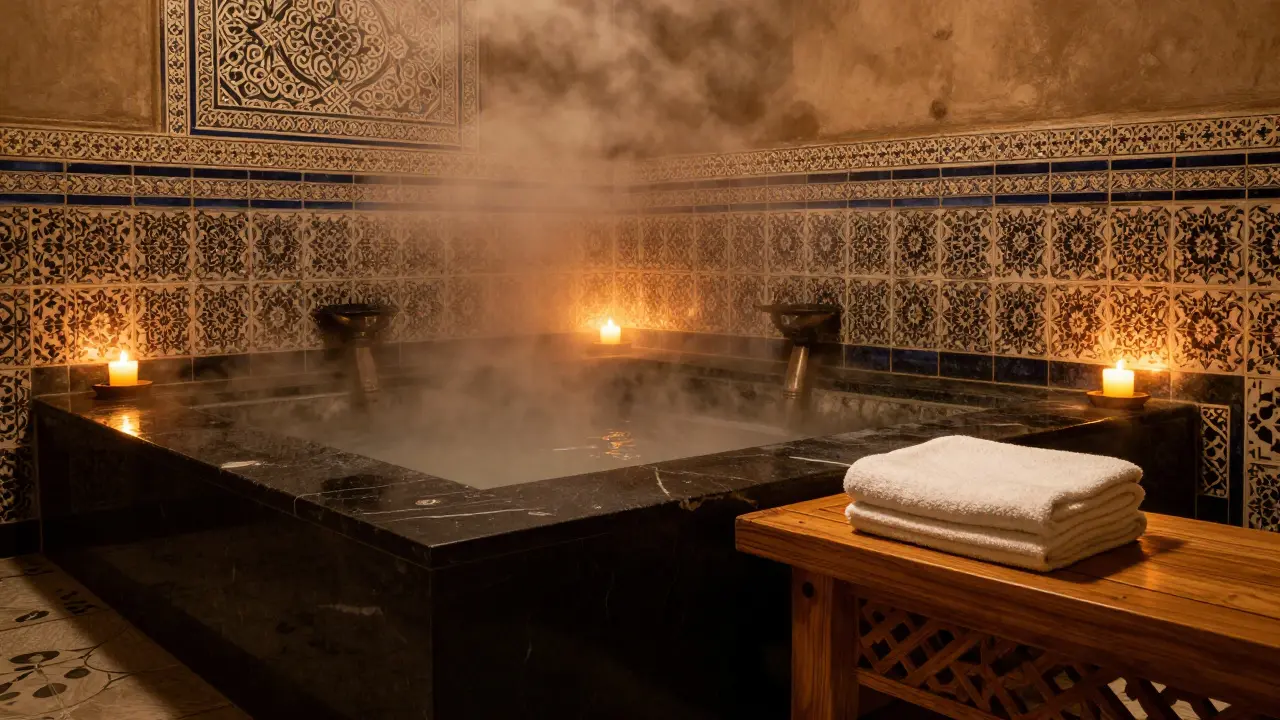
- A traditional hammam interior: curved stone walls, low lighting, water flowing from a central fountain.
Suggested Tables
- Comparison of Hammam vs. Sauna vs. Steam Room
- Key Benefits of Hammam Therapy
- Safety Tips for Hammam Visits
Sharon Bryant
February 2, 2026 AT 15:27This isn't a hammam-it's a steam room with a fancy glove. Stop romanticizing colonial spa culture.
Real hammams don't charge $120.
Patsy Ferreira
February 4, 2026 AT 03:45Okay but like… who even LETS a stranger SCRUB their back with a burlap sack??
And why is everyone acting like this is some ancient spiritual practice when it’s just… hot water and soap??
I’ve been to Turkey. This ain’t it. This is wellness capitalism with a side of exoticism.
You’re paying for vibes, not tradition.
Also, the author says ‘Moroccan, Turkish, or Egyptian’ like they’re interchangeable-nope. They’re not.
And why no mention of gender segregation? That’s a core part of real hammams.
Also, who approved this article? Someone clearly googled ‘hammam’ and called it a day.
Also, the oil? Argan oil is expensive AF. You’re not getting that unless you’re paying $200.
Also, the tea? Mint tea is served in tiny cups, not mugs.
Also, the floors? They’re not marble in real ones. They’re cracked tile.
Also, the staff? They’re not ‘therapists.’ They’re workers.
Also, the ‘reset button’? Bro, you just got scrubbed.
Also, why is this article so long??
Also, I’m done.
William Terry
February 5, 2026 AT 00:34Look I get it you wanna feel fancy but if you're going to call it a hammam at least get the basics right
Real hammams don't have candles and rose petals
They have old ladies yelling in Arabic and kids splashing in the corner
You want peace? Go meditate
You want culture? Go to Istanbul
This is just a spa with a name tag
Peter Jones
February 5, 2026 AT 06:36The article provides a reasonably accurate overview of the structural and sensory components of traditional hammams, particularly in distinguishing them from saunas and steam rooms.
However, the cultural context is diluted in favor of aesthetic appeal.
Authentic hammams, particularly in the Levant and North Africa, are deeply communal spaces with established gender and class norms.
The commercialized versions in the U.S. often strip away the social ritual, reducing it to a solitary wellness product.
That said, the physical benefits of heat, exfoliation, and hydration are well-documented and legitimate.
It's worth noting that the use of natural oils and clays does have empirical dermatological support.
For those seeking therapeutic relief, these adaptations may serve a useful function-even if they aren't culturally authentic.
One suggestion: if you're going to reference Islamic heritage, acknowledge the religious and hygienic roots-not just the aesthetic.
Andrew Cheng
February 5, 2026 AT 14:11I went to a hammam in Toronto last winter and honestly? It changed how I see self-care.
Not because it was fancy-but because it was quiet.
No phone. No noise. Just steam and someone gently scrubbing your back like they’ve done it a thousand times.
I cried. Not because it hurt. Because I hadn’t felt seen in years.
People think it’s about the oil or the marble.
It’s not.
It’s about being held.
Even if it’s by a stranger.
And yeah, it’s expensive.
But if you can swing it once a year? Do it.
It’s not a spa.
It’s a reset.
❤️
Jillian Angus
February 6, 2026 AT 08:27Wait… so you’re telling me a bunch of American spas are using ‘traditional’ techniques but never mentioning that the original hammam was a Muslim religious practice?
And now they’re selling it as ‘wellness’ without any cultural credit?
That’s cultural appropriation with a side of profit.
And who’s training these ‘therapists’? Are they even Muslim? Are they from the region?
Or are they just some girl from Ohio who took a 3-day online course?
And why is the article silent on the fact that in real hammams, women are NEVER scrubbed by men?
And why is there no mention of the historical role of hammams in healing during plagues?
And why is the author pretending this is just about ‘skin health’?
This is a spiritual practice that’s been erased to make it palatable for white wellness bros.
And now they’re charging $150 for it.
That’s not a hammam.
That’s a scam.
Jennie Magalona
February 7, 2026 AT 23:26There’s something sacred in the silence of a real hammam-the way time slows, not because you’re being told to relax, but because the environment demands it.
It’s not about the scrub or the oil-it’s about surrender.
For centuries, people entered these spaces not to look good, but to be unmade and remade.
The ritual isn’t performative.
It’s reparative.
What’s happening in the U.S. isn’t a dilution-it’s a translation.
Some of us need this form of stillness more than we admit.
Yes, the marble is fake.
Yes, the tea is served in a mug.
But if the heat holds you, if the hands know how to press, if the silence doesn’t rush you-then it’s still a hammam.
It’s not about authenticity as preservation.
It’s about authenticity as resonance.
And sometimes, in a world that never stops, that’s enough.
Don’t dismiss it because it’s not Istanbul.
Ask instead: does it hold you?
If yes, then it’s real.
Erika King
February 9, 2026 AT 00:54I went to one in LA and it was the most intense thing I’ve ever done in my life like I thought I was just going to get steamed and maybe a little rub but no they had this giant woman with these rough hands and she just started scraping my skin like I was a potato and I was screaming inside but I didn’t want to be rude so I just lay there and then she poured cold water on me and I thought I was gonna die and then she rubbed this oil all over me and I felt like a newborn baby and then I sat there drinking tea and I just started crying like I hadn’t cried in years and I didn’t even know why and then I left and I felt like I had been unplugged from the matrix and now I go every month and I tell all my friends and I even bought the kese glove online and I scrub myself in the shower and I’m not even kidding I feel like a different person like my skin is alive and my brain is quiet and I don’t even know how to explain it but if you’ve ever felt like you were just going through the motions like you were a robot on autopilot then you need to try this because it’s not just a bath it’s like your soul gets a hug and I know it sounds crazy but it’s true and I’m not even a spa person I used to think this stuff was for rich people who had too much time but now I get it and I wish I had done it sooner and I’m so glad I did and I’m telling everyone I know because I think it’s the most important thing I’ve ever done for myself and I don’t even care if it’s not ‘authentic’ because it worked for me and I’m not going to let anyone take that away from me
Nathan Hume
February 9, 2026 AT 16:38As someone from India where we have similar steam rituals (like the ‘hokh’ in Punjab), I can say this: the essence is universal.
Heat + silence + care = healing.
It doesn’t matter if it’s called hammam, kashmiri steam, or Turkish bath.
The soul recognizes it.
And yes, commercialization happens-but if it brings peace to even one person, that’s a win.
Also, the scrub? It’s not about the glove.
It’s about the rhythm.
One slow stroke. One breath.
That’s the magic.
And if you’re nervous? Go alone.
They’ll treat you like family.
Trust me.
🙂
Dennis Collins
February 11, 2026 AT 00:20Stop. Just stop. This isn't a hammam. It's a spa. A fancy spa. With a name. And a price tag. And a marketing team. And a fake marble floor. And a therapist who learned on YouTube. And a mint tea that's not even real mint. And a kese glove that's probably made in China. And a 'ritual' that lasts 60 minutes because that's the billing cycle. And a 'reset button' that costs $120. And a 'cultural ambassador' who doesn't know the difference between Moroccan and Turkish. And a 'soul-soothing experience' that's just a steam room with extra steps. And a 'traditional practice' that's been watered down to sell more candles. And a 'deep cleansing' that's just exfoliation with a side of oxytocin. And a 'sacred process' that's just a 90-minute massage with a side of cultural appropriation. And a 'quiet ritual' that's played on a Bluetooth speaker. And a 'slow, intentional' experience that's scheduled in 15-minute increments. And a 'real hammam' that's a lie. And a 'genuine wellness practice' that's a scam. And a 'beautiful tradition' that's been sold to the highest bidder. And a 'spiritual reset' that's just a really expensive bath. And I'm done.