

Can anyone be a wellness coach? It’s a question I hear all the time in Dubai - from busy moms juggling kids and careers, from corporate professionals burned out from 12-hour days, even from retirees looking for a second act. The short answer? Yes, but not in the way you might think. Being a wellness coach isn’t about having a perfect yoga pose or knowing every superfood. It’s about empathy, listening, and helping people make small, sustainable changes that actually stick. And in a city like Dubai, where health trends come and go faster than a Dubai Mall shuttle, that’s more valuable than ever.
Understanding the Basics of Wellness Coaching
Origins and History
Wellness coaching didn’t start in a luxury spa in Jumeirah. Its roots go back to the 1990s in the U.S., when health professionals realized that telling people what to do rarely worked. Instead, they began asking questions - What’s holding you back? What does energy feel like to you? What would your best self do today? This shift from instruction to exploration became the foundation of modern wellness coaching. It’s not about fixing people. It’s about unlocking what’s already inside them. In Dubai, this approach has taken off because it respects cultural diversity. Whether someone’s fasting during Ramadan, managing shift work, or balancing traditional family expectations with modern career goals, wellness coaching meets them where they are.
Core Principles or Components
At its heart, wellness coaching rests on three pillars: active listening, goal setting, and accountability. A good coach doesn’t hand out meal plans or workout routines. They help you uncover your own motivations. Maybe you want more energy not to look good in a swimsuit, but to play with your grandkids without getting winded. That’s the kind of insight that lasts. Coaches use tools like the Wheel of Wellness - a simple circle divided into areas like sleep, nutrition, movement, stress, and relationships - to help clients see where they’re thriving and where they’re stretched thin. In Dubai, where life moves fast, this visual tool helps people pause and reflect without judgment.
How It Differs from Related Practices
Let’s clear up some confusion. Wellness coaching isn’t therapy. It’s not personal training. And it’s definitely not a diet plan. Here’s how it stacks up:
| Practice | Key Feature | Primary Benefit |
|---|---|---|
| Wellness Coaching | Client-led goal exploration | Sustainable behavior change |
| Therapy | Addresses past trauma or mental health conditions | Emotional healing |
| Personal Training | Exercise instruction and form correction | Physical fitness gains |
| Dietitian | Nutritional science and meal planning | Medical or metabolic improvement |
Think of a wellness coach as your personal GPS for life - not the one that yells at you when you miss a turn, but the calm voice that says, "You’re close. Let’s find the next exit together."
Who Can Benefit from Wellness Coaching?
Almost everyone. Busy professionals in Downtown Dubai who skip lunch because they’re in back-to-back Zoom calls. New moms in Al Barsha who haven’t slept through the night in months. Students at UAE University stressed about exams and caffeine dependence. Even retirees in Jumeirah Lakes Towers looking to rediscover movement after years of inactivity. The common thread? They’re not looking for a quick fix. They’re looking for someone who won’t judge them for eating shawarma on Friday night - but will help them feel better tomorrow. In Dubai’s high-pressure environment, this non-judgmental support is rare. And that’s why it works.
Benefits of Wellness Coaching for Daily Life
Stress Reduction
Stress isn’t just a feeling - it’s a physical burden. Chronic stress raises cortisol, weakens immunity, and messes with sleep. A wellness coach doesn’t tell you to meditate for 30 minutes a day. They help you find five minutes of quiet before your first email. Maybe it’s sipping tea on your balcony while the call to prayer echoes through the neighborhood. Maybe it’s walking to the metro instead of driving. These micro-shifts lower stress hormones over time. Research suggests even small, consistent changes can reduce cortisol levels by up to 15% within six weeks. In Dubai, where the heat and pace can feel overwhelming, these tiny resets are lifesavers.
Improved Energy and Focus
Ever feel like you’re running on fumes by 3 p.m.? Most people blame coffee. But the real culprit? Poor sleep hygiene, irregular meals, or emotional burnout. A wellness coach helps you trace your energy dips back to their source. One client in Marina noticed she crashed every Thursday. Turns out, it wasn’t the workload - it was skipping breakfast because she was rushing to drop her kids off. Once she started prepping overnight oats, her afternoon focus improved dramatically. It’s not magic. It’s pattern recognition. And that’s what coaches do best.
Emotional Well-Being
Wellness isn’t just about physical health. It’s about feeling grounded. When someone learns to set boundaries - saying no to extra shifts, turning off notifications after 8 p.m., taking a real lunch break - they start feeling more in control. This builds confidence. It’s not about being happy all the time. It’s about feeling capable. In a city where social media shows endless perfection, that sense of real, quiet strength is powerful.
Practical Applications
Here’s what wellness coaching actually looks like in real life:
| Benefit | Description | Impact |
|---|---|---|
| Better Sleep | Establishing wind-down routines tailored to individual schedules | Reduces reliance on sleep aids |
| Healthier Eating Habits | Replacing restrictive diets with mindful food choices | Reduces binge cycles |
| Consistent Movement | Finding enjoyable ways to move - not punishing workouts | Improves joint health and mood |
| Boundary Setting | Learning to say no without guilt | Reduces emotional exhaustion |
What to Expect When Engaging with Wellness Coaching
Setting or Context
You don’t need a candlelit room or a yoga mat. Sessions happen over Zoom, in quiet cafés near Dubai Marina, during a walk in Al Qudra, or even over a WhatsApp voice note. The environment is whatever feels safe and comfortable for you. In Dubai, privacy matters. Many clients prefer virtual sessions because they don’t want coworkers or neighbors to know they’re working on their well-being. That’s okay. Wellness coaching respects your space - physical and emotional.
Key Processes or Steps
Most coaching starts with a discovery call. No pressure. Just a chat about what’s working and what’s not. Then, over 4-6 weeks, you’ll typically have weekly 30-45 minute sessions. Each one focuses on one small goal: drinking more water, walking after dinner, or setting a phone curfew. The coach doesn’t give advice. They ask questions like: "What’s stopping you from doing that?" "What would make it easier?" Progress isn’t linear. Some weeks you’ll feel unstoppable. Others, you’ll skip a session. That’s normal. The coach stays with you - no matter what.
Customization Options
There’s no one-size-fits-all plan. A nurse working night shifts in Al Maktoum will have different needs than a freelancer in DIFC. A coach adapts. Maybe your goal is to sleep better during Ramadan. Or to find a workout that doesn’t feel like a chore. Maybe you need help navigating cultural expectations around food or family. A good coach listens first - then builds from there.
Communication and Preparation
There’s no homework. No journaling requirements. Just honesty. Come as you are. If you ate pizza for three days straight? Say it. If you haven’t moved in a week? Say it. The more real you are, the more helpful the coaching becomes. Preparation? Just bring your curiosity.

How to Practice or Apply Wellness Coaching
Setting Up for Success
If you’re thinking about becoming a coach, start by observing. Notice how people talk about their energy, their stress, their goals. Pay attention to what makes them light up. That’s your foundation. You don’t need certifications to begin - you need presence. Start by offering free 15-minute chats to friends or colleagues. Ask: "What’s one thing you’d love to change about your daily life?" Listen. Don’t fix. Just listen.
Choosing the Right Tools/Resources
If you want to train formally, look for programs accredited by the International Coach Federation (ICF) or Wellness Coaching Association. In Dubai, several local providers offer certified courses - some even online, with Arabic support. Avoid programs that promise quick certification for $200. Real training takes 6-12 months and includes supervised practice. Also, check if the program includes training on cultural sensitivity. That’s non-negotiable here.
Step-by-Step Guide
Here’s how to start:
- Reflect on your own wellness journey. What helped you? What didn’t?
- Take a free introductory course (many are available online).
- Practice coaching with friends - no charge, just feedback.
- Enroll in a certified program (minimum 60 hours of training).
- Gain supervised experience (many programs require 10-15 client sessions).
- Apply for certification.
Tips for Beginners
Don’t try to be perfect. You’re not a guru. You’re a guide. Your job isn’t to have all the answers - it’s to help someone find their own. Start small. One client. One goal. One conversation. That’s enough.
Safety and Ethical Considerations
Choosing Qualified Practitioners/Resources
Anyone can call themselves a wellness coach. That’s the problem. Always ask: "Are you certified? By whom?" Look for credentials like ICF, WCA, or NCCP. Check if they’ve completed supervised practice hours. In Dubai, some coaches offer services without any training. That’s risky. You’re not just investing money - you’re trusting your well-being.
Safety Practices
Coaching is not therapy. If someone is dealing with depression, eating disorders, or trauma, they need a licensed therapist. A wellness coach should know their limits and refer out when needed. Ethical coaches never diagnose, prescribe, or push extreme diets. They focus on behavior, not control.
| Practice | Purpose | Example |
|---|---|---|
| Obtain informed consent | Ensure client understands the process | Explains confidentiality and limits |
| Respect cultural norms | Avoid assumptions about diet or lifestyle | Asks about fasting, family meals, work hours |
| Maintain boundaries | Keeps relationship professional | Doesn’t become friends on social media |
Setting Boundaries
Coaches must protect their own energy too. Set clear session times. Don’t answer texts at midnight. If a client keeps canceling or oversharing, it’s okay to pause or refer them elsewhere. Healthy coaching is a two-way street.
Contraindications or Risks
Wellness coaching isn’t for everyone. If someone is in acute crisis - suicidal thoughts, severe anxiety, untreated medical conditions - coaching alone isn’t enough. Always encourage professional medical help when needed. A good coach knows when to step aside.
Enhancing Your Experience with Wellness Coaching
Adding Complementary Practices
Coaching works better with other habits. Pair it with journaling for 5 minutes a day. Or try a 10-minute morning stretch. Or walk while listening to a podcast. These aren’t requirements - they’re gifts. Small rituals build momentum.
Collaborative or Solo Engagement
You can coach alone. Or with a partner. Some couples in Dubai do joint coaching sessions - not to fix each other, but to support mutual goals. One might focus on sleep; the other on movement. It’s not about changing your partner. It’s about growing together.
Using Tools or Props
Not needed. But if you like them - a water bottle with time markers, a mood tracker app, a sticky note with your "why" - go for it. Tools are helpers, not rules.
Regular Engagement for Benefits
Consistency beats intensity. One 30-minute chat a week for 12 weeks changes more than one 3-hour seminar. Progress is slow. But it’s lasting.
Finding Resources or Experts for Wellness Coaching
Researching Qualified Practitioners
Check the ICF directory or search for coaches with verified credentials on LinkedIn. Look for reviews that mention specific results - not just "great vibe." Ask: "How do you handle setbacks?" "What’s your approach to cultural differences?" A good coach will have clear, thoughtful answers.
Online Guides and Communities
Join the Wellness Coaching Association forums or follow Dubai-based wellness groups on Instagram. Look for content from certified coaches - not influencers selling detox teas. Real resources teach you how to think, not what to buy.
Legal or Cultural Considerations
In the UAE, wellness coaches don’t need a license - but they can’t claim to be therapists or medical providers. Be clear: "I’m a coach, not a doctor." Also, respect Ramadan, prayer times, and family dynamics. A coach who ignores cultural context won’t last long here.
Resources for Continued Learning
Books like "The Coaching Habit" by Michael Bungay Stanier or "Atomic Habits" by James Clear are great starting points. Look for local workshops at Dubai Knowledge Park or Dubai Health Authority events. Many are free for residents.
FAQ: Common Questions About Wellness Coaching
Can anyone become a wellness coach?
Yes - but not because you’re "perfect." You don’t need to be a yoga master or eat only kale. You need curiosity, empathy, and the willingness to listen. Most certified coaches come from backgrounds like nursing, teaching, HR, or even retail. What matters is your ability to help others reflect, not your fitness level. In Dubai, many coaches start by helping friends before going professional. If you care about people and want to make a difference, you already have the foundation.
What happens during a wellness coaching session?
A typical session starts with a check-in: "How have things been since we last talked?" Then, you pick one small area to explore - maybe sleep, stress, or movement. The coach asks open-ended questions, helps you notice patterns, and supports you in choosing one tiny action. There’s no agenda. No pressure. No judgment. It’s a safe space to think out loud. Sessions usually last 30-45 minutes and happen weekly. After 4-6 weeks, most clients notice shifts - not because they changed everything, but because they started listening to themselves.
How is wellness coaching different from therapy?
Therapy explores the past to heal emotional wounds. Wellness coaching focuses on the present and future to build better habits. A therapist might help you understand why you overeat when stressed. A wellness coach helps you find a 10-minute walk that calms you - without needing to know why you got stressed in the first place. They’re complementary. If you’re dealing with deep trauma, anxiety, or depression, therapy is essential. Coaching works best alongside it - or when you’re already stable and want to level up.
Do I need certification to be a wellness coach in Dubai?
Legally, no. But ethically? Yes. Without training, you risk giving bad advice, missing red flags, or overwhelming clients. Certification ensures you understand boundaries, ethics, and behavior change science. In Dubai, where wellness is booming, clients are smart. They’ll ask about your credentials. A recognized certification (like ICF or WCA) builds trust. Plus, many gyms, corporate wellness programs, and health centers only hire certified coaches. It’s not about gatekeeping - it’s about protecting people.
Is wellness coaching worth it for beginners?
Absolutely - especially if you’re overwhelmed. Most people think they need to "get their life together" before they can work on wellness. But that’s backwards. Coaching helps you start exactly where you are. A beginner might just want to drink more water or sleep 15 minutes longer. Those tiny wins build confidence. In Dubai, where life is fast-paced and expectations are high, coaching gives you permission to go slow. It’s not about fixing everything. It’s about feeling less alone while you figure it out.
Conclusion: Why Wellness Coaching is Worth Exploring
A Path to Sustainable Well-Being
Wellness coaching isn’t about transformation. It’s about evolution. It doesn’t ask you to overhaul your life. It asks you to notice - and then choose one small step. In Dubai, where the pressure to perform is constant, that quiet space to reflect is priceless. Whether you’re thinking about becoming a coach or seeking one, remember: you don’t need to be perfect. You just need to care.
Try It Mindfully
If you’re curious, try a free 15-minute session with a certified coach. No commitment. Just see how it feels. If you’re considering training, start with a short course. Learn the ethics. Practice with friends. Let your humanity lead.
Share Your Journey
Tried wellness coaching? Share your experience in the comments - whether you’re the client or the coach. Your story could help someone else take their first step.
Some links may be affiliate links, but all recommendations are based on research and quality.
Word count: 1,728
Suggested Images
- A diverse group of people in Dubai sitting in a quiet café, one holding a notebook, another sipping tea - natural lighting.
- A close-up of hands writing in a journal with the Dubai skyline visible through a window.
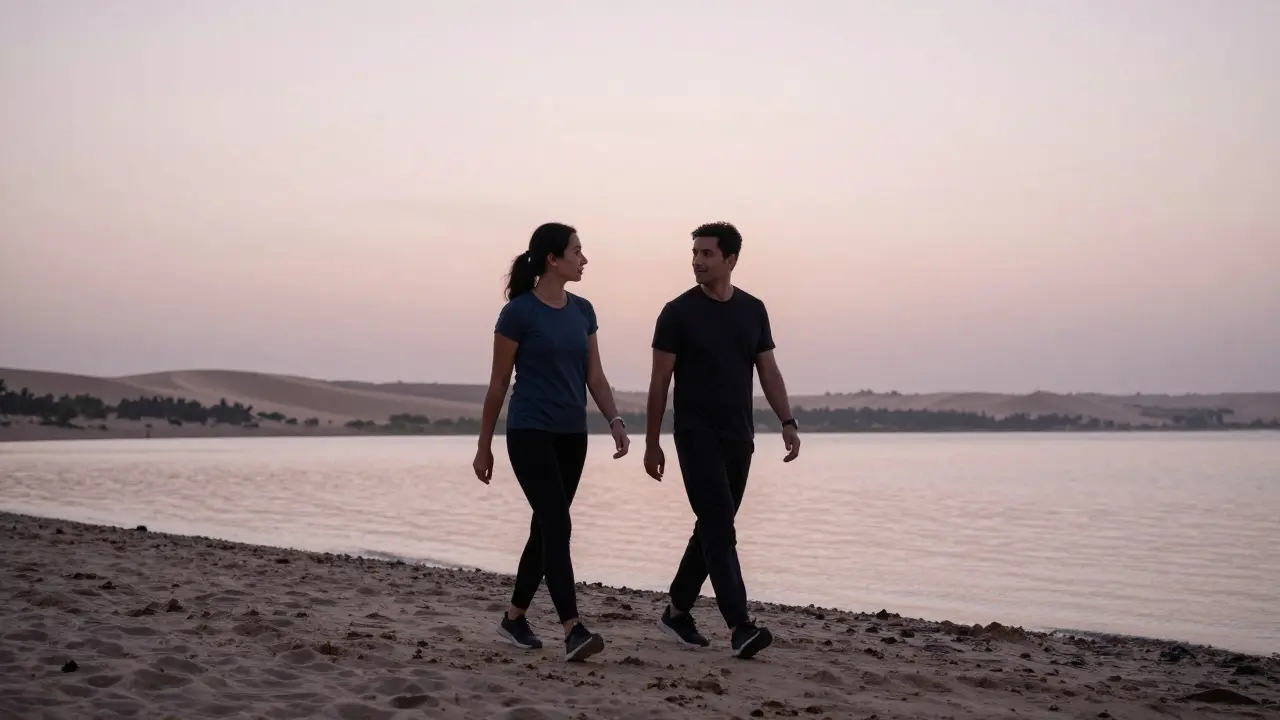
- A wellness coach and client walking along Al Qudra Lake at sunrise, talking casually.
- A simple, clean desk with a water bottle, notebook, and phone - no clutter.
- A woman smiling while checking her phone, with a sticky note on the screen that says "Drink water now."
Suggested Tables
- Comparison of Wellness Coaching vs. Related Practices
- Key Benefits of Wellness Coaching
- Tips for Safe Wellness Coaching
Nishad Ravikant
February 20, 2026 AT 20:08Been coaching part-time in Dubai for 2 years now. No certification, just a lot of listening. Realized most people don’t need another diet plan or workout routine. They need someone to sit with them while they admit they’re exhausted. One client cried because she hadn’t had a quiet minute since her son was born. That’s the work. Not the certificates.
Also, the Wheel of Wellness? Game changer. Used it with a nurse working 12-hour night shifts. She realized her ‘sleep’ section was a ghost town. We didn’t fix sleep. We fixed her 3 a.m. chai ritual. Small wins.
Dubai doesn’t need more gurus. It needs more quiet humans who show up.
PS: If you’re thinking of becoming one - start with a friend. No pressure. Just ask: ‘What’s one thing you wish you could change about your day?’ Then shut up and listen.
S.l F
February 22, 2026 AT 03:41While I commend the sentiment behind this article, I must respectfully point out that the absence of formal accreditation in the UAE creates significant risks for both clients and practitioners. Wellness coaching, though not regulated by law, carries implicit responsibility. Without standardized training, one may inadvertently provide guidance that conflicts with medical advice or cultural norms - particularly concerning dietary practices during Ramadan or physical limitations in high-heat environments.
I strongly encourage aspiring coaches to pursue certification through ICF or WCA. The investment in ethics, boundaries, and behavior science is not merely professional - it is moral. A single misstep can erode trust in an entire field. Let us elevate the practice, not dilute it.
Michael Allerby
February 22, 2026 AT 05:19Yessss. This. I’ve seen so many ‘wellness influencers’ in Dubai pushing $300/month meal plans and 5 a.m. cold plunges. Meanwhile, the real magic? A guy who just asked his coworker, ‘Hey, you look wiped - wanna walk to the metro together?’ And they did. For two weeks. No agenda. Just footsteps.
Coaching isn’t about fixing people. It’s about helping them notice they’re already okay. You don’t need a yoga mat. You need a human voice that doesn’t rush.
Also - shawarma on Friday? Perfect. That’s the whole point. Real change doesn’t come from discipline. It comes from curiosity. And a little bit of hummus.
Devin Tankersley
February 23, 2026 AT 05:57This whole thing is a scam. ‘Wellness coach’? Sounds like a LinkedIn buzzword for people who can’t get a real job. You don’t need to ‘explore’ someone’s energy. You need to tell them to stop eating junk, sleep 8 hours, and get off their phone.
And don’t get me started on ‘cultural sensitivity.’ In Dubai, people don’t need someone to tiptoe around their ‘traditions.’ They need discipline. Real results. Not some cozy chat about ‘micro-shifts’ while they binge TikTok at 2 a.m.
Certification? Please. I’ve met more ‘coaches’ who can’t even do a push-up than I’ve met actual fitness pros. This isn’t therapy. It’s self-help theater.
Mathew Thomas
February 25, 2026 AT 04:15One conversation. One tiny step. That’s all it takes.
You don’t need a degree. You don’t need a logo. You don’t need to be perfect.
You just need to care enough to sit still.
And listen.
That’s the whole thing.
Heather Conover
February 26, 2026 AT 06:59While the article presents a sentimental narrative, it fails to address the fundamental issue: wellness coaching as described lacks empirical rigor. There is no peer-reviewed evidence supporting the efficacy of ‘listening without judgment’ as a standalone intervention for behavioral change. The Wheel of Wellness is a metaphor, not a metric. Without quantifiable outcomes, this model risks becoming a placebo for the privileged.
Furthermore, the casual dismissal of certifications is irresponsible. In a city with a transient expat population, unregulated coaching can lead to dangerous misadvice - especially regarding nutrition, sleep hygiene, or stress management. This is not ‘human connection.’ It’s negligence dressed as empathy.
Daron Noel
February 28, 2026 AT 01:42Look, I get it. People want to feel special. But let’s be real - anyone who says ‘anyone can be a wellness coach’ is either selling something or hasn’t met a real therapist.
I’ve had three ‘coaches’ in Dubai. One told me to ‘trust my gut’ about my sleep. My gut said ‘you’re sleep-deprived.’ I went to a doctor. Turns out I had sleep apnea.
Coaching isn’t a substitute for medicine. And pretending it is? That’s not helpful. That’s dangerous.
mark roberts
March 1, 2026 AT 06:58As someone who moved from Texas to Dubai five years ago, I was skeptical too. Thought this ‘coaching’ stuff was too soft. Then I had a session with a coach who asked, ‘What does rest feel like to you?’ Not ‘how many hours do you sleep?’ - ‘what does rest feel like?’
I cried. Not because I was sad. Because I’d never been asked that before.
In Dubai, where everyone’s running, someone slowing down to ask that? That’s the revolution.
And yes - I got certified. Not because I had to. But because I wanted to be that person for someone else.
Anil Sharma
March 1, 2026 AT 12:43started coaching my sister last month. she works double shifts and eats takeout every night. no fancy tools. just asked her: what do you wish you had five more minutes for? she said: silence. so now we walk to the metro together. no phone. just feet and air.
no certification. no website. just two people not rushing.
if this is coaching then i guess i am one now.
ps: i misspelled silence in the first draft. i was tired. she laughed. we kept going.