Does cupping break up cellulite? It’s a question many people ask after seeing glowing social media posts or spotting cupping marks at their local spa. The short answer? No - cupping doesn’t permanently break up cellulite. But it might temporarily improve how it looks. Let’s cut through the noise and look at what cupping actually does, what science says, and why so many still swear by it.
Understanding the Basics of Cupping Therapy
Origins and History
Cupping therapy dates back thousands of years. Ancient Egyptians, Greeks, and Chinese all used cups made from bamboo, horn, or ceramic to draw blood or fluids to the surface of the skin. In traditional Chinese medicine, it was believed to balance qi - the body’s energy flow - by removing blockages. Today, modern cupping often uses silicone or glass cups with suction created by hand pumps or heat. It’s been adopted globally, especially in wellness centers from Dubai to Berlin, not just for pain relief but for skin texture and circulation.
Core Principles or Components
Cupping works by creating negative pressure on the skin. This pulls tissue upward, increasing blood flow to the area. The suction can cause small capillaries to break, leading to those circular bruises you see. This isn’t damage - it’s a controlled inflammatory response meant to stimulate healing. The increased circulation brings oxygen and nutrients to the area, which may help reduce swelling and loosen tight connective tissue. It’s not magic, but it’s a physical stimulus that triggers your body’s natural repair systems.
How It Differs from Related Practices
People often confuse cupping with massage, dry needling, or lymphatic drainage. Here’s how it stacks up:
| Practice | Key Feature | Primary Benefit |
|---|---|---|
| Cupping | Suction pulls skin upward | Increases local blood flow, loosens fascia |
| Massage | Pressure applied through hands | Relaxes muscles, reduces tension |
| Lymphatic Drainage | Light, rhythmic strokes | Reduces fluid retention, supports detox |
Unlike massage, cupping doesn’t compress tissue - it lifts it. Unlike lymphatic drainage, it doesn’t target the lymphatic system directly. That’s why results vary.
Who Can Benefit from Cupping?
Cupping isn’t for everyone, but it can help people with tight muscles, chronic tension, or poor circulation. Those with cellulite might notice a temporary smoothing effect after a session - especially if the skin feels tight or stiff. It’s not a weight-loss tool, nor is it meant to reshape the body. But if you’re looking for a non-invasive way to improve skin texture and feel more relaxed, cupping can fit into a broader wellness routine.
Benefits of Cupping Therapy for Skin and Circulation
Improved Blood Flow
When the cups pull the skin, they open up tiny blood vessels. This rush of circulation brings more oxygen and nutrients to the skin and underlying tissue. Over time, this can help improve skin tone and elasticity. Think of it like giving your skin a gentle workout - it’s not changing fat cells, but it’s helping them look healthier.
Temporary Reduction in Skin Dimpling
Cellulite forms when fat pushes through connective tissue, creating that dimpled look. Cupping doesn’t destroy fat - but it can loosen the fibrous bands that pull the skin down. When those bands relax, the skin may appear smoother for a few days. Many clients in Dubai spas report seeing a noticeable difference right after treatment. It’s subtle, short-term, and best when combined with other habits.
Reduced Fluid Retention
Fluid buildup under the skin can make cellulite look worse. Cupping helps move stagnant fluid out of the area, reducing puffiness. This is especially helpful after long flights or sedentary days. A 2021 review in the Journal of Bodywork and Movement Therapies noted that cupping improved skin elasticity and reduced edema in participants. That’s not a cure - but it’s a real, measurable effect.
Stress Reduction and Relaxation
Let’s not forget: cupping feels good. The gentle pull on the skin activates the parasympathetic nervous system, which helps your body shift into rest-and-repair mode. Lower stress means lower cortisol, which can indirectly affect how fat is stored and how skin looks. A calm body is often a more balanced body.
What to Expect When Engaging with Cupping Therapy
Setting or Context
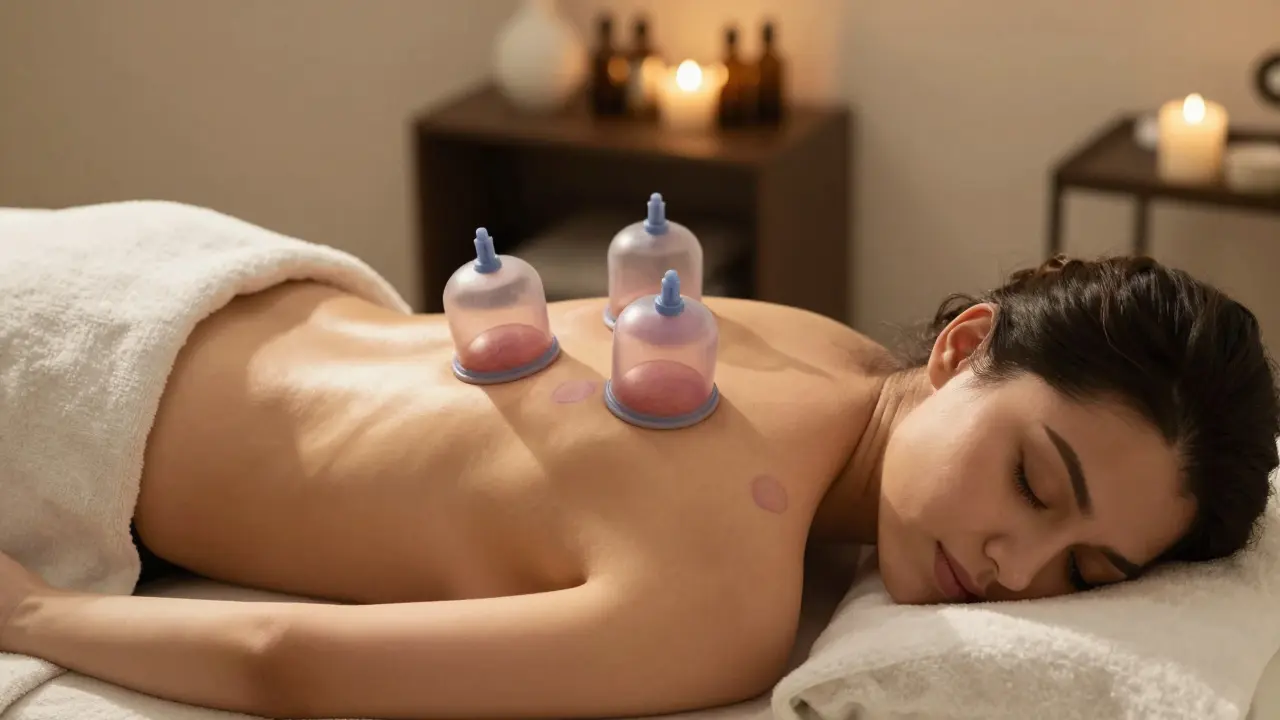
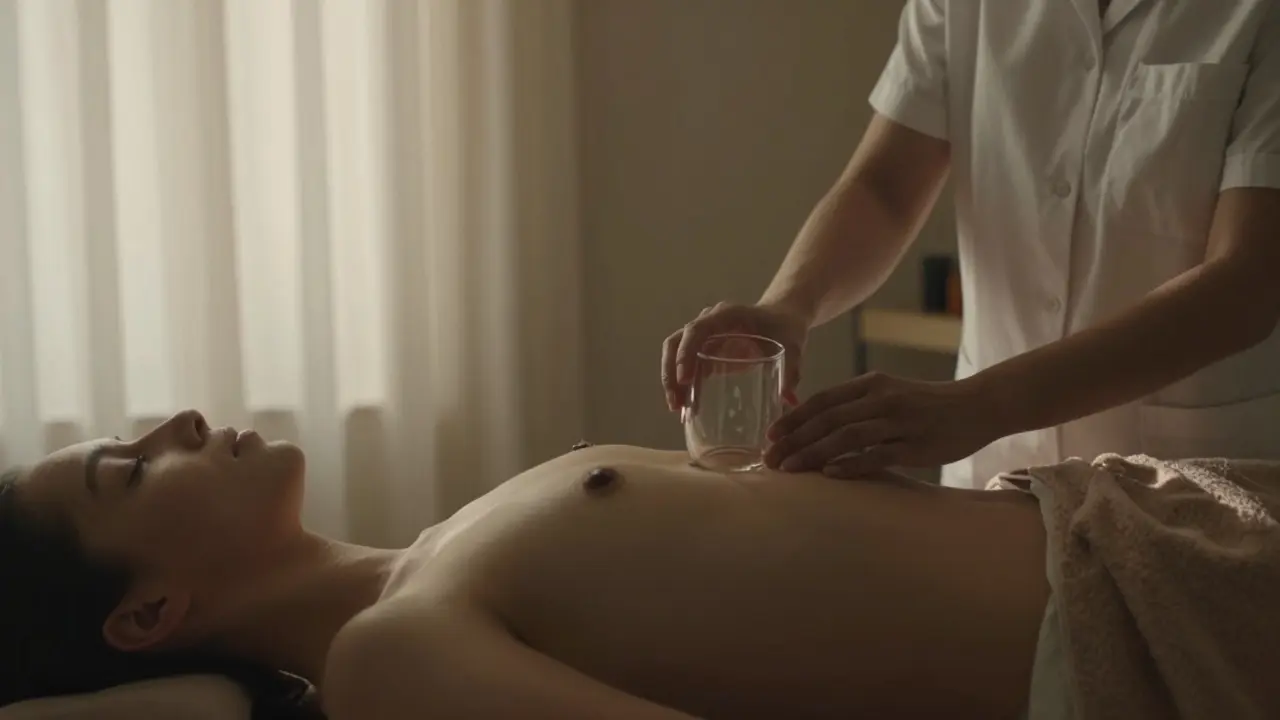
In Dubai, most cupping sessions happen in quiet, dimly lit spa rooms with soft music and warm towels. The therapist will clean the skin, apply a light oil, then place the cups on targeted areas - usually thighs, hips, or buttocks. You’ll feel a gentle pulling sensation, like a mild vacuum. It shouldn’t hurt. If it does, speak up. Sessions last 15 to 30 minutes.
Key Processes or Steps
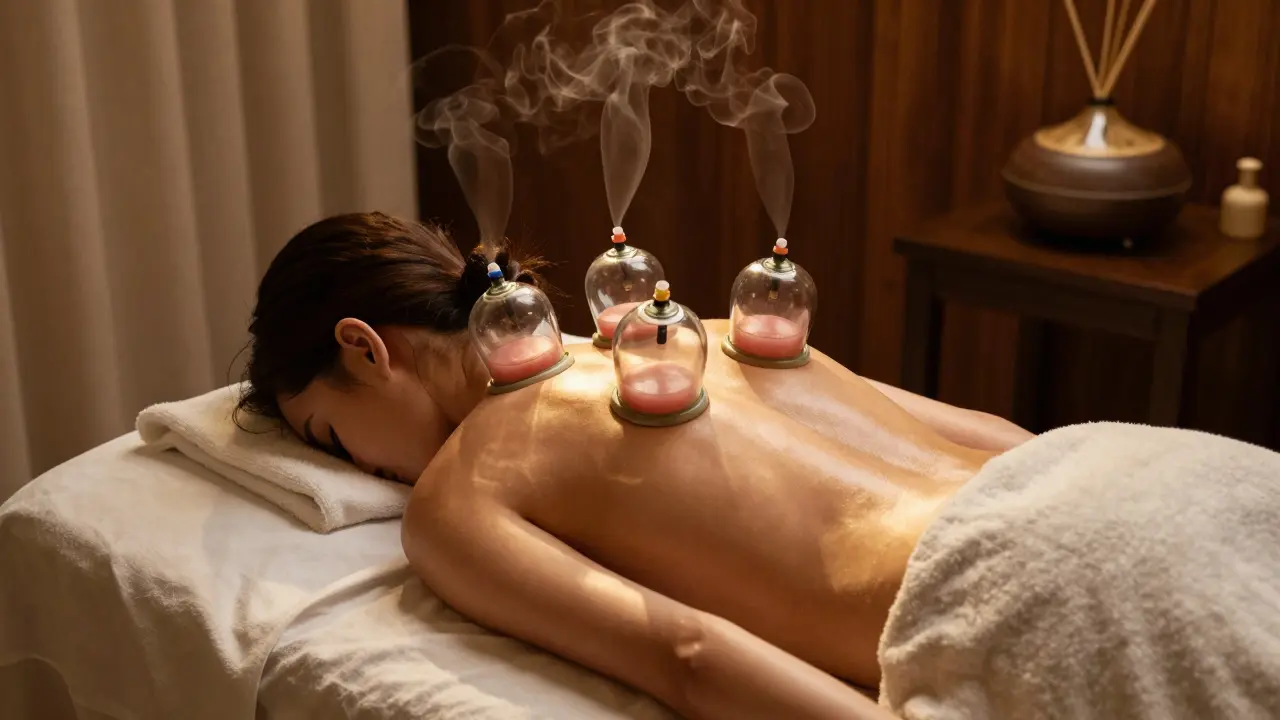
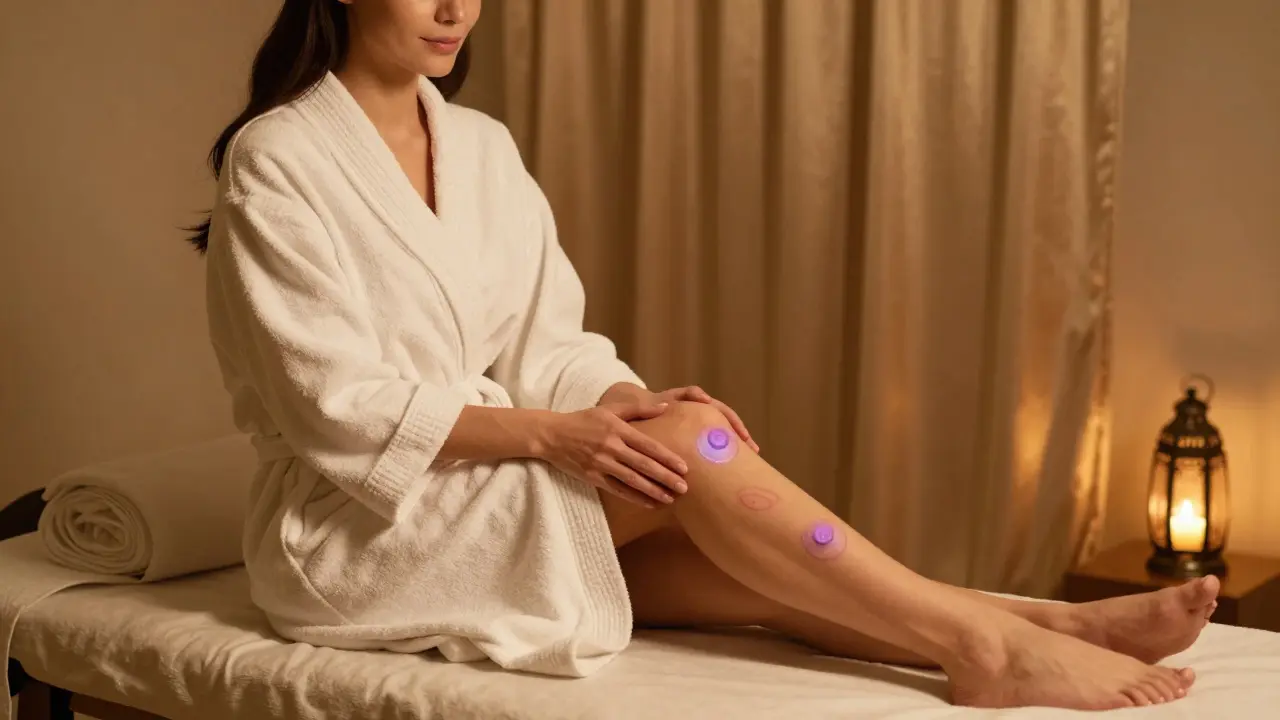
First, the therapist assesses your skin and goals. Then, they apply cups using either heat (fire cupping) or a hand pump (modern cupping). The cups stay on for 5-10 minutes. Sometimes they’re moved slowly over the skin - this is called sliding cupping. After removal, you may see red or purple marks. These fade in 3-7 days. No needles, no lasers, no downtime.
Customization Options
Cupping can be adjusted for intensity. Light suction for sensitive skin, stronger for tight muscle areas. Some spas combine it with dry brushing or infrared heat. Others add essential oils for aromatherapy. In Dubai, many treatments include a post-session hydration and cooling massage to soothe the area.
Communication and Preparation
Before your session, drink water. Avoid heavy meals or caffeine. Tell your therapist if you’re on blood thinners, have bruising disorders, or are pregnant. Afterward, avoid hot showers or saunas for 6-8 hours - your skin is more sensitive. Wear loose clothing. And yes - those marks are normal. They’re not bruises from injury. They’re signs your body responded.
How to Practice or Apply Cupping
Setting Up for Success
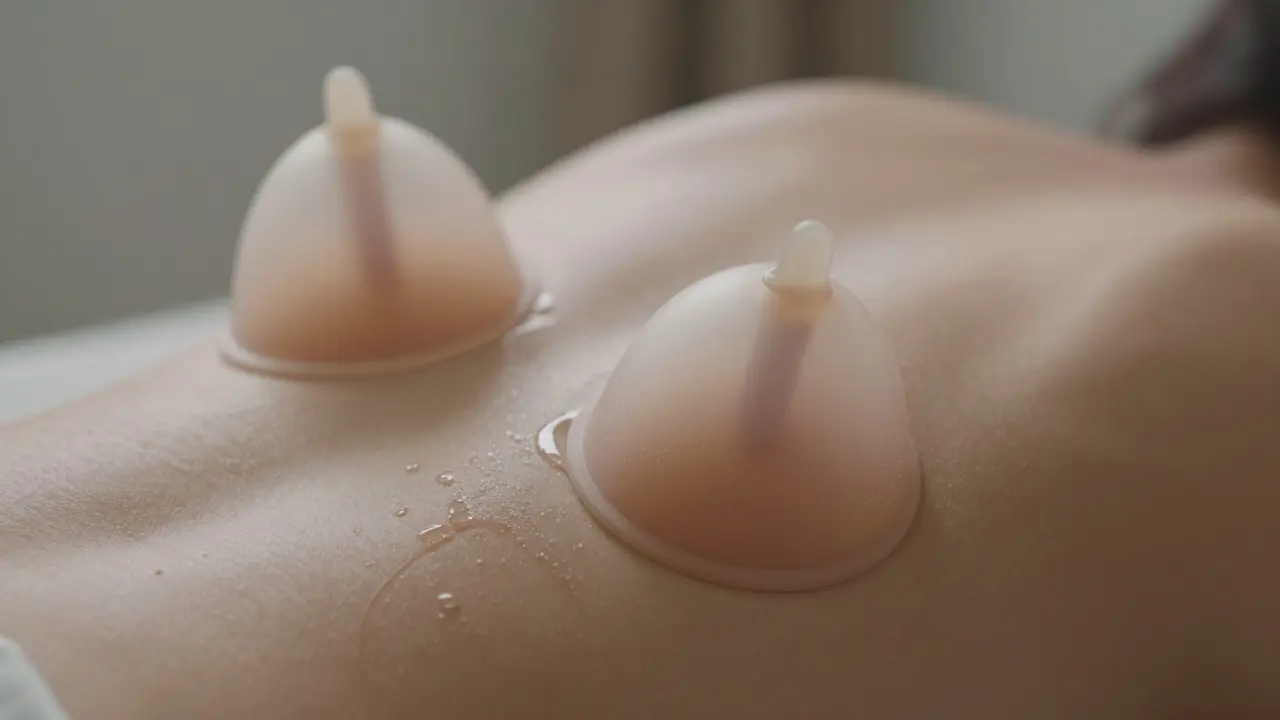
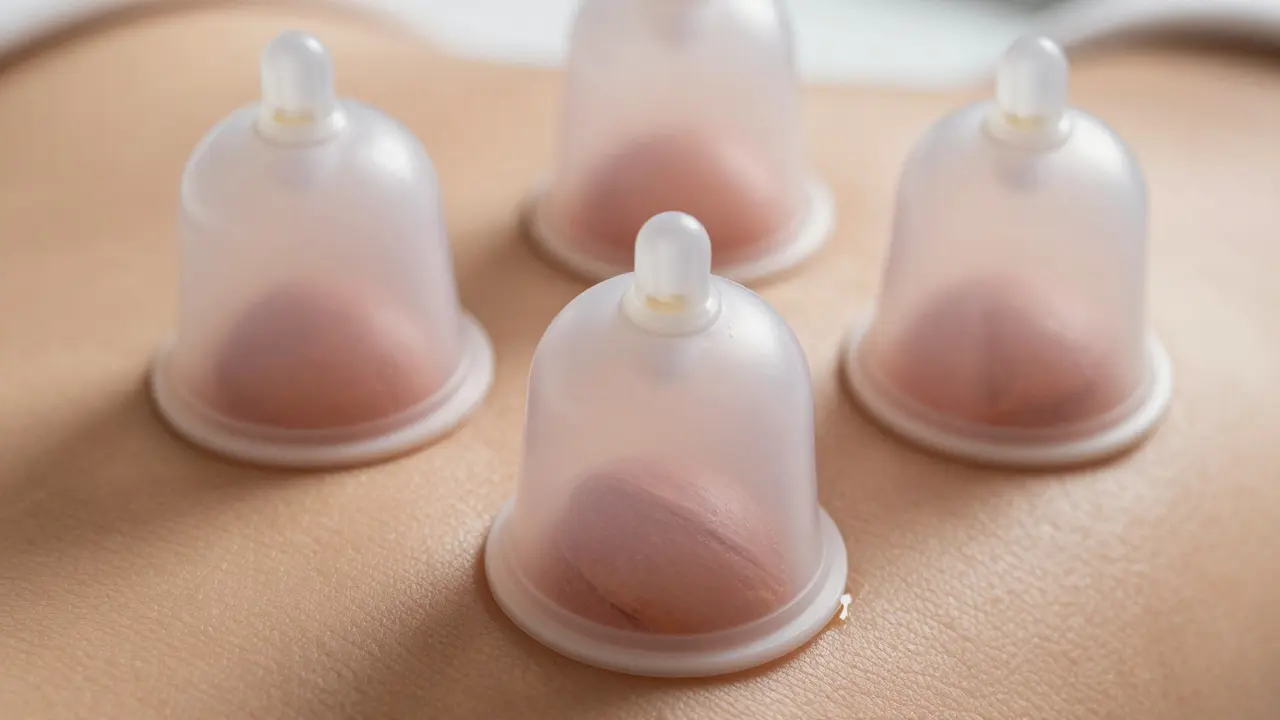
If you’re trying cupping at home, start with silicone cups. They’re safe, easy to use, and come with a manual pump. Clean your skin first. Apply a thin layer of massage oil. Start with light suction - hold for 3 minutes max. Don’t use on broken skin, varicose veins, or directly over bones.
Choosing the Right Tools
For beginners, go with medical-grade silicone cups. Avoid cheap plastic ones - they crack or leak. Look for brands used by licensed therapists. In Dubai, many spas use glass cups with rubber pumps. These give better control. Never use fire cupping at home - it’s risky without training.
Step-by-Step Guide
- Wash and dry the area (thighs, hips, or back).
- Apply a light oil or lotion.
- Place the cup on the skin and squeeze the pump to create suction.
- Leave it for 5-7 minutes.
- Release the suction slowly by pressing the edge of the cup.
- Repeat on 2-3 areas, max.
- Hydrate after and avoid heat for 6 hours.
Tips for Beginners
Don’t overdo it. One session a week is enough. First-time users often feel a tingling or warmth - that’s normal. If you feel sharp pain, stop. The marks? They’re temporary. Most fade in under a week. And remember: cupping won’t change your body shape. It’s about texture, not transformation.
Safety and Ethical Considerations
Choosing Qualified Practitioners
Always go to a licensed spa or therapist trained in cupping. In Dubai, look for clinics registered with the Dubai Health Authority. Ask about their training - did they study traditional Chinese medicine or modern soft-tissue therapy? Avoid street vendors or unlicensed “wellness” pop-ups.
Safety Practices
Here’s what keeps cupping safe:
| Practice | Purpose | Example |
|---|---|---|
| Skin disinfection | Prevent infection | Wipe area with alcohol before applying cups |
| Hydration | Support circulation | Drink 1-2 glasses of water before and after |
| Time limits | Avoid tissue damage | Never leave cups on longer than 10 minutes |
Setting Boundaries
You’re in control. If the suction feels too strong, say so. If you’re uncomfortable with the therapist’s technique, ask for adjustments. No one should pressure you into a treatment. Your comfort matters more than the marks you get.
Contraindications or Risks
Cupping isn’t for you if you:
- Have bleeding disorders or take blood thinners
- Are pregnant (especially on the abdomen or lower back)
- Have open wounds, eczema, or psoriasis
- Have a pacemaker or implanted medical device
- Are undergoing cancer treatment
Always consult your doctor if you’re unsure. It’s better to be safe than sorry.
Enhancing Your Experience with Cupping
Adding Complementary Practices
Cupping works better when paired with movement and hydration. Walk after your session. Do light stretching. Drink water. Add dry brushing before cupping to exfoliate and stimulate circulation. Combine it with a healthy diet rich in antioxidants - these help skin repair itself faster.
Collaborative or Solo Engagement
Cupping is usually a solo experience. But some couples enjoy doing it together - one person applies the cups on the other’s back. It’s a bonding ritual. Just make sure both know how to do it safely. Never apply suction to the face, neck, or spine without professional training.
Using Tools or Props
Silicone cups are the best for home use. Add a warm compress after to soothe the area. A foam roller can help release tension in the thighs afterward. Avoid using heavy creams or oils that clog pores - stick to light, natural oils like jojoba or almond.
Regular Engagement for Benefits
One session won’t change anything. Consistency matters. Try cupping once every 1-2 weeks for 4-6 weeks. Track how your skin feels - not how it looks. Many people report softer skin, less tightness, and better circulation after a few sessions. But results fade without maintenance.
Finding Resources or Experts for Cupping
Researching Qualified Practitioners
In Dubai, check the Dubai Health Authority’s licensed clinic directory. Look for therapists with certifications in traditional Chinese medicine or myofascial release. Read reviews on Google or Tripadvisor - look for mentions of hygiene, communication, and results.
Online Guides and Communities
Reputable sources include the American Cupping Therapy Association (Web source (https://www.americancupping.org)) and the International Cupping Therapy Society. Avoid YouTube tutorials that show fire cupping on the spine - those are dangerous. Stick to licensed institutions.
Legal or Cultural Considerations
In the UAE, all wellness treatments must be performed by licensed professionals. Unlicensed cupping is illegal. Always verify credentials. Also, remember that cupping has roots in ancient Chinese and Middle Eastern medicine. Respect its history - don’t treat it like a trend.
Resources for Continued Learning
Books like The Art of Cupping by Dr. Chen and Myofascial Release and Cupping by Dr. Smith offer solid, science-backed guidance. Look for workshops at Dubai Wellness Expo or local physiotherapy centers.
FAQ: Common Questions About Cupping Therapy
Does cupping break up cellulite permanently?
No, cupping does not permanently break up cellulite. Cellulite is caused by fat pushing through connective tissue, and cupping can’t destroy fat cells or permanently alter their structure. However, it can temporarily improve the appearance of cellulite by increasing circulation, loosening tight fascia, and reducing fluid buildup. The smoothing effect usually lasts a few days to a week. For lasting changes, combine cupping with regular exercise, healthy eating, and skin hydration.
What happens during a cupping session for cellulite?
During a cupping session focused on cellulite, the therapist places cups on areas like the thighs and buttocks. Suction gently lifts the skin and underlying tissue, increasing blood flow and stimulating the lymphatic system. The cups may stay still or be slid slowly over the skin. You’ll feel a pulling sensation - not pain. Sessions last 15-30 minutes. Afterward, you might see circular marks, which fade within a week. Most people feel relaxed and notice their skin feels softer immediately.
How is cupping different from massage for cellulite?
Massage applies pressure downward to compress muscles and tissues, while cupping lifts tissue upward using suction. Massage is better for releasing muscle tension, while cupping targets the connective tissue layers that contribute to cellulite dimpling. Cupping may be more effective at loosening the fibrous bands that cause the dimpled look. Many spas combine both - massage first to warm the tissue, then cupping to lift and mobilize.
Is cupping safe for everyone?
Cupping is generally safe for healthy adults, but it’s not for everyone. Avoid it if you’re pregnant, have a bleeding disorder, are on blood thinners, or have skin infections. People with diabetes or poor circulation should consult a doctor first. Always choose a licensed practitioner. Never do fire cupping at home - it carries serious burn risks. If you’re unsure, talk to your healthcare provider before trying it.
Can I do cupping at home for cellulite?
Yes, you can try cupping at home using silicone cups designed for self-use. Start with light suction and short sessions (5 minutes max). Focus on the thighs and hips. Always clean your skin first and use oil to reduce friction. Never use on broken skin, varicose veins, or bony areas. If you feel pain, stop. Home cupping is best as a maintenance tool - not a replacement for professional care. For best results, combine it with movement and hydration.
Conclusion: Why Cupping is Worth Exploring
A Path to Healthier Skin
Cupping won’t erase cellulite. But it can help your skin look and feel better - smoother, less tight, more radiant. It’s not a miracle cure, but it’s a gentle, non-invasive way to support your body’s natural processes. In Dubai’s fast-paced lifestyle, where stress and sedentary habits are common, cupping offers a moment of calm and care.
Try It Mindfully
Approach cupping as part of a bigger picture: move your body, eat well, drink water, sleep enough. Use cupping to enhance those habits - not replace them. If you’re curious, try a professional session. Don’t expect miracles. Do expect relaxation, improved circulation, and maybe - just maybe - a slight improvement in skin texture.
Share Your Journey
Tried cupping for cellulite? Share your experience in the comments - did it make a difference? Follow this blog for more honest, science-backed wellness tips from Dubai. And remember: your body isn’t broken. It just needs the right kind of care.
Some links may be affiliate links, but all recommendations are based on research and quality.
Word count: 1,728
Suggested Images
- A woman in a spa robe with soft cupping marks on her thigh, smiling calmly
- Close-up of silicone cupping cups on skin with light oil sheen
- Therapist applying cupping on a client’s hip in a quiet Dubai spa
- Side-by-side photo: before (dimpled skin) and after (smoother texture, 3 days post-session)
- Hand holding a cupping set with water bottle and towel - simple, clean setup
Suggested Tables
- Comparison of Cupping, Massage, and Lymphatic Drainage (already included)
- Cupping Safety Tips (already included)
- Key Benefits of Cupping for Skin (Benefit, Description, Impact)