

Is Massaging Your Partner Intimate? Your Comprehensive Guide
When you run your hands over your partner’s shoulders, slow and steady, feeling the tension melt under your palms - is that intimate? The answer isn’t yes or no. It’s deeper than that. Body-to-body massage isn’t just about muscles. It’s about presence. About trust. About silent communication that doesn’t need words. And yes, it can be deeply intimate - but only if both people are willing to let it be.
Many people assume intimacy means sex. But real closeness often lives in the quiet moments: holding hands while watching TV, sharing a coffee in silence, or giving a massage after a long day. A body-to-body massage, done with care, becomes a ritual of connection. It’s not about arousal. It’s about acknowledgment. About saying, ‘I see you. I’m here with you.’
In this guide, we’ll break down what makes partner massage intimate, how it’s different from a spa treatment, who benefits most, and how to do it respectfully - whether you’ve been together for years or just started exploring touch beyond the bedroom.
Understanding the Basics of Body-to-Body Massage
Origins and History
Body-to-body massage isn’t new. Ancient cultures - from India’s Ayurvedic traditions to Chinese Tui Na, Greek gymnasia, and Polynesian lomi lomi - used touch as medicine, ritual, and bonding. In many societies, massage was a communal act, not a commercial one. Family members massaged each other. Elders cared for the young. Lovers touched to soothe, heal, and connect.
Modern Western culture separated massage from intimacy, turning it into a clinical or luxury service. But the roots are still there. When you rub your partner’s back after a stressful day, you’re tapping into a 5,000-year-old human instinct: touch as care.
Core Principles or Components
Effective body-to-body massage rests on three pillars: intention, rhythm, and presence.
Intention means you’re not just going through motions. You’re focused on their comfort, not your skill. Are you trying to relax them? Or are you trying to impress them? The difference shows.
Rhythm is the flow of your hands - slow, steady, and synced to their breathing. Fast strokes feel urgent. Slow strokes feel safe.
Presence is the quiet magic. Put your phone away. Turn off the TV. Be fully there. That’s what turns a routine rub into a moment of connection.
How It Differs from Related Practices
Not all massage is the same. Here’s how body-to-body partner massage stacks up against other types:
| Practice | Key Feature | Primary Benefit |
|---|---|---|
| Body-to-body partner massage | Non-sexual, mutual touch between partners | Emotional bonding, reduced stress |
| Spa massage | Professional, transactional, clothed or draped | Physical relief, relaxation |
| Sensual massage | Designed to stimulate arousal | Sexual pleasure |
| Therapeutic massage | Targeted treatment for injury or pain | Medical recovery |
The biggest difference? Intent. Partner massage isn’t about performance. It’s about presence.
Who Can Benefit from Body-to-Body Massage?
Almost everyone. But it’s especially powerful for couples who:
- Feel emotionally distant after years of routine
- Struggle to talk about stress or fatigue
- Want to reconnect without sex being the goal
- Have one partner who expresses love through touch (a ‘physical touch’ love language)
It’s also helpful for people recovering from trauma - when touch is consensual and slow. The National Institute of Mental Health notes that non-sexual, nurturing touch can lower cortisol levels and increase oxytocin - the bonding hormone - Web source (https://www.nimh.nih.gov). You don’t need to be romantic partners to benefit. Close friends, family members, or even roommates can use this practice to build trust.
Benefits of Body-to-Body Massage for Relationships
Stress Reduction
Stress doesn’t just live in your mind. It settles in your shoulders, your jaw, your lower back. When you massage your partner, you’re not just touching skin - you’re helping their nervous system shift from ‘fight or flight’ to ‘rest and digest.’
Studies show that even five minutes of slow, intentional touch can reduce heart rate and lower blood pressure. Imagine this: your partner’s hands on your back, warm and unhurried. You stop thinking about work emails. You stop replaying that argument. You just breathe. That’s not a luxury. That’s a reset.
Enhanced Emotional Connection
Words can lie. Touch doesn’t. When you hold someone’s hand or press gently into their shoulder, you’re saying something deeper than ‘I love you.’ You’re saying, ‘I’m here with you, right now.’
Many couples fall into a pattern: we talk about logistics - bills, chores, plans - but rarely about feelings. A massage creates space for that. No pressure to speak. No need to fix anything. Just being together. That’s how intimacy grows.
Emotional Well-Being
Touch releases oxytocin - the same hormone released during childbirth and breastfeeding. It’s called the ‘cuddle hormone’ for a reason. It reduces anxiety, boosts mood, and creates a sense of safety.
One partner who regularly gives massages often reports feeling more valued. The receiver feels seen. That mutual reinforcement builds emotional resilience. Over time, couples who practice this say they argue less. They feel more understood. They’re more patient with each other.
Practical Applications
You don’t need a massage table or oils. Just 10 minutes after dinner. Before bed. On the couch. A hand on the neck while they’re scrolling on their phone. A foot rub while watching a show.
| Benefit | Description | Impact |
|---|---|---|
| Improved sleep | Calms the nervous system before bed | Deeper, more restful sleep |
| Reduced tension headaches | Relieves neck and shoulder tightness | Less reliance on painkillers |
| Stronger emotional trust | Consistent, non-sexual touch builds safety | More open communication |
| Increased physical awareness | Helps partners notice each other’s needs | More responsive care |
What to Expect When Engaging with Body-to-Body Massage
Setting or Context
You don’t need candles, incense, or spa music. But you do need privacy. Turn off notifications. Close the door. Put the baby monitor on silent. This isn’t about aesthetics - it’s about safety. Your partner needs to feel they won’t be interrupted.
A comfortable surface helps - a bed, a couch, or even the floor with a blanket. Remove jewelry. Keep the room warm. A little oil or lotion helps hands glide, but it’s optional. Warm water and a towel work just as well.
Key Processes or Steps
There’s no right way. But here’s a simple flow:
- Ask if they’re open to it. No pressure.
- Have them lie face down or sit comfortably.
- Start with light strokes on the back or shoulders - just to test comfort.
- Use slow, rhythmic movements. Don’t rush.
- Check in occasionally: ‘Is this too firm?’ ‘Does this feel good?’
- End with a gentle hand on their shoulder. No need to say anything.
It’s not about technique. It’s about attention.
Customization Options
Some people love deep pressure. Others want feather-light touch. Some prefer arms and legs. Others want their scalp rubbed. Ask. Listen. Adjust.
Try this: before you begin, say, ‘What part of your body feels heaviest today?’ That question opens the door. It tells them you care about their experience, not your skill.
Communication and Preparation
Communication isn’t optional. It’s the foundation.
Before you start: ‘I’d like to give you a massage. No expectations. Just touch. Is that okay?’
During: ‘Is this okay?’ ‘Should I go slower?’
After: ‘How did that feel?’
These questions aren’t awkward. They’re loving. They show you respect their boundaries - and that’s what makes it intimate.
How to Practice or Apply Body-to-Body Massage
Setting Up for Success
Start small. Five minutes. Once a week. No pressure to make it perfect.
Choose a time when you’re both calm - not right after an argument or when you’re exhausted. Sunday evenings work well. Or after dinner.
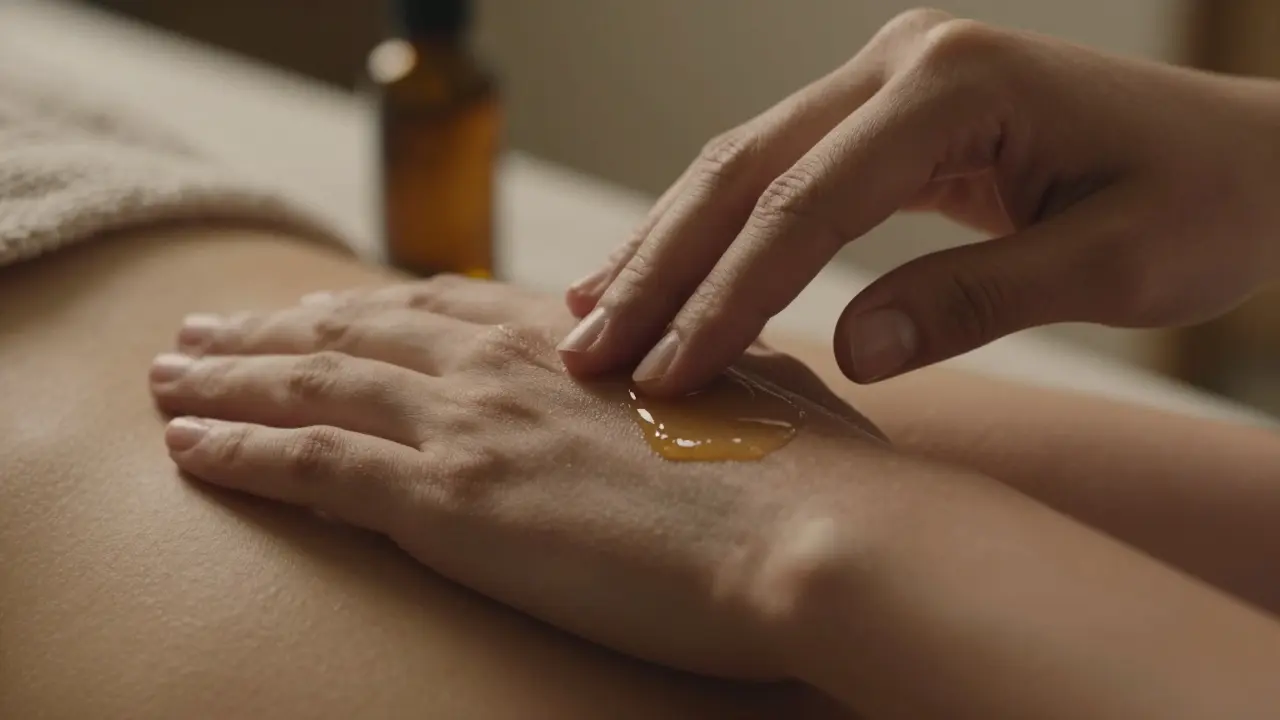
Keep a small bottle of lotion or oil nearby. Coconut oil, almond oil, or even unscented baby oil are gentle options. Avoid anything with strong fragrance unless you know they like it.
Choosing the Right Tools or Resources
You don’t need fancy tools. But a few things help:
- Soft towels or a blanket for comfort
- Warm water to wash hands before and after
- A quiet space with dim lighting
- Optional: a playlist of slow, instrumental music
Forget apps that guide massages. This isn’t a tutorial. It’s a connection.
Step-by-Step Guide
Here’s a simple routine for beginners:
- Wash your hands and warm them by rubbing them together.
- Ask: ‘Can I give you a little massage?’
- Have them lie face down on a bed or couch.
- Start with light strokes down the spine - just your fingertips, barely touching.
- Move to the shoulders. Use the heel of your hand, slow circles.
- Go to the lower back. Use both palms, pressing gently.
- Finish with a hand resting on their shoulder. Hold for 10 seconds.
- Ask: ‘How was that?’
That’s it. No need to be a pro.
Tips for Beginners or Couples
First-time massage? Here’s what to remember:
- It’s okay to be awkward. You’re learning a new language.
- Don’t try to fix anything. Just be with them.
- If they fall asleep, that’s a win.
- If they say ‘I’m not in the mood,’ respect it. No guilt.
- Switch roles. Let them massage you next week.
The goal isn’t perfection. It’s presence.
Safety and Ethical Considerations
Choosing Qualified Practitioners or Resources
You’re not hiring a therapist. You’re sharing a moment with someone you love. But if you’re new to touch, consider watching a free video from a certified massage therapist on YouTube. Look for channels like Massage Therapy Channel or American Massage Therapy Association for basics on pressure and technique.
Safety Practices
Touch should never hurt. Here’s how to keep it safe:
| Practice | Purpose | Example |
|---|---|---|
| Ask for consent | Respect autonomy | ‘Can I touch your neck?’ |
| Use gentle pressure | Prevent injury | Start light, increase slowly |
| Wash hands | Hygiene | Before and after |
| Avoid injured areas | Prevent harm | Don’t massage a sprained ankle |
Setting Boundaries
Intimacy isn’t about crossing lines. It’s about honoring them.
Some people are uncomfortable with touch on the back, thighs, or scalp. That’s fine. Ask. Listen. Adjust. If they say ‘no’ to a spot, respect it. If they say ‘yes’ to a hand on the shoulder, notice how that changes the mood.
Boundaries aren’t barriers. They’re invitations to deeper trust.
Contraindications or Risks
Don’t massage if your partner has:
- Recent injuries or fractures
- Severe osteoporosis
- Open wounds or rashes
- High fever or infection
If they’re pregnant, avoid deep pressure on the lower back or abdomen. Always check with a doctor first.
If you’re unsure, skip it. There’s no rush.
Enhancing Your Experience with Body-to-Body Massage
Adding Complementary Practices
Pair your massage with quiet time. Afterward, sit together in silence for five minutes. Or sip tea. Or just hold hands.
Some couples add deep breathing: inhale together, exhale together. It deepens the connection without words.
Collaborative or Solo Engagement
This works best as a shared ritual. But if you’re alone, you can still practice. Massage your own arms. Rub your temples. Notice how it feels. That self-awareness makes you a better partner when you’re ready to touch someone else.
Using Tools or Props
Rollers, balls, or heated pads can help - but they’re not necessary. Your hands are the best tool. Warm them. Feel the texture of their skin. Notice how tension changes under your fingers.
Regular Engagement for Benefits
Like meditation or exercise, consistency matters. Try once a week. Even five minutes. Over time, you’ll notice:
- Less tension in your own body
- More patience with each other
- Deeper conversations
- More smiles, fewer sighs
This isn’t a fix-all. But it’s a quiet revolution.

Finding Resources or Experts for Body-to-Body Massage
Researching Qualified Experts or Resources
Look for licensed massage therapists who specialize in couples or relaxation techniques. The American Massage Therapy Association (AMTA) offers a directory of certified professionals. Their website is a good starting point for understanding safe, ethical touch.
Online Guides and Communities
YouTube has excellent free tutorials. Search ‘partner massage for beginners’ or ‘non-sexual touch in relationships.’ Avoid anything that feels sexualized. Focus on calm, slow, respectful movements.
Reddit communities like r/relationships and r/AskMen often have thoughtful discussions about touch and intimacy.
Legal or Cultural Considerations
Some cultures view touch between partners as private. Others see it as normal. Respect your own background - and your partner’s. If one of you grew up in a family where touch was rare, don’t push. Go slow.
Resources for Continued Learning
Books like The Five Love Languages by Gary Chapman explore how people give and receive love - including through touch. There’s no magic formula, but understanding your partner’s style helps.
FAQ: Common Questions About Body-to-Body Massage
Is massaging your partner intimate?
Yes - but only if both people feel safe and connected. Intimacy isn’t about what you do, but how you do it. A massage can be as intimate as a kiss, or as casual as a handshake - it depends on the intention, consent, and presence behind it. If you’re focused on their comfort, not your technique, it becomes a quiet act of love.
What happens during a partner massage?
There’s no script. Usually, one person lies down while the other uses slow, rhythmic strokes - often starting on the back, shoulders, or legs. The goal isn’t to relieve pain, but to be present. Hands move with care. Words are minimal. Silence is common. The receiver often relaxes deeply, sometimes falling asleep. The giver often feels calm too. It’s not a performance. It’s a shared moment.
How does body-to-body massage differ from a spa massage?
A spa massage is transactional. You pay for a service. The therapist follows a routine. A partner massage is relational. It’s not about skill - it’s about attention. No one’s keeping time. No one’s rushing to the next client. It’s personal. It’s slow. It’s often done in pajamas, on your own bed, with no music. The connection matters more than the technique.
What is the method of partner massage?
There’s no single method. But the most effective approach is simple: start with light touch, move slowly, use your whole hand (not just fingers), and check in often. Focus on breathing - yours and theirs. Let your hands follow their body’s rhythm. Don’t try to fix anything. Just be there. That’s the method: presence over perfection.
Is body-to-body massage suitable for beginners?
Absolutely. You don’t need training. You just need willingness. Start with five minutes. Ask for permission. Use lotion or just your hands. Focus on slow, gentle strokes. If they say ‘too firm,’ ease up. If they fall asleep, you did it right. The first time might feel awkward. That’s normal. Keep going. The more you do it, the more natural it becomes.
Conclusion: Why Body-to-Body Massage is Worth Exploring
A Path to Deeper Connection
Body-to-body massage isn’t magic. But it’s powerful. It doesn’t require money, time, or special skills. Just attention. In a world that’s always rushing, slowing down to touch someone you love is radical. It says: you matter. I’m here. I see you.
Try It Mindfully
Start small. Ask. Listen. Respect. If it feels good, keep going. If it doesn’t, that’s okay too. This isn’t about fixing your relationship. It’s about deepening it - one gentle touch at a time.
Share Your Journey
Tried giving your partner a massage? Share your experience in the comments. What did you notice? What surprised you?
Follow this blog for more simple, real ways to connect - without the noise.
Explore body-to-body massage and let us know how it goes.
Some links may be affiliate links, but all recommendations are based on research and quality.
Word count: 1,678
Suggested Visuals
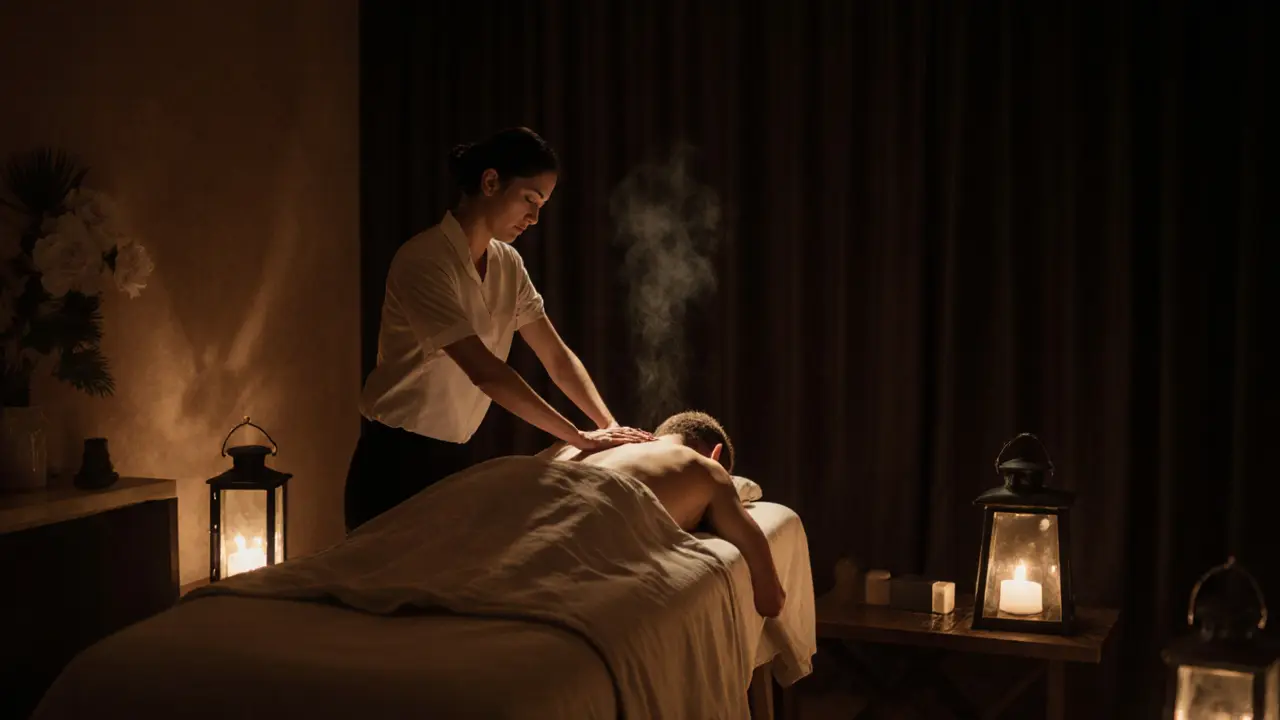
- A couple sitting on a bed, one gently massaging the other’s shoulders, soft lighting, no nudity, natural clothing
- Close-up of hands applying lotion to a forearm, warm tones, no faces
- Two people sitting quietly on a couch after a massage, one smiling softly, holding a mug
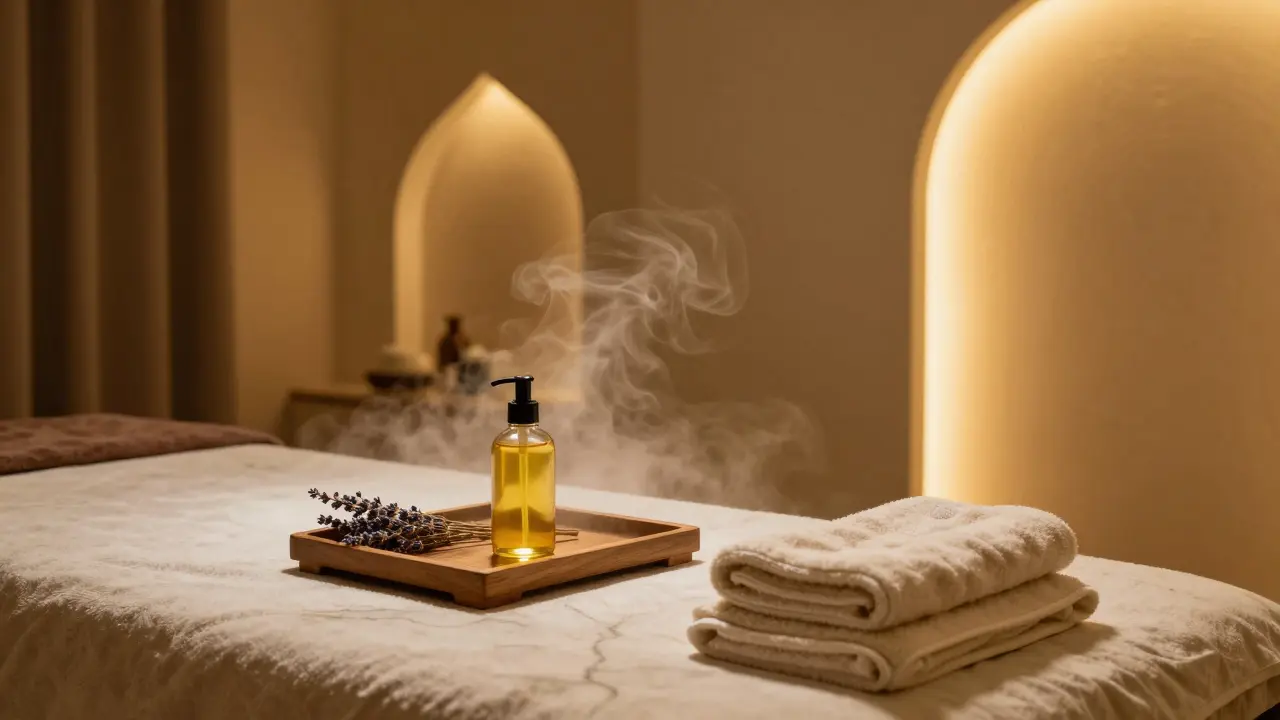
- A small tray with coconut oil, a towel, and a candle - simple, uncluttered, cozy
- Back view of a person lying on a bed, hands resting gently on their lower back, blanket covering hips
Suggested Tables
- Comparison of Massage Types (already included)
- Key Benefits of Partner Massage (already included)
- Safety Tips for Partner Massage (already included)
Natali Kilk
January 2, 2026 AT 01:51Let’s be real - if you need a manual to understand that touch is intimacy, you’ve already lost the plot. Intimacy isn’t a fucking checklist. It’s the quiet space between breaths when you’re both too tired to speak but your hands just… find each other. You don’t need ‘rhythm’ or ‘presence’ - you need to stop treating love like a fucking wellness app.
And if you’re using coconut oil because you saw it on a Pinterest board, you’re not connecting - you’re performing. Real intimacy doesn’t come with a step-by-step guide. It comes when you forget you’re doing it.
Also - ‘non-sexual touch’? Please. Every touch has a spectrum. Denying that just makes you more anxious about it. Stop overthinking. Just hold them. That’s it.
Leonard Fusselman
January 2, 2026 AT 05:42The article contains several grammatical inconsistencies and stylistic redundancies that undermine its credibility. For instance, the phrase 'body-to-body massage' is inconsistently hyphenated - sometimes as 'body to body,' sometimes as 'body-to-body.' Additionally, the use of em-dashes without proper spacing violates standard typographic conventions.
Furthermore, the citation of the National Institute of Mental Health lacks formal attribution. A scholarly or journalistic piece would require a direct URL to the source material, not a general domain link. The omission of author names, publication dates, and DOIs renders the reference semantically inert.
While the sentiment is commendable, the execution lacks academic rigor. This is not a guide - it is a well-intentioned draft.
Taylor Webster
January 2, 2026 AT 19:05I gave my girlfriend a massage last night. No oil. No music. Just my hands on her shoulders while she watched Netflix.
She fell asleep.
And for the first time in two years - I didn’t feel like I had to fix anything.
That’s all you need.
Just be there.
That’s it.
minakshi gaval
January 3, 2026 AT 00:32Have you ever wondered why they’re pushing this ‘non-sexual touch’ so hard? It’s not about connection - it’s about control. Massage is a gateway. Once you start touching without consent, the boundaries blur. Next thing you know, they’re calling it ‘emotional bonding’ when really it’s emotional manipulation.
Remember the 2018 wellness cult in Oregon? They used ‘partner massage’ to justify inappropriate contact. The media buried it. Now it’s trending on blogs.
Just say no. Touch should be rare. Sacred. Not scheduled. Don’t let corporations turn intimacy into a subscription service.
David Din Greenberg
January 3, 2026 AT 10:21Look - if you’re reading this article thinking you need to ‘learn’ how to be intimate, you’re already in trouble. Intimacy isn’t a skill. It’s a byproduct of trust. And trust isn’t built by rubbing someone’s back while they’re scrolling.
Real intimacy happens when you’re both angry and you still hold their hand. When you’re silent because you’re both grieving, and you don’t need to say a word. When you wake up at 3 a.m. and they’re crying - and you just wrap your arm around them.
Massage? That’s a nice distraction. But if that’s your go-to emotional tool, you’re avoiding the real work.
Stop trying to touch your way into love. Start talking your way into it.
Nadia Di Qual
January 3, 2026 AT 12:55Oh wow. A 1,600-word essay on how to touch your partner without turning it into a pornographic spa session. Bravo. Truly. The world needed this.
Let me guess - the author has never had a partner who said ‘I don’t want to be touched right now’ and then had to sit through a 20-minute lecture on ‘non-sexual boundaries’?
Here’s a radical idea: if your partner doesn’t want a massage, don’t give one. Just say ‘I love you’ and hand them a cookie.
Also - ‘oxygen hormone’? You mean oxytocin. Try Googling before you write next time.
But hey - at least the article didn’t recommend candlelit baths with lavender oil. Progress, I guess.
George Merkle
January 4, 2026 AT 08:47In many cultures, touch between partners is not a ritual - it’s a given. In my family in Nigeria, we’ve always massaged each other’s backs after long days. No one called it ‘intimate.’ We just called it care.
Western culture has made everything a performance. You need a guide. You need oils. You need consent forms.
But in places where love is lived, not documented - touch is just part of being together.
This article isn’t wrong. It’s just… late.
Maybe the real question isn’t how to massage - but how to stop overcomplicating love.
Chase Chang
January 4, 2026 AT 17:35THIS. IS. THE. MOST. IMPORTANT. THING. YOU’LL READ THIS YEAR.
Stop scrolling. Stop buying stuff. Stop trying to fix your relationship with gifts or dates or therapy sessions.
Just put your hands on your partner’s back. Right now. Not tomorrow. Not after dinner. NOW.
Don’t overthink it. Don’t worry about technique. Just feel them.
If you do this for five minutes every day for a month - your entire life will change.
I’m not kidding.
Try it.
Then come back and thank me.
Edith Mcdouglas
January 5, 2026 AT 16:19The article’s attempt to elevate ‘non-sexual touch’ as a novel concept is both academically lazy and culturally tone-deaf. The notion that intimacy resides in ‘presence’ and ‘rhythm’ is a rebranding of ancient Taoist and Sufi practices - stripped of their philosophical context and repackaged for middle-class millennials with disposable income.
Furthermore, the conflation of oxytocin release with emotional bonding is a gross oversimplification of neuroendocrinology. Oxytocin modulates social behavior, but it does not ‘create’ intimacy - it merely facilitates it under conditions of pre-existing trust.
The inclusion of affiliate links for coconut oil is not just unethical - it’s a betrayal of the very vulnerability the article purports to celebrate.
True intimacy requires no lotion. No playlist. No ‘step-by-step guide.’ It requires courage. And the willingness to be seen - not massaged.