

When it comes to lactic acid, the debate isn’t just about whether it works-it’s about how you use it. If you’ve ever stood in front of your bathroom mirror, bottle in hand, wondering if you should apply lactic acid to wet or dry skin after a body scrub, you’re not alone. The answer isn’t as simple as ‘wet is better’ or ‘dry is stronger.’ It’s about your skin’s natural behavior, how lactic acid actually works, and the climate you live in-especially here in Dubai, where humidity swings and sweat are part of daily life.
Understanding the Basics of Lactic Acid
What Lactic Acid Actually Does
Lactic acid is an alpha hydroxy acid (AHA) naturally found in milk and fermented foods. In skincare, it’s prized for gently dissolving the glue between dead skin cells. Unlike harsh scrubs that physically abrade the surface, lactic acid works chemically-sloughing off dullness, smoothing texture, and boosting radiance. It’s also a humectant, meaning it draws moisture into the skin. That’s why it’s a favorite in body scrubs: it exfoliates while hydrating, unlike sugar or salt scrubs that can strip moisture.
Why Wet vs. Dry Matters
Your skin’s hydration level changes how lactic acid behaves. On dry skin, it penetrates more deeply and quickly because there’s no water barrier slowing it down. On wet skin, the water dilutes the acid slightly, making its action slower and more gentle. Neither is wrong-but each gives you a different result.
How It Differs from Other Exfoliants
Think of lactic acid as the quiet professional compared to its rowdy cousins. Glycolic acid (another AHA) is smaller and more aggressive-it zips into skin fast and can sting. Salicylic acid (a BHA) dives into pores to unclog them, great for acne but not ideal for dry patches. Lactic acid? It’s the one that gives you glow without the burn. It’s also less likely to cause irritation, making it safer for sensitive skin and warmer climates.
| Exfoliant | Primary Action | Best For |
|---|---|---|
| Lactic Acid | Chemical exfoliation + hydration | Dry, dull, or sensitive skin |
| Glycolic Acid | Deep chemical exfoliation | Thick, resilient skin |
| Salt Scrub | Physical exfoliation | Calloused areas like heels |
| Sugar Scrub | Physical + mild humectant | Normal to combination skin |
Who Can Benefit from Lactic Acid?
Almost everyone. If your skin feels rough after a long day in the sun, if you have keratosis pilaris (those little bumps on arms and thighs), or if your legs look dull after shaving-lactic acid helps. It’s especially useful in Dubai, where heat and AC dry out skin. People with eczema-prone skin often tolerate lactic acid better than other AHAs because it’s less irritating. But if you’ve just had laser treatment, a chemical peel, or have open cuts, skip it.
Benefits of Lactic Acid for Body Skin
Smoothing Rough Texture
After a few weeks of regular use, your arms, knees, and elbows stop feeling like sandpaper. That’s because lactic acid dissolves the buildup of keratin-the protein that makes skin feel bumpy. A 2021 study from the Journal of Clinical and Aesthetic Dermatology found that 5% lactic acid applied twice weekly improved skin smoothness by 42% in participants with rough body skin. No scrubbing required.
Improving Hydration
Lactic acid doesn’t just remove dead skin-it helps the skin hold onto water. It boosts natural moisturizing factors (NMFs), which are the skin’s own hydration system. This is huge in Dubai, where indoor AC can make skin feel tight and flaky. Using lactic acid after a shower locks in moisture better than any lotion alone.
Reducing Dark Spots and Uneven Tone
Sun exposure, shaving irritation, or post-inflammatory marks from acne can leave your legs or back looking patchy. Lactic acid gently fades these by accelerating cell turnover. You won’t see results overnight, but in 4-6 weeks, you’ll notice a more even tone-especially if you pair it with daily sunscreen.
Preventing Ingrown Hairs
If you shave or wax, lactic acid is your secret weapon. It keeps pores clear so hairs don’t get trapped under the surface. Many dermatologists in Dubai recommend using a lactic acid body wash or lotion 2-3 times a week to keep ingrowns at bay. No more red bumps after your bikini wax.
| Benefit | Description | Impact |
|---|---|---|
| Smoothing Texture | Breaks down rough, bumpy skin | Soft, silky feel within weeks |
| Hydration Boost | Enhances skin’s natural moisture retention | Less need for heavy creams |
| Even Tone | Fades discoloration from sun or shaving | More radiant, uniform skin |
| Ingrown Hair Prevention | Keeps follicles clear | Reduces red bumps and irritation |
What to Expect When Applying Lactic Acid
Setting the Scene
Find a quiet moment after your shower. You don’t need a spa-just a towel, a clean applicator (like a soft cotton pad or your hands), and a bottle of lactic acid in the 5-10% range. Keep it away from direct sunlight. In Dubai’s heat, storing it in the fridge helps preserve potency.
The Two Main Methods
There are two ways people apply lactic acid after a body scrub:
- On wet skin: Apply immediately after patting dry. The slight moisture helps spread it evenly and reduces stinging.
- On dry skin: Apply to completely dry skin. This lets the acid penetrate deeper, which is great for stubborn texture-but can feel tingling.
Customization for Your Skin
If your skin is sensitive, go wet. If you’re targeting thick, calloused areas like heels or elbows, go dry. If you’re new to acids, start with wet skin once a week. Gradually increase frequency and try dry application if your skin adapts. Listen to your skin-if it stings more than a light tingle, rinse it off.
What to Do After Application
Wait 10-15 minutes before applying moisturizer. This gives the acid time to work. Then, lock it in with a rich, fragrance-free cream. Avoid layering with retinol or other strong actives on the same night-your skin can only handle so much.
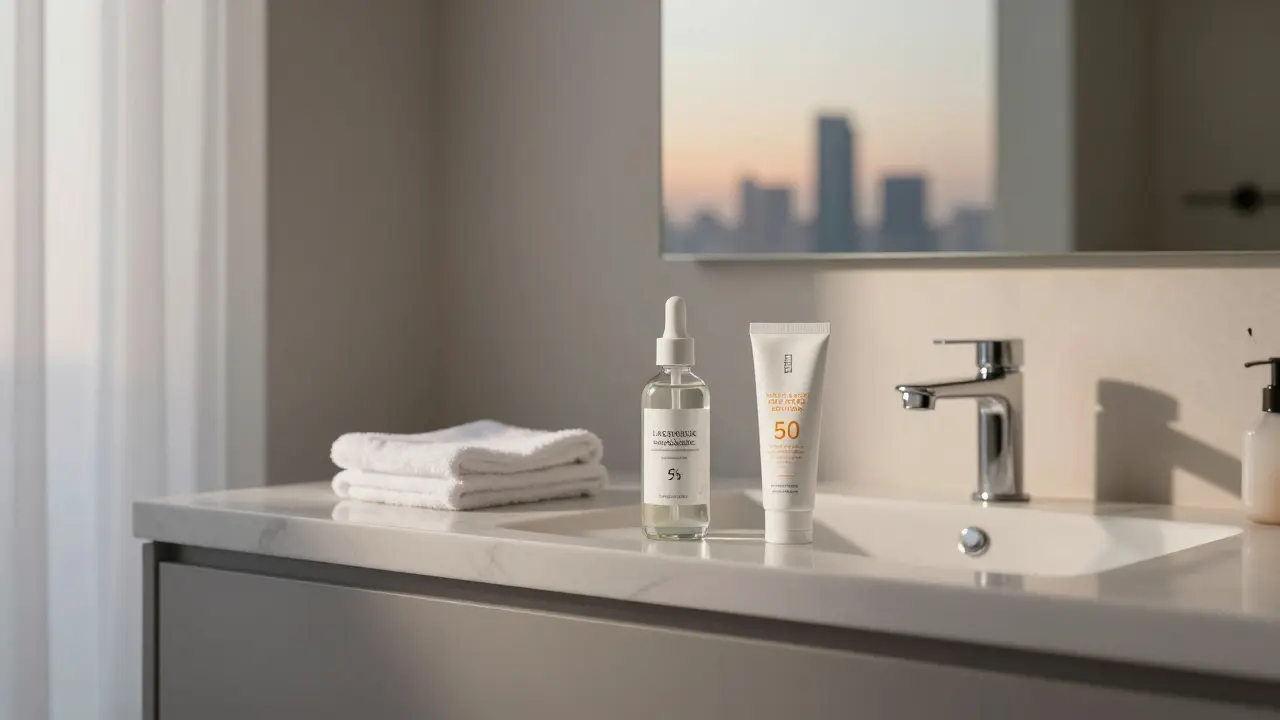
How to Apply Lactic Acid Correctly
Setting Up for Success
Keep your lactic acid product in a cool, dark place. Use a clean pump or dropper-never dip fingers into the bottle. Always patch test on your inner arm first. Wait 24 hours. If no redness or itching, you’re good to go.
Choosing the Right Product
Look for body lotions or serums with lactic acid at 5-10%. Avoid anything with alcohol, fragrance, or menthol-these irritate more than help. Brands like The Ordinary, Paula’s Choice, and CeraVe have affordable, effective options. If you’re in Dubai, check local pharmacies like Boots or Guardian-they stock trusted lines.
Step-by-Step Guide
- Take a warm (not hot) shower. Use a gentle cleanser.
- Pat your skin dry-leave it slightly damp if going wet, or completely dry if going dry.
- Apply lactic acid to your arms, legs, back, or any rough areas. Use a cotton pad or clean hands.
- Wait 10-15 minutes. Don’t rinse.
- Follow with a thick moisturizer (look for ceramides or shea butter).
- Use 2-3 times a week. Increase to daily only if your skin tolerates it.
Tips for Beginners
Start slow. Use it once a week. Watch for tingling-it’s normal. Burning? Rinse off. Don’t use on freshly shaved skin. Always wear sunscreen during the day-even if you’re applying it at night. Lactic acid makes skin more sun-sensitive.
Safety and Ethical Considerations
Choosing Safe Products
Not all lactic acid is created equal. Avoid products with no listed percentage or vague terms like ‘natural exfoliant.’ Look for ‘lactic acid’ on the ingredient list, not just ‘milk extract.’ Stick to brands with transparent labeling.
Safety Practices
Here’s what to keep in mind:
| Practice | Purpose | Example |
|---|---|---|
| Patch test first | Prevent allergic reaction | Apply behind ear or inner arm |
| Avoid sun exposure | Prevent sun damage | Use SPF 30+ daily |
| Don’t mix with retinol | Reduce irritation | Use retinol on alternate nights |
| Stop if skin burns | Prevent chemical burn | Rinse immediately |
Setting Boundaries
Just because it’s a chemical doesn’t mean your skin has to take it. If your skin feels tight, red, or flaky, pause for a week. Your skin isn’t weak-it’s telling you to slow down.
Contraindications
Avoid lactic acid if you have:
- Open wounds or active eczema flare-ups
- Recent chemical peels or laser treatments
- Known allergy to milk or dairy products
- Extremely sensitive skin that reacts to all acids
If you’re unsure, consult a dermatologist. In Dubai, many clinics offer free skin assessments.
Enhancing Your Experience
Adding Complementary Practices
Pair lactic acid with hydration. Drink water. Use a humidifier at night. Apply a ceramide-rich cream after lactic acid. You can also use a soft loofah once a week to gently buff before applying acid-but never on the same day as a scrub.
Collaborative or Solo Use
Lactic acid is a solo act. You don’t need to share it. But if you’re doing a self-care night, light a candle, play calm music, and enjoy the ritual. It’s not just skincare-it’s self-respect.
Using Tools or Props
A soft cotton pad or clean hands work best. Avoid loofahs or brushes when applying lactic acid-they can scratch the skin and make irritation worse.
Regular Engagement for Results
Consistency beats intensity. Use it 2-3 times a week for 4 weeks. That’s when most people start seeing a glow. Don’t expect miracles overnight. Skin renews every 28 days. Be patient.

Finding Resources or Experts
Researching Qualified Providers
In Dubai, look for dermatologists who specialize in body treatments. Clinics like The Skin Clinic, DermaCare, or Dr. Laila’s Aesthetics offer personalized advice. Ask about lactic acid protocols-not all dermatologists use it for body skin.
Online Guides and Communities
Check r/SkincareAddiction on Reddit or @skincareroutine on Instagram. Real people share their routines-no ads, no hype. Look for posts from users in hot climates.
Legal or Cultural Considerations
In the UAE, skincare products must meet GCC standards. Always check the label for approval numbers. Avoid importing unregulated products from overseas. They may contain banned ingredients or unsafe concentrations.
Resources for Continued Learning
Read ‘The Beauty of Skin’ by Dr. Hadley King. Watch YouTube videos from licensed dermatologists like Dr. Shereene Idriss. She breaks down acids without jargon.
FAQ: Common Questions About Lactic Acid
Should you put lactic acid on wet or dry skin?
Both work-but they give different results. Wet skin means gentler, more even absorption. Dry skin means deeper exfoliation. If you’re new to acids, start wet. If you have thick, rough skin and no sensitivity, try dry. In Dubai’s dry climate, many find wet application more comfortable. Listen to your skin: if it stings, switch to damp skin.
Can you use lactic acid after a body scrub?
Yes-but not right after. Wait 24 hours. Scrubs remove the top layer, and lactic acid will be too harsh if applied immediately. Let your skin recover. Then use lactic acid 2-3 times a week on its own.
How long does it take to see results?
Most people notice smoother skin in 2-3 weeks. Brighter tone shows up in 4-6 weeks. It’s not instant, but it’s lasting. Think of it like building muscle-slow, steady progress.
Does lactic acid make skin more sensitive to the sun?
Yes. Always use sunscreen daily. Even if you apply lactic acid at night, your skin is more vulnerable during the day. In Dubai’s sun, skipping SPF is risky. Use SPF 30 or higher, even on cloudy days.
Is lactic acid safe for sensitive skin?
Yes-better than glycolic or salicylic acid. But start slow. Use a low concentration (5%) once a week. If you feel burning, rinse off. Sensitive skin doesn’t mean you can’t use it-it just means you need patience.
Conclusion: Why Lactic Acid is Worth Exploring
A Path to Radiant Skin
Lactic acid isn’t magic. But it’s one of the few ingredients that works gently, deeply, and sustainably. It doesn’t strip. It doesn’t burn. It just helps your skin do what it’s meant to: renew, glow, and protect itself.
Try It Mindfully
Start small. Use it twice a week. Pay attention. Adjust. Your skin will thank you. And in a city where heat and AC battle daily, that glow? It’s not just beauty-it’s comfort.
Share Your Journey
Tried lactic acid on wet or dry skin? Share your experience in the comments. Follow for more no-nonsense skincare tips tailored to Dubai life.
Some links may be affiliate links, but all recommendations are based on research and quality.
Word count: 1,742
Suggested Images
- A close-up of smooth, glowing legs after lactic acid application
- A bathroom counter in Dubai with a lactic acid serum, moisturizer, and sunscreen
- Someone gently patting their arms dry after a shower
- A comparison photo: rough skin vs. smooth skin after 4 weeks of use
- A hand holding a bottle of lactic acid body lotion with Arabic text on the label
Suggested Tables
- Comparison of Exfoliants for Body Skin
- Key Benefits of Lactic Acid for Body Skin
- Safety Tips for Lactic Acid Use
Selene Becmar
February 17, 2026 AT 13:22Let me just say this: applying lactic acid to wet skin is like whispering to your cells - tender, poetic, *soulful*. But dry skin? Oh honey, that’s a midnight confession to your epidermis. You’re not just exfoliating - you’re performing a ritual of rebirth. 🌙✨ I did it dry in Dubai last summer - sweat, AC, and all - and my legs? They looked like they’d been kissed by a goddess who only uses organic goat milk. I cried. Not because it stung - because it *worked*. This isn’t skincare. It’s alchemy. And I’m the wizard. 💫
Carli Lowry
February 19, 2026 AT 08:37Actually, the science is pretty straightforward: water dilutes lactic acid’s concentration, slowing its penetration. Wet application = gentler, more even exfoliation. Dry = deeper, faster action. No mysticism needed. But hey - if you want to call your moisturizer ‘a vessel for celestial hydration,’ I won’t stop you. Just please don’t call your loofah a ‘soul scrubber.’
Rich Beatty
February 20, 2026 AT 06:22Hey, I tried both ways - wet first, then dry. Honestly, wet worked better for me at first. Less stinging, felt smoother right away. After a few weeks, I switched to dry on my elbows and heels - wow, what a difference. Just start slow, use sunscreen, and don’t overdo it. Your skin’s not a battlefield. You’re not trying to win a war - you’re just trying to feel good in your own skin. You got this.
Ronnie Chuang
February 22, 2026 AT 05:25Wet skin? LOL. You’re telling me to use lactic acid like it’s a baby bath? Nah. I use it on bone-dry skin, then I go outside and let the Dubai sun roast it in. That’s how you get results. If you’re too scared to feel a tingle, you’re not ready for real skin. And don’t even get me started on ‘ceramides’ - that’s just corporate jargon for ‘we made it smell nice.’
j t
February 22, 2026 AT 17:02I’ve been using lactic acid for 14 months now. I started because my knees looked like they’d been sandblasted by a desert storm after I shaved. I tried wet, then dry, then wet again, then dry with a humidifier running. I’ve done it every night except when I was sick. I’ve cried. I’ve screamed. I’ve had to stop for 3 weeks because my skin looked like a map of Mars. But now? My legs are smoother than a newborn’s butt. I don’t care what the studies say. I care about what my skin feels like at 2 a.m. when I’m naked in front of the mirror. And I feel like I’ve been reborn. Not because of science. Because I didn’t give up. You don’t need to be a dermatologist. You just need to be stubborn. And maybe a little bit broken. That’s how you heal.
Jimmy Carchipulla
February 23, 2026 AT 13:45Wet skin = easy win 🙌
Sriram T
February 24, 2026 AT 16:39Bro I tried dry application in Mumbai last monsoon and my skin went full anime protagonist mode - glowing, radiant, like I just got a divine blessing from Lord Shiva himself 🌟🪷✨ Lactic acid is not a product, it’s a spiritual upgrade. My cousin in Dubai said she uses it on wet skin... she’s still stuck in 2020. I’m on a whole other level. 5%? Nah. I use 12% with a drop of rosewater and chant mantras while applying. My skin? It sings.
Jonny BiGSLiCE
February 26, 2026 AT 01:25The article correctly identifies that hydration level affects penetration - dry skin allows for deeper, more immediate action; wet skin moderates it. This isn’t a matter of preference or aesthetics - it’s biochemistry. The humectant properties of lactic acid mean it draws water into the stratum corneum regardless, but the presence of external water creates a diffusion barrier. For most people, especially in arid climates, starting with damp skin minimizes irritation while still delivering efficacy. Only after establishing tolerance should one consider dry application for targeted areas. There’s no ‘right’ way - only the right way for your skin’s current state. Listen to it. Not the internet. Not the influencers. Your skin knows.