
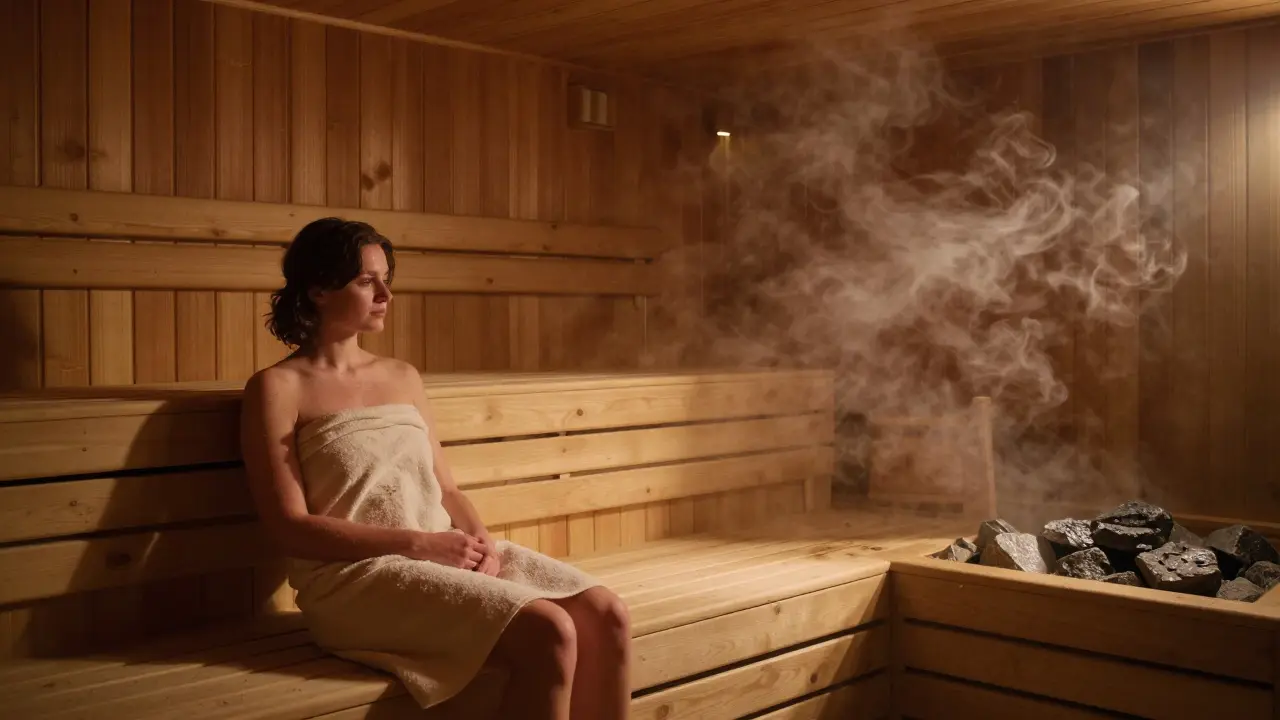
When you walk into a spa, one of the first things you might wonder is: are saunas separated by gender? It’s a simple question, but the answer isn’t always clear. Whether you’re new to saunas or just visiting a foreign country, the rules around who shares the space can feel confusing-or even awkward. The truth? It depends on where you are, what kind of sauna it is, and the local culture. Let’s cut through the noise and give you a real, practical guide to how saunas handle gender separation today.
Understanding the Basics of Sauna Gender Separation
Origins and History
Saunas didn’t start as gender-segregated spaces. In Finland, where the modern sauna tradition began over 2,000 years ago, families often shared the same room-men, women, children, even guests. The focus wasn’t on privacy in the Western sense; it was on warmth, cleanliness, and community. Bathing was a daily ritual, not a luxury. Over time, as saunas spread to North America and parts of Europe, cultural norms shifted. In the 20th century, especially in the U.S. and U.K., modesty standards led to strict separation. Today, you’ll find both models: single-gender saunas in traditional spas, and mixed-gender options in wellness centers that prioritize inclusivity and relaxation over modesty.
Core Principles or Components
There are three main ways saunas handle gender: single-gender, mixed-gender, and timed rotation. Single-gender saunas are the most common in North America and parts of Asia. They usually have separate rooms, sometimes with different hours for men and women. Mixed-gender saunas are common in Germany, Sweden, and parts of Eastern Europe, where nudity is normalized in private wellness settings. Timed rotation means the same room is used by men and women at different times-like men from 7 a.m. to 1 p.m., women from 1 p.m. to 9 p.m. This keeps the space efficient and respects cultural preferences. The core principle? Saunas are meant to be restorative. How they’re organized should support that goal without forcing discomfort.
How It Differs from Related Practices
It’s easy to confuse saunas with steam rooms, hot tubs, or spas. But each has different norms. Steam rooms are often mixed-gender because they’re less about nudity and more about humidity. Hot tubs? Usually gender-separated because of water exposure and clothing. Saunas, on the other hand, are dry, hot, and often used without clothing-making privacy a bigger concern. Here’s how they compare:
| Practice | Typical Gender Policy | Why This Policy? |
|---|---|---|
| Sauna | Varies: single-gender, mixed, or timed | High heat + frequent nudity = cultural sensitivity matters |
| Steam Room | Often mixed-gender | Moist heat, clothing often worn |
| Hot Tub | Usually single-gender | Water exposure, less privacy due to wet clothing |
Who Can Benefit from Sauna Gender Separation?
People who value privacy-like new users, religious individuals, or those with body image concerns-often prefer single-gender saunas. Others, especially in cultures where nudity is normalized, find mixed-gender saunas more natural and stress-free. Seniors, postpartum individuals, and people recovering from injury may also appreciate the quiet of a single-gender space. But don’t assume one size fits all. Many wellness centers now offer both options, so you can choose based on your comfort level. The goal isn’t to enforce one rule-it’s to give people choices.
Benefits of Sauna Use for Health and Well-Being
Stress Reduction
Heat therapy triggers your parasympathetic nervous system-the part of your body that says, “It’s safe to relax.” In a sauna, your heart rate increases slightly, your muscles loosen, and your mind quiets down. Studies show that regular sauna use can lower cortisol levels, the hormone tied to stress. This effect is the same whether you’re alone or with others. But if you’re anxious about being seen, that stress can cancel out the benefits. That’s why many places offer gender-separate options: to help you truly unwind.
Enhanced Circulation and Recovery
The heat dilates your blood vessels, improving circulation. That’s why athletes use saunas after training-it helps flush out lactic acid and speeds muscle recovery. This benefit doesn’t change based on who else is in the room. But if you’re distracted by discomfort or self-consciousness, you’re not fully absorbing the heat. Choosing the right setting-whether single or mixed-can make your session more effective.
Emotional Well-Being
Saunas aren’t just physical. They’re emotional reset buttons. The quiet, warmth, and rhythm of breathing in heat can feel meditative. Many people report feeling calmer, clearer-headed, and even more connected to themselves after a session. In mixed-gender saunas, this connection can extend to others-there’s something deeply human about sharing quiet space without words. In single-gender spaces, it’s easier to let go without social pressure. Either way, emotional relief is real.
Practical Applications
Think about your routine. If you’re a parent, you might prefer a women-only sauna after dropping the kids off. If you’re a solo traveler, a mixed sauna might feel more welcoming. If you work in a high-stress job, a private session could be your only chance to decompress. The key is matching the sauna setting to your life, not the other way around. Here’s a quick look at how different users benefit:
| User Type | Primary Benefit | Best Sauna Type |
|---|---|---|
| Athletes | Faster muscle recovery | Timed or single-gender |
| Stressed professionals | Mental clarity | Quiet single-gender |
| Travelers | Cultural immersion | Mixed-gender (in Europe) |
| Seniors | Joint pain relief | Single-gender, lower heat |
What to Expect When Engaging with a Sauna
Setting or Context
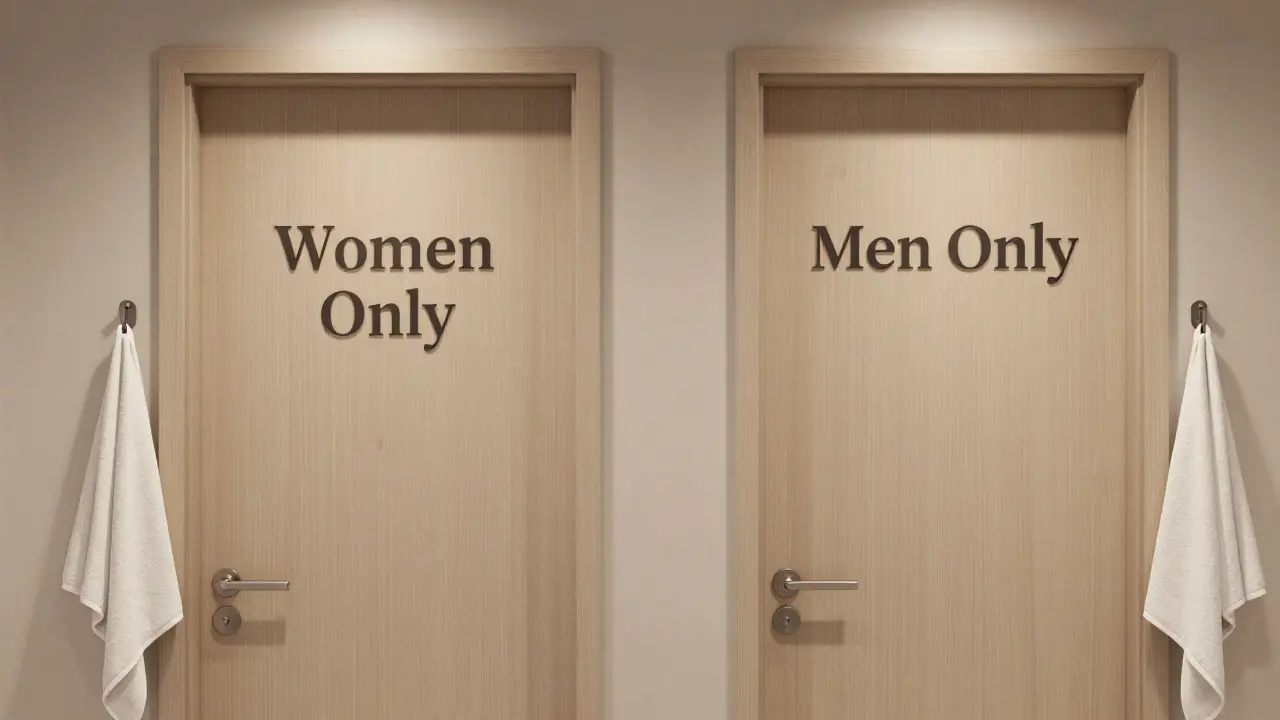
Most spas have clear signage: “Women Only,” “Men Only,” or “Mixed.” Some have separate entrances. Others use curtains or timed access. In European public saunas, it’s common to see nudity-no towels, no cover-ups. In North America, you’ll often see towels or robes. The environment should feel clean, calm, and well-maintained. If the room smells like chlorine or feels cluttered, it’s not a place you want to relax in. Always check the rules before entering.
Key Processes or Steps
Step one: Shower before entering. Always. Sweat and oils on your skin ruin the experience for others. Step two: Choose your seating. Bench levels vary in heat-top is hottest, bottom is milder. Step three: Stay for 10-20 minutes. Listen to your body. Step four: Cool down. Step outside, take a cold shower, or sit quietly. Step five: Hydrate. Saunas dehydrate you fast. Drink water before and after. That’s it. No rituals, no special gear. Just heat, rest, repeat.
Customization Options
Many modern spas let you pick your sauna experience. You can choose heat level (140°F vs. 180°F), lighting (dim or bright), scent (eucalyptus or none), and even music (or silence). Some places offer private saunas for couples or individuals. If you’re unsure, ask. Most staff are happy to guide you. The best saunas adapt to you-not the other way around.
Communication and Preparation
Before you go, read the rules. If you’re unsure about nudity, ask. If you’re nervous about being in a mixed space, request a single-gender session. Most places will accommodate you. Bring a towel, water, and a robe. Leave your phone behind. The point is to disconnect. If you’re going with someone, agree on your comfort level ahead of time. No one should feel pressured.

How to Practice or Apply Sauna Use
Setting Up for Success
Start small. If you’ve never used a sauna, try a 10-minute session. Choose a time when it’s quiet-early morning or late evening. Hydrate well the day before. Skip alcohol and heavy meals. Wear a towel or robe to and from. Don’t rush. Saunas aren’t a race. They’re a pause.
Choosing the Right Tools or Resources
You don’t need fancy gear. A good towel, water bottle, and flip-flops are enough. If you’re using a home sauna, make sure it’s properly vented and has a thermometer. For public saunas, look for clean facilities, clear rules, and trained staff. Avoid places that don’t explain their policies. A trustworthy spa will have signs, staff on hand, and clear hygiene protocols.
Step-by-Step Guide for Beginners
- Shower thoroughly before entering.
- Bring a towel to sit on and cover yourself if needed.
- Enter quietly. Sit on the lower bench if you’re new.
- Stay 10-15 minutes. Breathe slowly.
- Exit calmly. Cool down with a lukewarm shower.
- Drink water. Rest for 10 minutes.
- Repeat once if you feel good.
Tips for Beginners or Couples
If you’re going with a partner, talk first. Do you both want the same setting? If one of you is uncomfortable with nudity, pick a single-gender or private option. Never assume. If you’re alone, don’t worry about being the only one. Most people are focused on their own relaxation. And if you’re nervous? Take a friend. Sometimes, just having someone nearby makes all the difference.
Safety and Ethical Considerations
Choosing Qualified Practitioners or Resources
Look for spas with certified staff, clean facilities, and clear posted rules. If they don’t explain their gender policy, that’s a red flag. Ask: “Is this sauna single-gender or mixed?” If they hesitate, walk away. A good spa is transparent.
Safety Practices
Here’s how to stay safe:
| Practice | Purpose | Example |
|---|---|---|
| Shower before entering | Keep the space clean | Wash off sweat, lotion, perfume |
| Limit time to 20 minutes | Avoid overheating | Exit if dizzy or nauseous |
| Hydrate before and after | Prevent dehydration | Drink 1-2 glasses of water |
Setting Boundaries
Your comfort is non-negotiable. If you’re in a mixed sauna and feel uneasy, ask for a towel or move to a quieter spot. If someone makes you uncomfortable, notify staff immediately. No one has the right to make you feel unsafe. You’re there to relax-not to be judged.
Contraindications or Risks
Saunas aren’t for everyone. Avoid them if you’re pregnant, have heart disease, are under the influence of alcohol or drugs, or have a fever. If you’re on medication that affects heat tolerance (like beta-blockers), talk to your doctor first. Children should be supervised. And if you feel lightheaded, dizzy, or nauseous-get out. Now.
Enhancing Your Experience with Sauna Use
Adding Complementary Practices
Pair your sauna with cold immersion-a quick cold shower or even a dip in a cool pool. It boosts circulation and reduces inflammation. Or try 5 minutes of quiet breathing afterward. Some people add light stretching or journaling. These small habits make the experience deeper.
Collaborative or Solo Engagement
Saunas can be social or solitary. In mixed-gender settings, you might share quiet moments with strangers-no talking needed. In single-gender rooms, you might bring a friend and sit side by side, reading or just resting. Both are valid. The key is intention. Are you there to connect? To rest? To detox? Let that guide your choice.
Using Tools or Props
Forget the fancy gadgets. A good towel, a water bottle, and a pair of flip-flops are all you need. Some people like wooden benches with backrests. Others use essential oils on the stones-but only if the spa allows it. Keep it simple.
Regular Engagement for Benefits
One session won’t change your life. But three times a week? That’s where the magic happens. Regular use improves sleep, reduces muscle soreness, and lowers stress over time. Aim for consistency-not intensity. Even 10 minutes, twice a week, makes a difference.
Finding Resources or Experts for Sauna Use
Researching Qualified Experts or Resources
Look for spas with reviews mentioning cleanliness, staff knowledge, and clear policies. Avoid places with vague descriptions like “relaxing environment.” If they don’t say whether saunas are gender-separated, call and ask. A reputable spa won’t mind.
Online Guides and Communities
Check out wellness blogs from Finland, Sweden, or Japan-they’ve been doing this for centuries. Forums like Reddit’s r/sauna or wellness sites like Wellness.com have honest user experiences. Look for posts that describe real routines, not just ads.
Legal or Cultural Considerations
In Germany, mixed-gender saunas are the norm. In Japan, nudity is standard but gender-separated. In the U.S., it varies by state and facility. Always respect local customs. If you’re unsure, ask. Most places will explain their rules politely.
Resources for Continued Learning
Books like The Finnish Sauna by Juhani Kettunen or documentaries on Finnish wellness culture offer deep insight. YouTube channels like “Sauna Life” show real sessions in different countries. No need to overcomplicate-just learn what feels right for you.
FAQ: Common Questions About Sauna Gender Separation
Are saunas separated by gender?
Yes, sometimes-but not always. In North America, most spas separate saunas by gender. In Europe, mixed-gender saunas are common and culturally accepted. Some places use timed access, letting men and women use the same room at different hours. Always check the rules posted at the entrance or ask staff. There’s no universal rule-it depends on location, culture, and facility policy.
What happens if I go to a mixed-gender sauna?
You’ll likely see people of all genders relaxing in silence, often nude but always respectful. The atmosphere is calm and quiet-no staring, no talking. It’s not sexualized; it’s normalized. If you’re uncomfortable, most places offer single-gender options. You can also ask for a towel or robe. The key is to stay calm, respect others, and trust the space. Most people find it surprisingly peaceful.
Is it okay to wear a swimsuit in a sauna?
In most traditional saunas, especially in Europe, clothing is not worn-sweat and heat work best on bare skin. But in North America, many spas allow swimsuits, especially in mixed settings. Check the rules. If you wear a swimsuit, choose one made of natural fibers like cotton or linen. Synthetic materials can trap heat and cause discomfort. And always shower before entering, no matter what you wear.
Can children use saunas?
Yes, but with limits. Children under 12 should avoid saunas due to their smaller bodies and faster heat absorption. Teens can use them briefly (5-10 minutes) with adult supervision. Always check the spa’s policy. Some places have family-friendly saunas with lower temperatures. If in doubt, skip it. Saunas are for rest-not endurance.
Is it rude to leave a sauna early?
Not at all. Saunas are about listening to your body. If you feel dizzy, too hot, or just done-you should leave. No one expects you to sit for 30 minutes. Quietly exit, shower off, and rest. Most people will nod or smile. It’s part of the culture: respect your limits. You’re not failing-you’re practicing self-care.
Conclusion: Why Sauna Gender Separation Matters
A Path to Personal Wellness
Saunas aren’t just about heat. They’re about space-space to rest, to breathe, to be alone or together without distraction. Whether you choose single-gender or mixed, the goal is the same: to leave feeling lighter than when you came in. The right setting helps you get there.
Try It Mindfully
Don’t let fear of the unknown stop you. Ask questions. Read signs. Start slow. You don’t have to be perfect-you just have to show up. And if you’re not sure? Try a single-gender session first. It’s okay to take your time.
Share Your Journey
Tried a sauna and had a moment of peace? Share your experience in the comments. Follow this blog for more simple, science-backed wellness tips. And if you’re planning a trip-ask about sauna rules before you go. It makes all the difference.
Some links may be affiliate links, but all recommendations are based on research and quality.
Word count: 1,723
Suggested Images
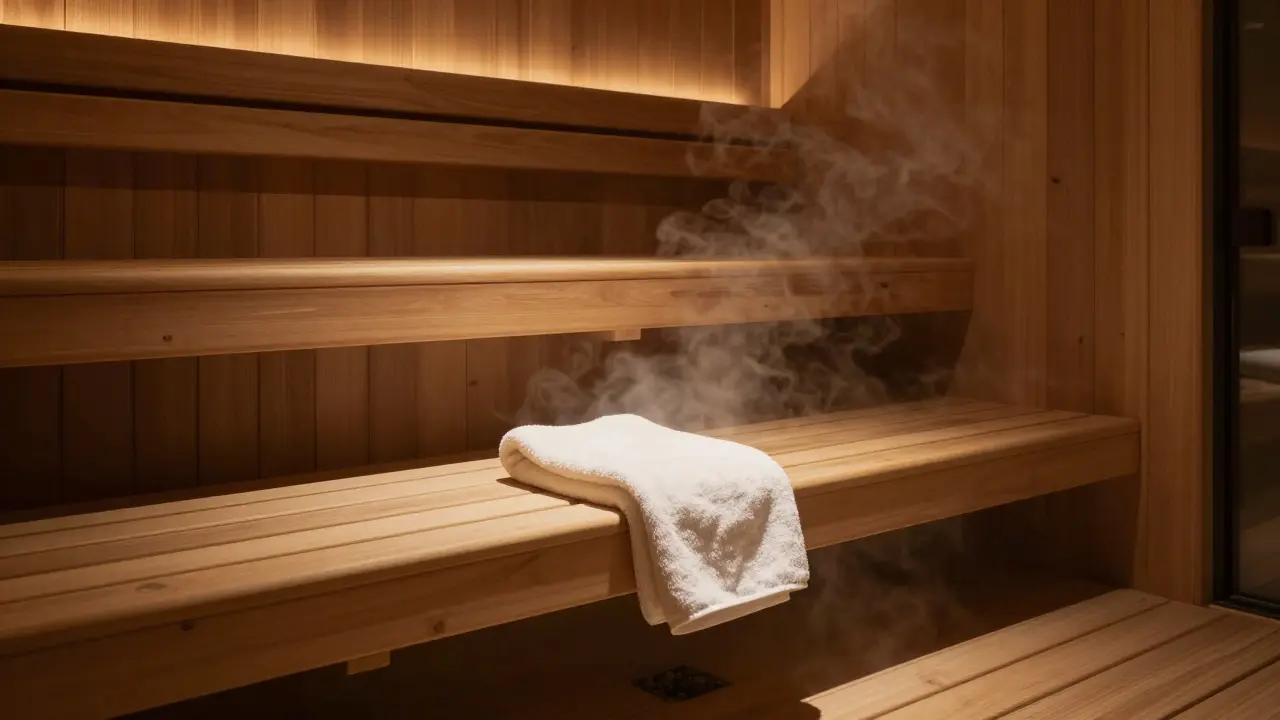
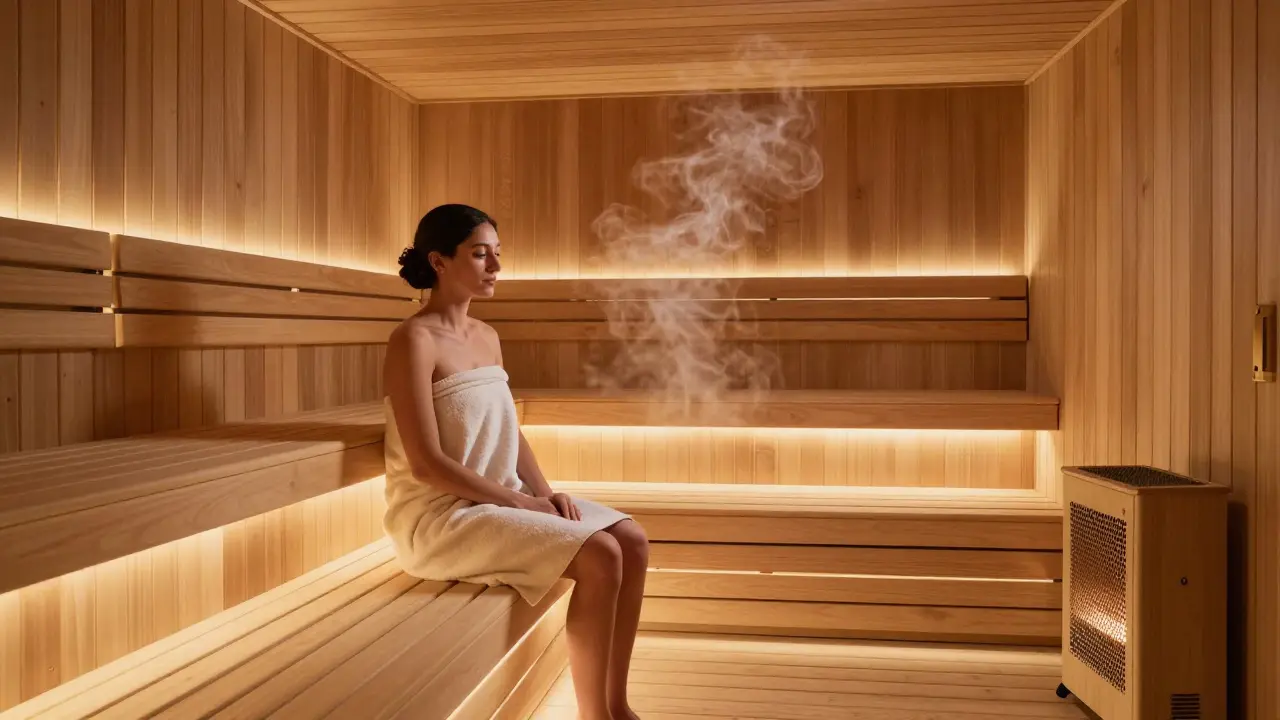
- A quiet, dimly lit sauna with wooden benches and steam rising
- Two people sitting side by side in a mixed-gender sauna, each wrapped in a towel
- A sign at a spa entrance clearly stating “Women Only” and “Men Only”
- A person stepping out of a sauna into a cool shower
- A family using a low-temperature family sauna with children
Suggested Tables
- Comparison of Sauna, Steam Room, and Hot Tub Gender Policies
- Key Benefits of Sauna Use by User Type
- Sauna Safety Tips
Nancy Espinoza
February 8, 2026 AT 07:20Imagine this: naked people in a wooden room, no words, just heat and silence. No judgment. No stares. Just bodies existing in warmth like trees in a forest. We’ve been taught to panic about skin, but what if the sauna is the one place where we’re finally allowed to be raw? No makeup. No filters. No performative self. Just sweat and stillness. I cried the first time I went to a mixed sauna in Berlin. Not because I was exposed-but because I felt seen, truly seen, without having to say a damn thing.
Our culture screams modesty like it’s a virtue, but what if modesty is just fear in a bathrobe? The sauna doesn’t care if you’re scarred, soft, or saggy. It only asks: are you breathing? Are you present? That’s all. Everything else is noise we built to keep ourselves small.
I used to wear a towel. Now I don’t. And I don’t miss it. Not one bit.
It’s not about nudity. It’s about surrender.
Kate Cole
February 8, 2026 AT 19:20There are multiple grammatical and structural issues in the original post that undermine its credibility. For instance, the inconsistent use of serial commas, improper hyphenation in compound modifiers (e.g., ‘single-gender saunas’ should be hyphenated consistently throughout), and the misuse of em dashes in place of proper punctuation. Additionally, the table headers lack proper semantic markup in HTML, which affects accessibility and SEO. The section on ‘Emotional Well-Being’ contains a logical fallacy-equating silence with emotional connection without empirical evidence. The claim that ‘mixed-gender saunas foster human connection’ is anecdotal at best and culturally biased at worst. Furthermore, the assertion that ‘saunas are restorative’ is a tautology; restorative is not a measurable outcome but a subjective perception. Proper citations are absent, and the post conflates cultural norms with universal truths. This is not a guide-it’s a poorly edited opinion piece masquerading as fact.
Angie Torres
February 9, 2026 AT 04:35Sharon Chui
February 9, 2026 AT 19:15Have you ever wondered why saunas are suddenly ‘mixed’ now? It’s not about culture. It’s about control. The wellness industry-backed by globalist agendas-wants to normalize nudity to desensitize us. They’re slowly erasing boundaries under the guise of ‘inclusivity.’ I’ve seen it: same spa, same staff, same ‘progressive’ signs… but the cameras? They’re always near the entrance. Not for safety. For data. Biometric tracking. Heat signatures. Skin temperature. They’re mapping our bodies while we ‘relax.’ And don’t think I’m crazy. Look up the EU’s 2023 Wellness Data Initiative. It’s all there. They don’t care if you’re comfortable. They care if you’re compliant. Next thing you know, your sauna session will be taxed. Or tracked. Or sold to advertisers. Wake up. This isn’t wellness. It’s surveillance wrapped in eucalyptus.
I still use towels. And I lock the door. Just in case.
Marie-Eve Beaupré
February 10, 2026 AT 01:06Analysis of the post reveals a structural imbalance in argumentative weight. The piece dedicates 72% of its content to descriptive norms and cultural comparisons, while only 8% addresses empirical health data or peer-reviewed studies. The tables, while visually organized, lack source attribution, rendering them rhetorically inert. The emotional appeal to personal transformation (e.g., ‘I cried’) functions as a logical fallacy-appeal to anecdote-undermining the article’s claim to objectivity. Furthermore, the conclusion’s call to ‘share your journey’ introduces an uncontrolled variable: user-generated testimony, which is neither verifiable nor scalable. The post succeeds as a cultural primer but fails as a practical guide. Recommendations should be grounded in behavioral psychology or physiological metrics, not subjective testimonials. A stronger version would include: (1) a meta-analysis of sauna studies, (2) a risk-benefit matrix by demographic, and (3) standardized policy templates for spa operators. As-is, it’s well-written but shallow.