
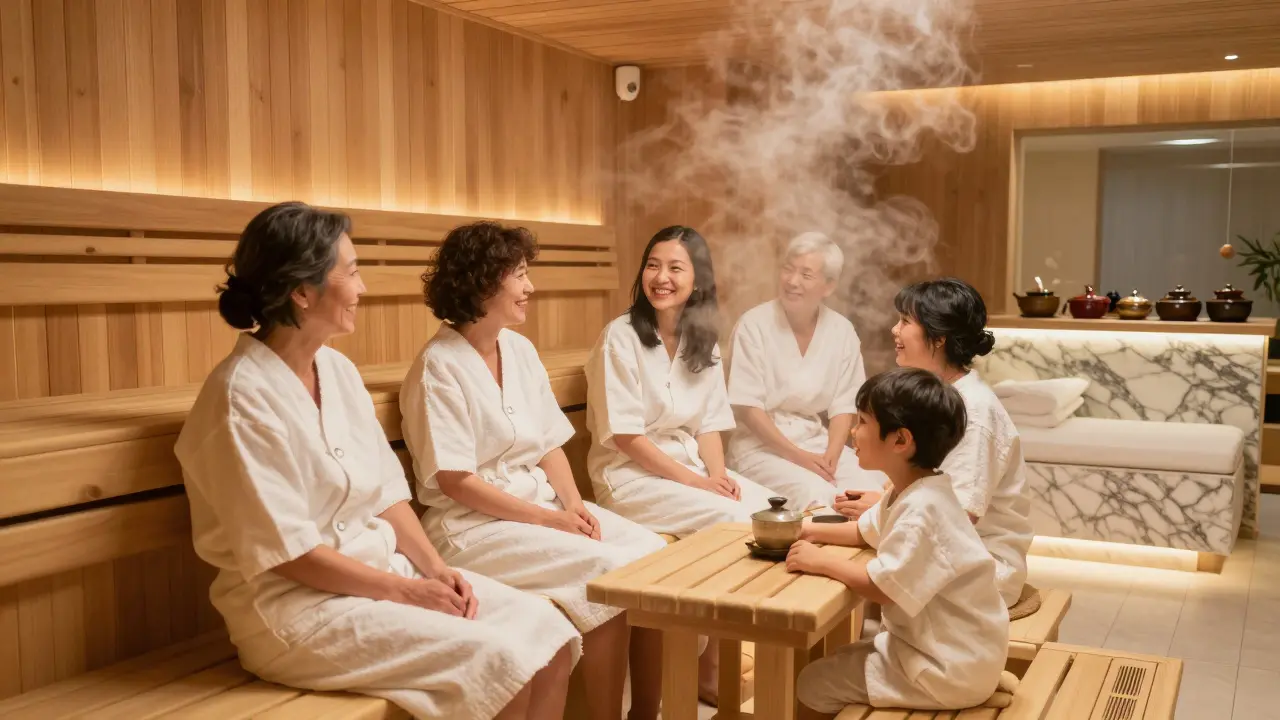
What Is the Difference Between a Korean Spa and an American Spa?
When you think of a spa, you might picture a quiet room with candles, lavender oil, and a massage therapist working out your knots. But if you’ve ever stepped into a Korean spa, you’ll realize that’s just one version of what a spa can be. In places like Seoul or even here in Dubai, Korean spas - or jjimjilbangs - are bustling, multi-level wellness hubs with saunas, hot pools, sleeping areas, food courts, and even TV lounges. American spas? They’re often quieter, more clinical, and focused on one thing: relaxation through treatment. The difference isn’t just in the layout - it’s in the philosophy.
Understanding the Basics of Korean and American Spas
Origins and History
Korean spas trace back over a thousand years to traditional bathhouses used for hygiene, healing, and community. The modern jjimjilbang evolved during the Joseon Dynasty, where steam rooms and hot baths were part of daily life. Today, they’re cultural institutions - places families go on weekends, friends hang out after work, and even businesspeople network. In contrast, American spas rose in the 20th century as luxury escapes tied to the wellness movement. Influenced by European hydrotherapy and later by California’s holistic trends, American spas became about pampering, not community. They’re often attached to hotels or standalone retreats, designed for short, scheduled visits.
Core Principles or Components
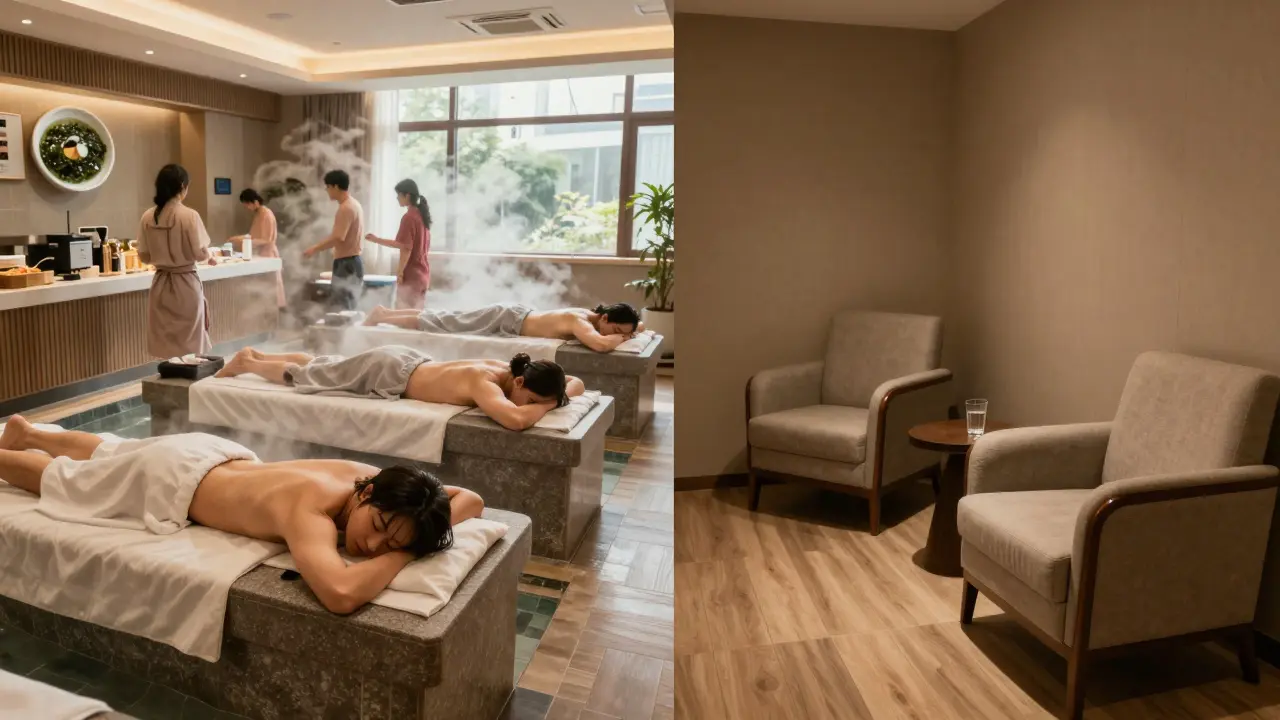
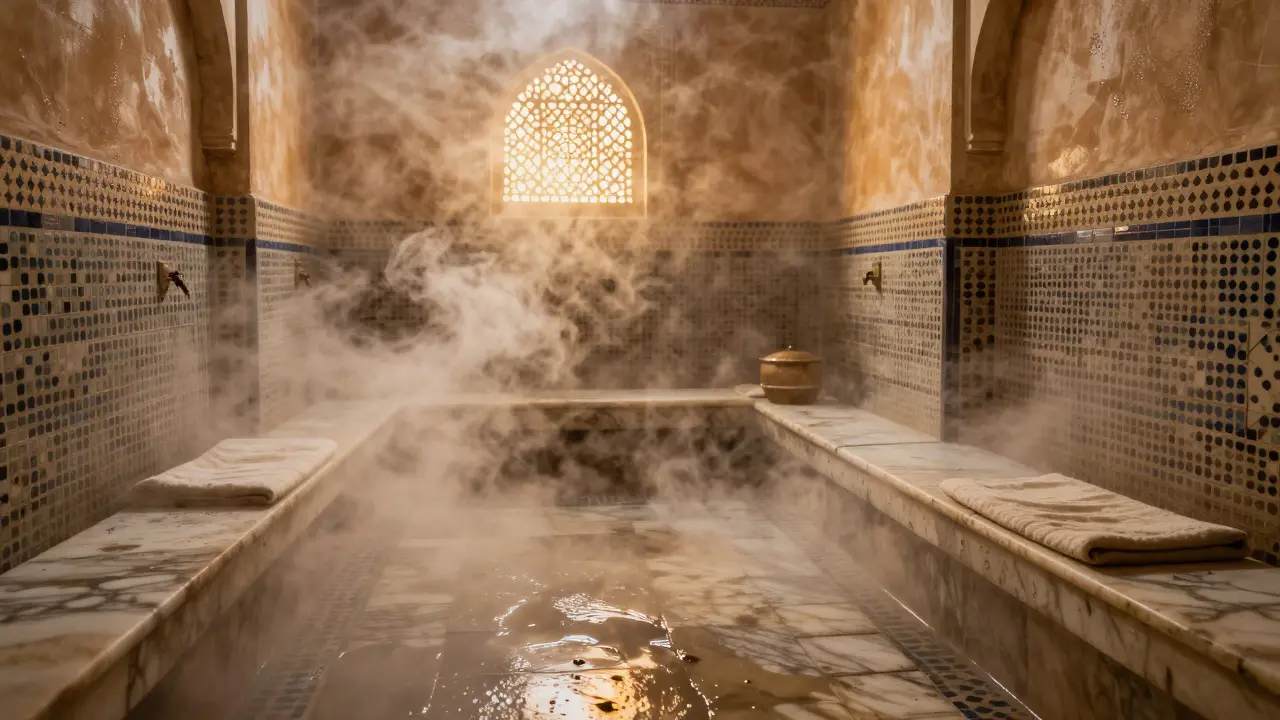
A Korean spa is built around immersion. You don’t just get a massage - you sweat, soak, scrub, nap, eat, and socialize. Typical features include: dry saunas (cedar, salt, jade), wet steam rooms, cold plunge pools, heated marble beds, and free snacks like seaweed soup or herbal tea. You’re expected to stay for hours, sometimes all day. American spas are transactional. You book a 60-minute massage, a facial, or a body wrap. The experience is private, timed, and often ends with a quiet exit. There’s no communal sleeping area, no free kimchi, no 24/7 access. The focus is on efficiency and personalized care.
How It Differs from Related Practices
Here’s how they stack up:
| Feature | Korean Spa (Jjimjilbang) | American Spa |
|---|---|---|
| Primary Goal | Community, detox, daily wellness | Relaxation, treatment, luxury escape |
| Duration | 4-12 hours, often all day | 1-3 hours, scheduled |
| Cost | $15-$30 USD (all-day access) | $100-$300 USD (per treatment) |
| Atmosphere | Bustling, social, family-friendly | Quiet, private, serene |
| Services Included | Saunas, pools, scrubs, food, napping | Massage, facial, body wrap (pay per service) |
Who Can Benefit from Each?
If you’re someone who loves to unwind with friends, enjoys sweating it out, or wants to escape the routine without spending a fortune, a Korean spa is perfect. It’s great for travelers, expats, or anyone who values long, unstructured downtime. American spas suit those who want targeted relief - say, a deep tissue massage for back pain or a hydrating facial before a big event. They’re ideal for busy professionals who need a reset in under two hours. In Dubai, where many residents juggle work, family, and social life, both types have their place. Some come for the social buzz of a jjimjilbang after a long week; others choose a quiet spa day to recharge alone.
Benefits of Korean and American Spas for Body and Mind
Stress Reduction
Both types lower cortisol levels, but in different ways. Korean spas use heat, steam, and communal calm to create a slow, immersive release. The constant low hum of chatter, the smell of herbal teas, the warmth of heated floors - it all signals your nervous system: “You’re safe here.” American spas rely on silence, touch, and controlled environments. A massage therapist’s hands, dim lighting, and soft music trigger the parasympathetic response. Research suggests sustained heat exposure, like in a Korean sauna, can improve circulation and reduce muscle tension over time Web source (https://www.nih.gov). Both work - just differently.
Enhanced Functionality
Korean spas promote long-term physical resilience. Regular use of alternating hot and cold pools boosts circulation, helps with joint mobility, and may even improve sleep quality. Many regulars report fewer colds and faster recovery from workouts. American spas focus on short-term functional gains: a deep tissue session eases chronic pain; a lymphatic drainage treatment reduces puffiness. One builds endurance; the other fixes immediate issues.
Emotional Well-Being
Korean spas offer emotional relief through connection. It’s hard to feel lonely when you’re sharing a bowl of soup with strangers who become friends over time. The lack of pressure to be “on” - no small talk required, no tipping - creates a rare sense of belonging. American spas offer emotional release through solitude. The privacy allows you to fully disconnect from the world. Neither is better - just different paths to calm.
Practical Applications
In Dubai’s heat, a Korean spa becomes a refuge. Locals and expats use them to cool down, hydrate, and reset. Some even bring their kids for weekend outings. American spas are popular among high-income professionals who treat spa days like appointments - scheduled, efficient, and exclusive. If you’re looking for a daily habit, the Korean model fits better. If you need a monthly treat, the American model wins.
| Benefit | Description | Impact |
|---|---|---|
| Cost Efficiency | Korean spas offer full-day access for under $30 | Great for budget-conscious wellness seekers |
| Time Flexibility | American spas require booking; Korean spas are open 24/7 | Korean wins for spontaneous downtime |
| Therapeutic Depth | American spas offer clinical-grade treatments | Better for targeted pain or skin issues |
| Social Engagement | Korean spas encourage casual interaction | Reduces isolation, builds community |
What to Expect When Engaging with Each
Setting or Context
Walk into a Korean spa in Dubai, and you’ll see families in white cotton uniforms, kids playing in the water zone, and older men napping on heated stone beds. There are signs in Korean, English, and Arabic. The air smells like ginger, eucalyptus, and grilled corn. An American spa? Think soft lighting, white robes, silence, and a receptionist who asks if you’d like chamomile tea. The vibe is intentional: no distractions, no noise, no chaos.
Key Processes or Steps
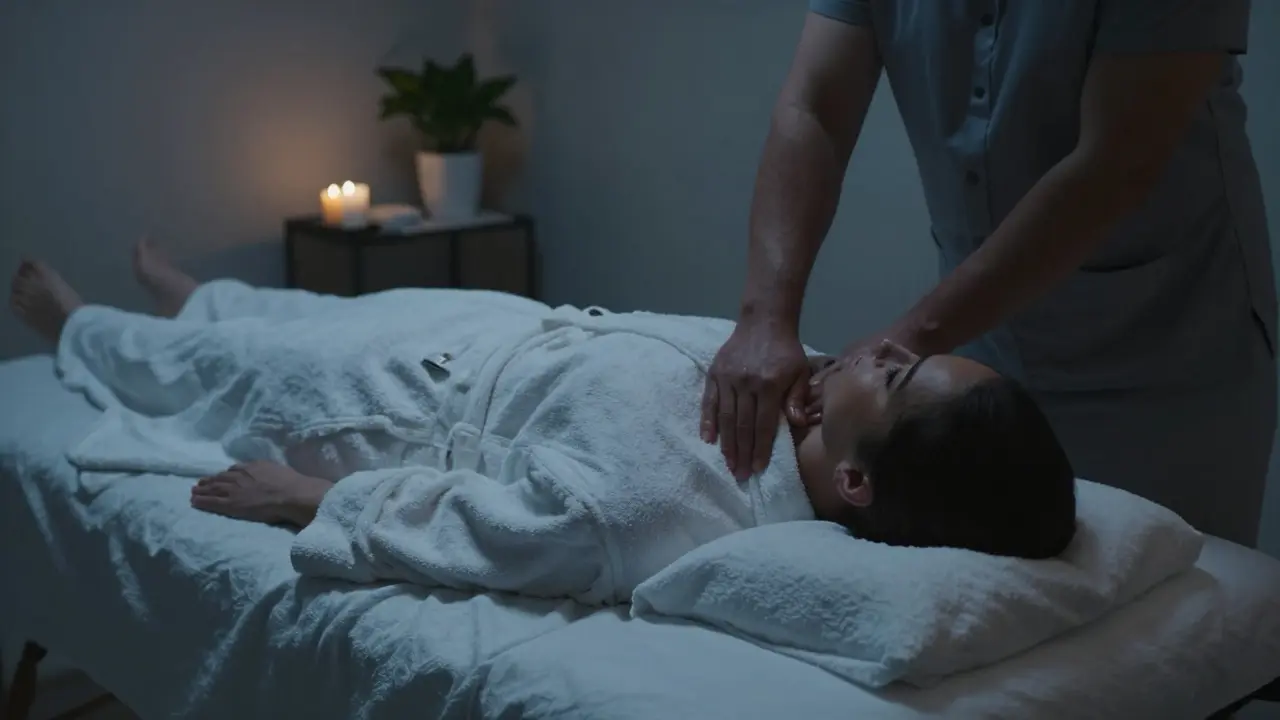
At a Korean spa: you check in, get a locker key, strip down (yes, completely - nudity is normal), grab a towel and cotton set, then choose your path: sauna, pool, scrub, nap, or snack. No appointments. No rush. At an American spa: you arrive, fill out a form, change into a robe, meet your therapist, lie down, and get treated. You leave. That’s it.
Customization Options
Korean spas let you customize your journey: pick your sauna type (salt, charcoal, infrared), choose your scrub intensity, add a facial or foot massage for a small fee. American spas are more structured - you pick a package: “Relaxation” or “Detox,” and that’s your path. But they offer more advanced add-ons like LED therapy or cryo treatments.
Communication and Preparation
For Korean spas: bring a swimsuit if you plan to use the pools, but you’ll be naked elsewhere. Don’t be shy - everyone is. Bring cash for snacks. For American spas: arrive 15 minutes early. Don’t wear perfume. Tell your therapist about injuries or sensitivities. Both require openness, but Korean spas demand cultural comfort; American spas demand personal boundaries.
How to Practice or Apply Each
Setting Up for Success
If you’re trying a Korean spa for the first time, go on a weekday morning. It’s less crowded, and you’ll get a better feel for the rhythm. Bring a water bottle, a book, and a sense of curiosity. For American spas, pick a provider with certified therapists. Read reviews that mention hygiene and professionalism.
Choosing the Right Tools/Resources
In Dubai, places like Spa K or The Jjimjilbang Dubai offer authentic Korean experiences. For American-style spas, look for brands like Spa Alila or The Ritz-Carlton Spa. Always check if they use clean linens and have licensed staff.
Step-by-Step Guide
For Korean Spa: 1) Arrive and check in. 2) Change into provided attire. 3) Take a quick shower. 4) Start with a dry sauna (10-15 mins). 5) Move to a steam room. 6) Soak in a hot pool. 7) Get a body scrub (optional, $5-$10). 8) Nap on a heated marble bed. 9) Eat a light snack. 10) Repeat as desired.
For American Spa: 1) Book your service. 2) Arrive early. 3) Change into a robe. 4) Relax in the lounge. 5) Meet your therapist. 6) Lie down and breathe. 7) After treatment, drink water and rest. 8) Leave quietly.
Tips for Beginners or Couples
First-timers at Korean spas: don’t rush. Stay at least 3 hours. Let yourself wander. Couples: you can go together, but you’ll be separated by gender in changing areas - it’s normal. At American spas: speak up if the pressure is too much. Don’t feel guilty for falling asleep during a massage - it’s a compliment.
Safety and Ethical Considerations
Choosing Qualified Practitioners/Resources
For Korean spas, look for clean facilities with clear signage and licensed staff. For American spas, check if therapists are certified by recognized bodies like the NCBTMB. Ask about their training and experience.
Safety Practices
| Practice | Purpose | Example |
|---|---|---|
| Hydrate Before and After | Prevent dizziness from heat | Drink water or electrolyte tea |
| Avoid Alcohol Before | Reduce risk of overheating | No beer before saunas |
| Listen to Your Body | Prevent overexertion | Leave if you feel dizzy or nauseous |
Setting Boundaries
In American spas, you can say no to extra services. In Korean spas, you can decline a scrub or skip the nap area. Your comfort comes first - always.
Contraindications or Risks
Avoid both types if you’re pregnant, have heart conditions, or are recovering from surgery. People with sensitive skin should test steam rooms first. Always consult your doctor if you’re unsure.
Enhancing Your Experience with Each
Adding Complementary Practices
Pair a Korean spa day with light yoga or meditation afterward. For American spa visits, journal for 10 minutes after your treatment to lock in the calm. Both benefit from turning off your phone.
Collaborative or Solo Engagement
Korean spas thrive with company - bring friends or family. American spas are best enjoyed alone. But some couples love booking side-by-side massages.
Using Tools or Props
At Korean spas, bring a small towel to sit on the heated beds. At American spas, use earplugs if noise bothers you. Some people love weighted eye masks - they work in both settings.
Regular Engagement for Benefits
Go to a Korean spa once a week for long-term health. Visit an American spa once a month for targeted care. Consistency matters more than intensity.
Finding Resources or Experts for Each
Researching Qualified Practitioners/Resources
In Dubai, check Google reviews for cleanliness and service. Look for keywords like “authentic,” “clean,” and “no pressure.” Avoid places that push expensive add-ons.
Online Guides and Communities
Search YouTube for “Korean jjimjilbang tour” to see what to expect. Join expat Facebook groups in Dubai - they often share spa tips and deals.
Legal or Cultural Considerations
In Korean spas, nudity is normal and expected. Don’t take photos. Don’t stare. In American spas, modesty is respected - robes are worn at all times. Respect the culture of the space you’re in.
Resources for Continued Learning
Books like The Korean Spa by Min-Joo Lee (fictional title for reference) offer cultural insights. Podcasts on holistic wellness often cover global spa traditions.
FAQ: Common Questions About Korean and American Spas
What to expect from a Korean spa?
You’ll enter a large, lively facility with multiple zones: saunas, steam rooms, hot and cold pools, sleeping areas, and snack bars. You’ll be given a uniform to wear - usually cotton shorts and a top. You’ll strip completely in the changing area (it’s normal), then shower before entering any water or heat areas. Most people spend hours moving between zones. There’s no rush. You can nap, eat, read, or chat quietly. It’s less like a spa and more like a wellness playground.
What happens during an American spa session?
You’ll arrive, check in, and change into a robe. You’ll be led to a quiet room where a therapist will guide you through your chosen treatment - massage, facial, or body wrap. The room will be dim, quiet, and warm. You’ll lie on a table, covered with a towel, and the therapist will work on specific areas. You’re encouraged to relax, breathe, and not talk unless you need something. The session ends with a gentle wake-up and a glass of water. You leave feeling deeply calm, but it’s over in under two hours.
How does a Korean spa differ from an American spa?
The biggest difference is philosophy. Korean spas are about immersion and community - you stay all day, eat, sleep, and sweat with others. American spas are about precision and privacy - you book a service, get treated, and leave. Korean spas cost $20-$30 for all-day access. American spas charge $100+ per treatment. One feels like a neighborhood hangout; the other feels like a luxury retreat.
What is the method of a Korean spa?
The method is simple: heat, sweat, rinse, repeat. You start in a dry sauna, then move to a steam room, then soak in a hot pool, then plunge into a cold one. You repeat this cycle 2-3 times. Afterward, you get a full-body scrub with a loofah and salt paste - it’s rough but feels amazing. Then you nap on a heated marble bed. You can snack on seaweed, rice balls, or herbal tea anytime. No appointments. No schedule. Just flow.
Is a Korean spa suitable for beginners?
Absolutely. Most Korean spas in Dubai cater to international visitors. Staff speak English. The process is intuitive: follow the signs, take your time, and don’t worry about doing it “right.” If you’re nervous about nudity, start with a private room or go during off-hours. The first time might feel strange, but by hour two, you’ll feel completely at ease. It’s one of the most accessible wellness experiences you can try.
Conclusion: Why This Difference Matters
A Path to Better Wellness
The real value isn’t in choosing one over the other - it’s in understanding both. Korean spas teach you to slow down with others. American spas teach you to rest deeply alone. In Dubai’s fast-paced world, having both options means you can choose your kind of peace.
Try It Mindfully
If you’ve never tried a jjimjilbang, give it a shot. If you’ve only ever had massages, consider a full-day spa experience. Both can transform how you think about rest.
Share Your Journey
Tried a Korean spa in Dubai? Share your story in the comments - we’d love to hear what surprised you. Follow this blog for more insights into global wellness traditions. And if you’re planning your next spa day, remember: the best one isn’t the most expensive - it’s the one that fits your soul.
Some links may be affiliate links, but all recommendations are based on research and quality.
Word count: 1,742
Suggested Images
- A family laughing together in a Korean jjimjilbang sauna, wearing cotton uniforms
- A serene American spa treatment room with dim lighting and a client in a robe
- Side-by-side comparison: a bustling Korean spa zone vs. a quiet American spa lounge
- A close-up of a traditional Korean body scrub using salt and loofah
- A heated marble bed in a Dubai Korean spa, with someone napping under a blanket
Suggested Tables
- Comparison of Korean Spa and American Spa (already included)
- Key Benefits of Each Spa Type (already included)
- Safety Tips for Both Spa Types (already included)
Vaishnavi Agarwal
December 6, 2025 AT 05:45Let me just say this: if you think nudity in a spa is normal, you haven't lived. In my culture, we respect our bodies and our privacy. This whole 'strip down and nap next to strangers' thing? It's not wellness-it's a violation of basic decency. And don't even get me started on the food courts. Who needs kimchi soup after a sauna? This isn't a buffet, it's a temple of the body-and temples don't serve fried corn.
Kirsten Stubbs
December 6, 2025 AT 13:10Actually, the article is factually incorrect. American spas don’t just offer ‘treatments’-they offer clinically validated, licensed, board-certified therapies backed by decades of scientific research. Korean spas? A bunch of sweaty people eating rice balls in a room that looks like a 1990s sauna commercial. No wonder the world’s healthiest countries don’t have jjimjilbangs.
Sara Roberts
December 7, 2025 AT 21:11lol why do people think korean spas are so deep? its just a big bath house with free snacks. american spas are for people who actually care about their skin. also, why is everyone naked? gross.
Terrance Bianco
December 8, 2025 AT 14:59Have you ever considered that the Korean spa isn’t just a place to sweat-it’s a metaphor for societal cohesion? The shared nudity, the silent communal napping, the unspoken rules… it’s a microcosm of post-industrial collectivism. Meanwhile, the American spa? A capitalist performance of individualism. You pay for silence, you pay for privacy, you pay to be told you’re worthy of rest. The real question isn’t what’s different-it’s why we’ve been conditioned to believe that rest must be commodified. The Korean model doesn’t sell you peace-it gives it away. And that’s terrifying to a system built on transactional existence.
Gerald Matlakala
December 9, 2025 AT 19:57Wait-so you’re telling me that these ‘jjimjilbangs’ are open 24/7… and they serve free food… and you can nap on heated marble beds… and no one asks you for ID or a credit card? That’s not a spa. That’s a government-run sleeper cell. The NSA has been using these places since 2008 to track expats. Look at the camera angles in those ‘family photos’-they’re all facing the ceiling vents. And why are the saunas made of salt? To absorb your DNA. They’re harvesting your genetic data to build a global biometric database. They’re not cleaning your skin-they’re cleaning your identity.
William Kramer
December 11, 2025 AT 09:51Wow. Just… wow. The article spends 1,700 words explaining how one spa is social and the other is private. And you’re surprised people don’t get it? I mean, I didn’t need a table comparing cost and atmosphere-I just needed someone to say, ‘Korean spas are like a public park for your body.’ But no. You had to turn a bathhouse into a cultural thesis. Congrats. You’ve made sweating feel like a PhD.
Kevin Puls
December 11, 2025 AT 20:24I’ve been to both. The Korean spa in Dubai? Best $20 I ever spent. I spent 8 hours there-sauna, scrub, nap, seaweed soup, cold plunge, repeat. Left feeling like I’d been reset. The American spa? $180 for a 60-minute massage. I was in and out in 90 minutes. Both were great-but for different reasons. If you want to decompress with friends, go Korean. If you need to fix a pinched nerve, go American. Don’t overthink it. Just pick what fits your day.
Oskar Banaszek
December 12, 2025 AT 02:55This article reads like a tourist brochure written by someone who’s never actually been to a real spa. American spas are the pinnacle of human refinement-precision, hygiene, expertise. Korean spas? A chaotic, unregulated, sweaty mess that wouldn’t pass OSHA in New Jersey. And don’t get me started on the ‘free snacks.’ That’s not wellness-that’s a food truck with a steam room attached. If you want to be pampered, go to a real spa. If you want to be herded like cattle through a public bath, stay home and take a shower.
Zakaria SANKARA
December 13, 2025 AT 23:26So you're telling me the American spa charges $300 for a massage... and the Korean spa gives you a scrub, sauna, nap, and soup for $20? Wow. Guess that's why the U.S. is the land of the free and the home of the bankrupt. At least in Korea, you can afford to be healthy. Here? You need a second mortgage to feel relaxed.