
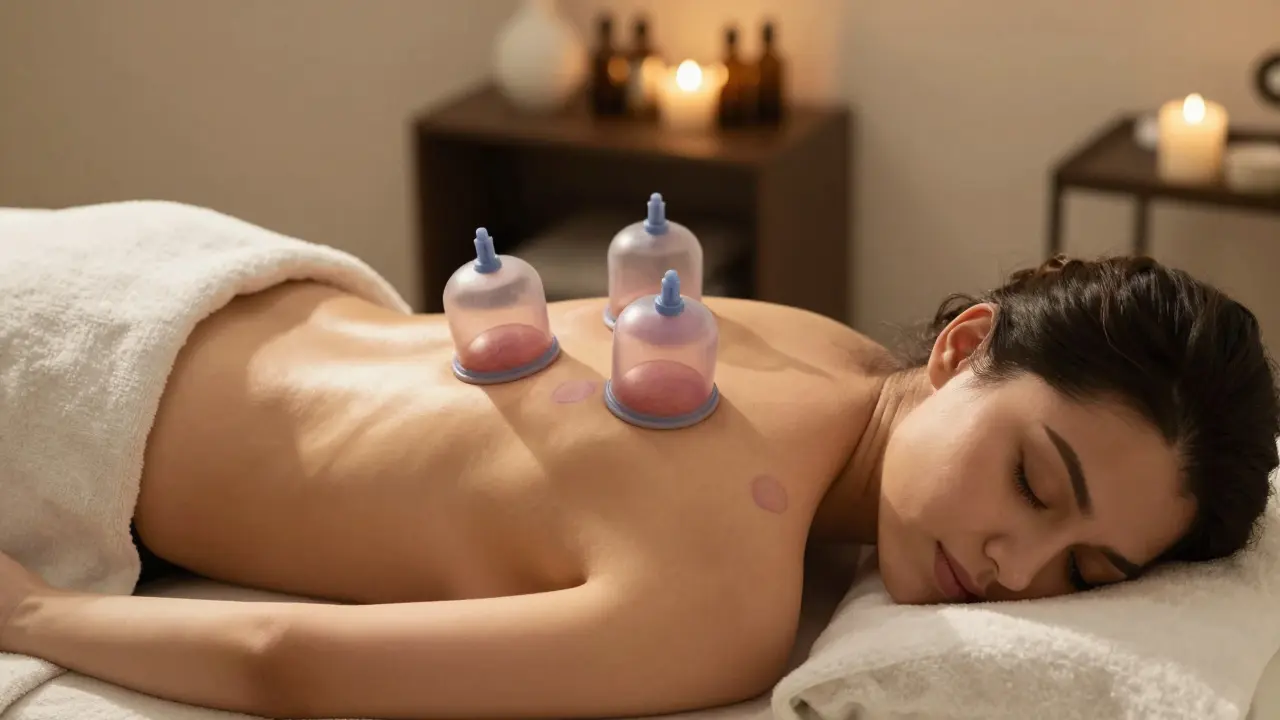
Why Does Cupping Leave Blood Marks? The Truth Behind the Bruises
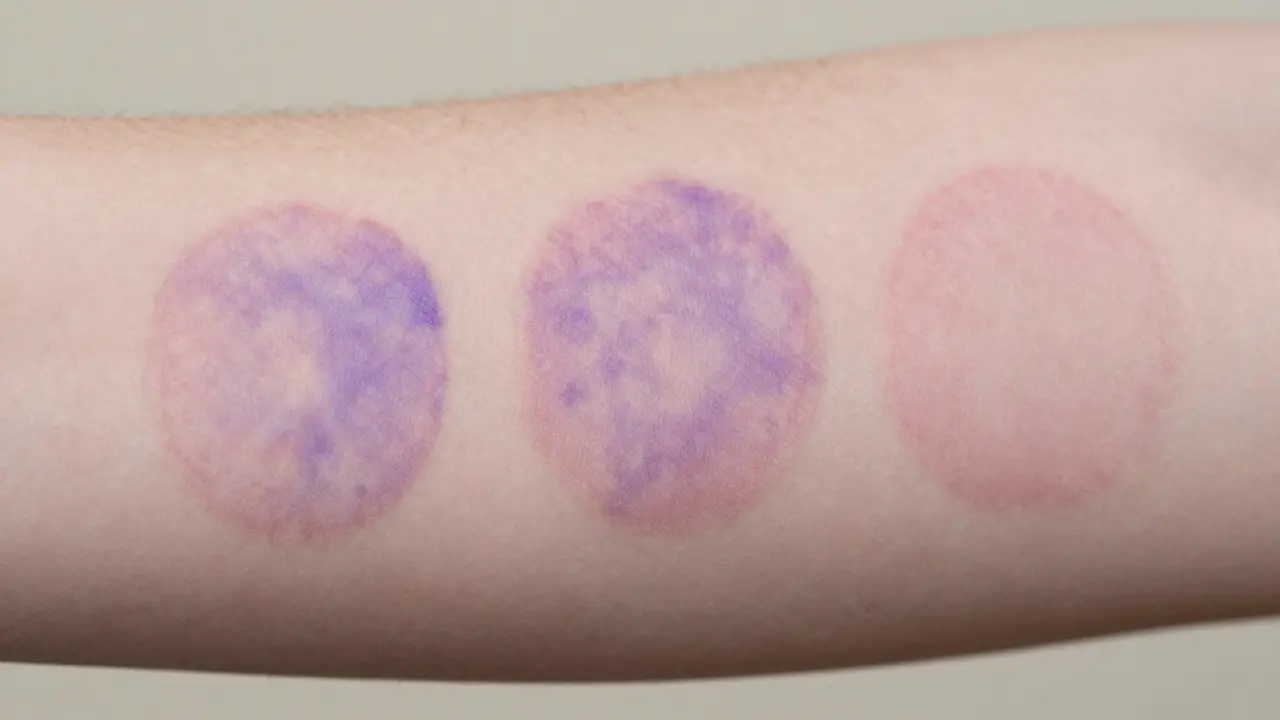
When people first see the dark circular marks left by cupping therapy, they often panic. Is this damage? Is it dangerous? Why is there what looks like a blood clot under the skin? The truth is, cupping doesn’t cause blood clots - it brings stagnant blood and fluids to the surface. Those marks aren’t bruises from injury. They’re signs of release - a visual map of where tension, toxins, and stagnation were trapped in your tissues.
Many assume cupping is just an ancient fad, but it’s been used for thousands of years across cultures - from ancient Egypt to traditional Chinese medicine, and even in early Greek practices. Today, it’s common in Dubai spas, wellness centers, and even among athletes recovering from intense training. But if you’ve never experienced it, those purple rings can look alarming. Let’s clear up the confusion.
Understanding the Basics of Cupping Therapy
Origins and History
Cupping has roots that stretch back over 3,000 years. Ancient Egyptian medical texts from 1550 BCE describe using hollowed animal horns to draw out "bad humors." In China, bamboo cups were used in the Han Dynasty (206 BCE-220 CE) to treat lung diseases and pain. By the 19th century, glass cups replaced bamboo, and the practice spread through Europe and the Middle East. Today, modern cupping blends these traditions with current understanding of fascia, circulation, and inflammation. It’s not magic - it’s physics and physiology working together.
Core Principles or Components
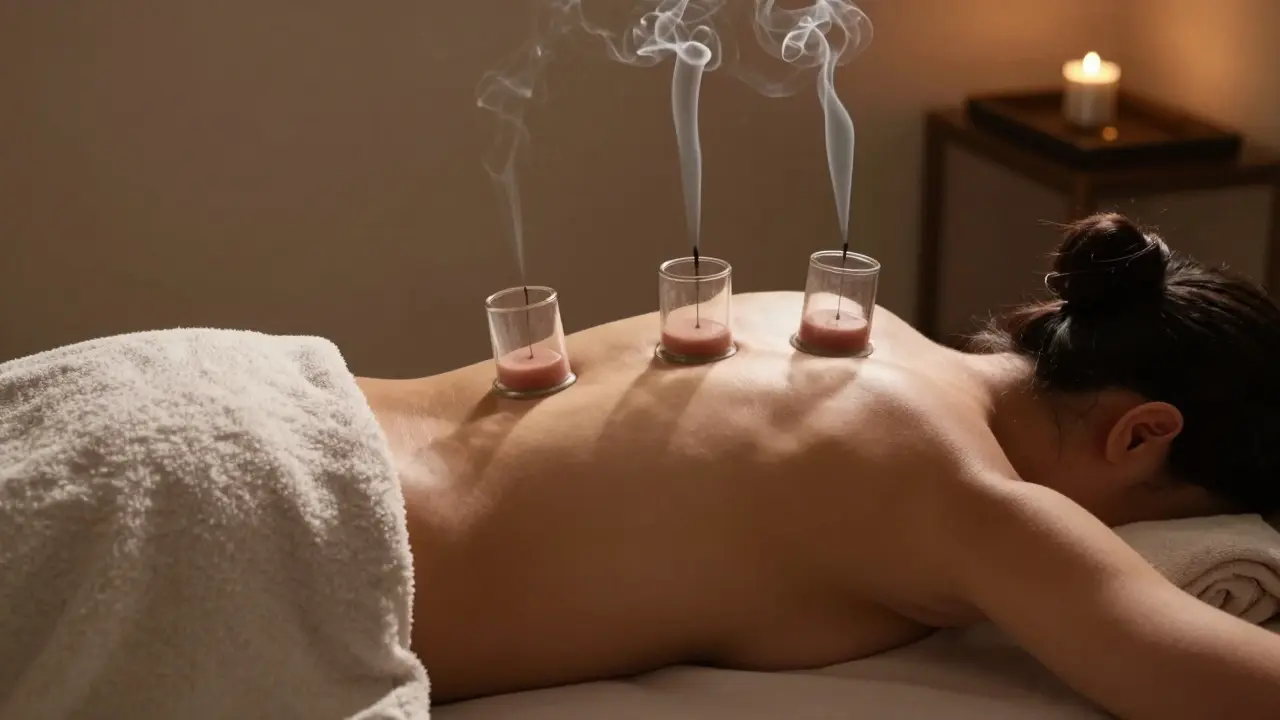
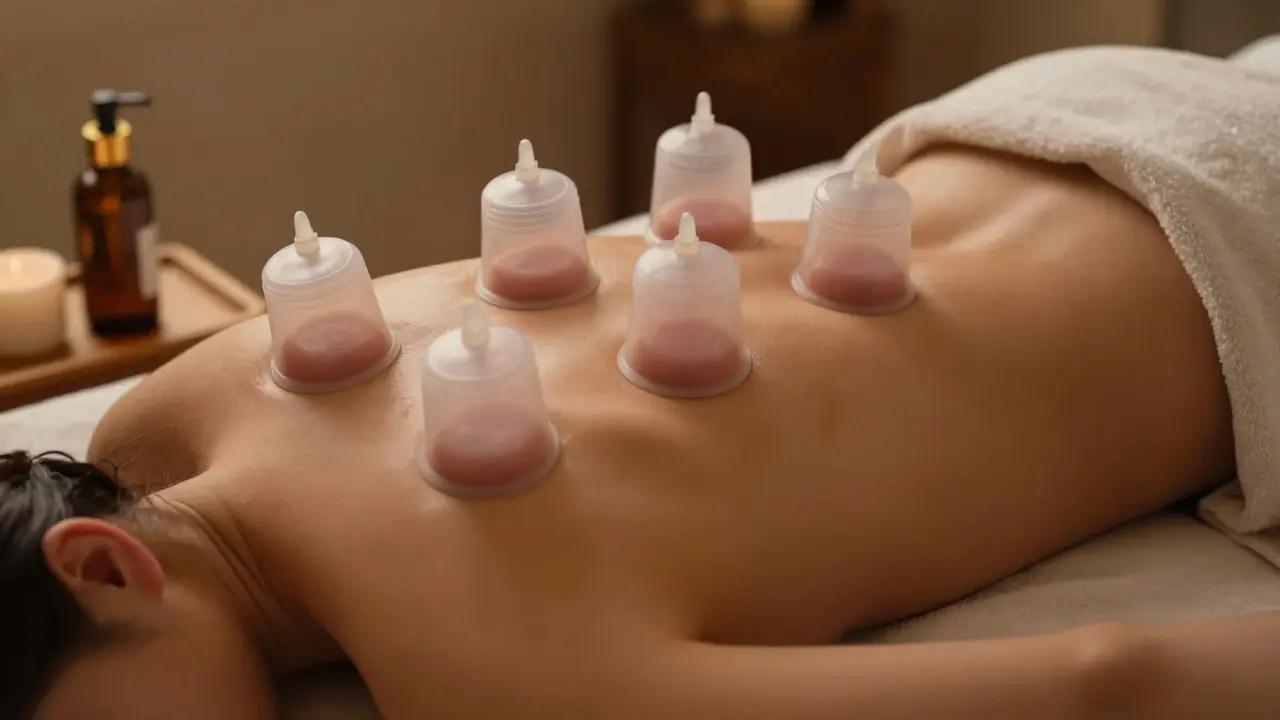
At its heart, cupping creates negative pressure. A glass or silicone cup is placed on the skin, and air is removed - either by heat (in traditional fire cupping) or a manual pump (in modern silicone cups). This suction lifts the skin, muscle, and connective tissue slightly off the bone. The goal isn’t to break skin - it’s to stimulate blood flow, release fascial adhesions, and encourage lymphatic drainage. The marks appear because tiny capillaries near the surface rupture under pressure, releasing old blood and metabolic waste that had pooled there. Think of it like squeezing a sponge full of dirty water - the discoloration is the gunk coming out.
How It Differs from Related Practices
People often confuse cupping with acupuncture, massage, or bloodletting. Here’s how they’re different:
| Practice | Key Feature | Primary Benefit |
|---|---|---|
| Cupping | Creates suction to lift tissue | Releases deep fascial tension, improves circulation |
| Acupuncture | Inserts fine needles into specific points | Regulates energy flow (Qi), targets nerve pathways |
| Deep Tissue Massage | Applies direct pressure to muscles | Breaks up knots, reduces muscle tightness |
Cupping doesn’t puncture the skin. It doesn’t target acupuncture points like needles do. And unlike massage, which pushes tissue down, cupping pulls it up. That’s why it reaches deeper layers than most hands-on therapies.
Who Can Benefit from Cupping?
Cupping isn’t for everyone, but many find relief from chronic muscle pain, migraines, stress, and even respiratory congestion. Athletes use it to recover faster. Office workers with stiff necks and shoulders swear by it. People with fibromyalgia or arthritis often report reduced stiffness after a few sessions. It’s especially popular in Dubai, where high temperatures and sedentary lifestyles contribute to muscle tension and poor circulation. If you’ve tried massage and still feel tight, cupping might be the next step.
Benefits of Cupping Therapy for Your Body
Stress Reduction
Cupping triggers the parasympathetic nervous system - your body’s "rest and digest" mode. The gentle pulling sensation signals safety to your brain, lowering cortisol levels. Many clients describe it as a deep, almost meditative release. One woman in Jumeirah told me she felt like "her shoulders finally stopped screaming." That’s not just anecdotal. Studies from the National Institutes of Health suggest cupping may reduce markers of inflammation and improve autonomic balance (Web source (https://www.nih.gov)).
Enhanced Functionality
When fascia - the connective tissue wrapping your muscles - gets stuck, movement becomes stiff and painful. Cupping helps separate those layers, restoring glide and flexibility. Dancers, swimmers, and even people with desk jobs report improved range of motion after just one session. It’s like giving your joints a reset button.
Emotional Well-Being
Chronic tension isn’t just physical. It lives in your nervous system. Cupping doesn’t just release muscles - it releases stored stress. People often cry during or after a session, not from pain, but from emotional release. It’s not therapy, but it can act like a pressure valve for buried anxiety. In cultures where talking about stress is taboo, cupping offers a silent, non-verbal way to let go.
Practical Applications
Here’s what cupping can actually do for daily life:
| Benefit | Description | Impact |
|---|---|---|
| Reduced Muscle Soreness | Speeds up recovery after workouts | Less downtime, faster return to activity |
| Improved Breathing | Loosens chest and rib cage tension | Easier deep breaths, less wheezing |
| Headache Relief | Releases neck and shoulder tightness | Fewer tension headaches |
| Detox Support | Stimulates lymph flow | Reduced bloating, clearer skin |
What to Expect When Engaging with Cupping Therapy
Setting or Context
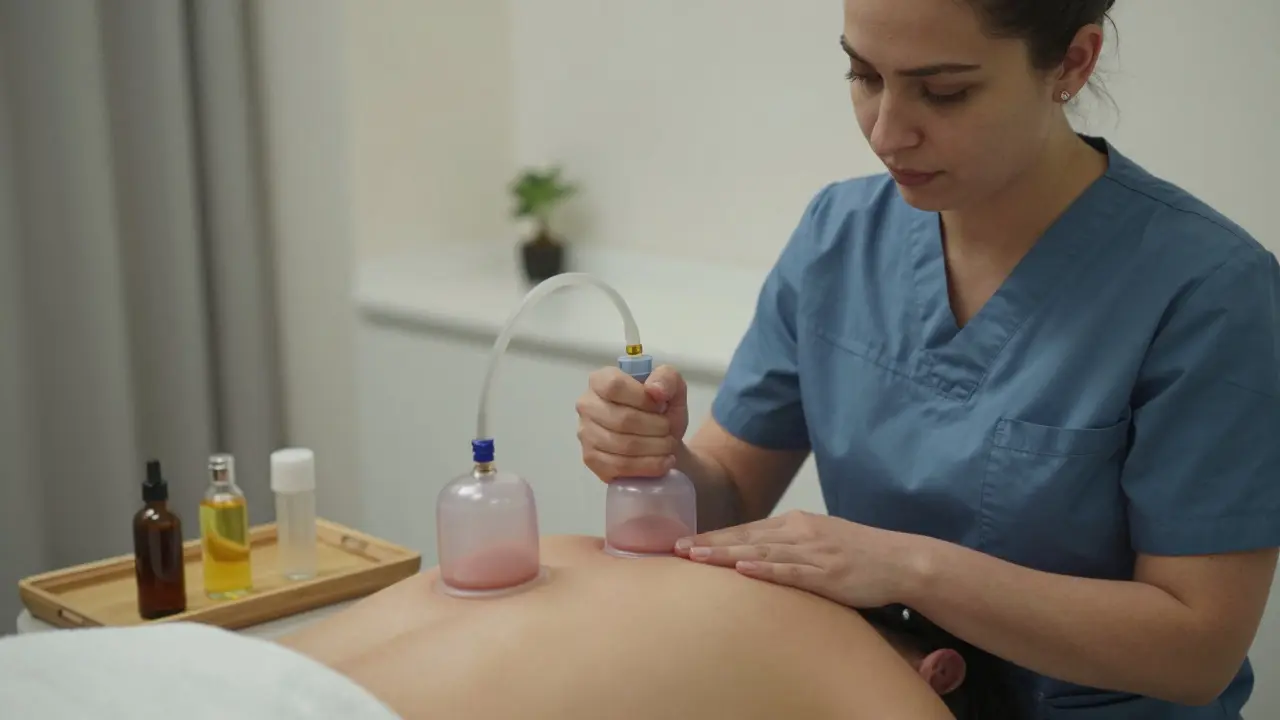
Most sessions happen in quiet, dimly lit rooms with soft music. You’ll lie on a table, fully clothed or draped in a towel. The therapist will apply oil or lotion to help the cups glide. In Dubai, many spas use silicone cups - quieter, safer, and easier to control than fire cups. The atmosphere is calming, not clinical. You’re not being "treated" - you’re being supported.
Key Processes or Steps
A typical session lasts 20-30 minutes:
- The therapist selects areas based on your complaints - back, shoulders, legs, or even the neck.
- Cups are placed using suction (no heat or fire in modern settings).
- Cups stay on for 5-15 minutes. You might feel a gentle pulling or warmth.
- Cups are removed slowly. The marks appear immediately after.
- Light stretching or massage may follow to help circulation.
The sensation is unusual - not painful, but deeply strange. Like being hugged from the inside.
Customization Options
Cupping isn’t one-size-fits-all. Light suction is used for sensitive areas like the face or neck. Stronger suction targets deep muscle knots. Some therapists use "sliding cupping," where the cup moves across the skin - great for large muscle groups. Others use "flash cupping," quickly placing and removing cups for a stimulating effect. Tell your therapist what you’re feeling. They’ll adjust.
Communication and Preparation
Before your session, drink water. Avoid heavy meals. Let your therapist know if you’re on blood thinners, pregnant, or have skin conditions. Don’t be shy - this isn’t a test. The more honest you are, the safer and more effective it will be.
How to Practice or Apply Cupping Therapy
Setting Up for Success
If you’re trying home cupping kits (which are widely available), choose silicone cups with adjustable suction. Avoid glass cups unless you’ve been trained - fire cupping carries burn risks. Use a clean towel, massage oil, and a quiet space. Never use cupping on broken skin, open wounds, or over varicose veins.
Choosing the Right Tools or Resources
Look for certified practitioners with training in traditional or medical cupping. In Dubai, check if they’re registered with the Dubai Health Authority (DHA). Reputable spas will show their credentials. Avoid places offering "cupping for weight loss" or "detox cures" - those are marketing gimmicks. Cupping doesn’t burn fat or purge toxins like a miracle cleanse.
Step-by-Step Guide
For home use:
- Apply a few drops of oil to the skin.
- Press the silicone cup firmly onto the area.
- Squeeze the bulb to create gentle suction - don’t overdo it.
- Leave it on for 5-10 minutes.
- Release the suction by pressing the edge of the cup to let air in.
- Repeat on other areas, but never on the same spot twice in one day.
Tips for Beginners
First-timers often worry about the marks. They’re normal. They fade in 3-10 days. Don’t cover them with makeup - let your skin breathe. Avoid sun exposure right after. And don’t rush into intense sessions. Start light. Your body will tell you what it needs.
Safety and Ethical Considerations
Choosing Qualified Practitioners
In Dubai, only licensed healthcare providers or certified wellness therapists can legally offer cupping. Ask to see their DHA registration. If they can’t show it, walk away. Untrained practitioners can cause bruising, burns, or infections.
Safety Practices
Here’s how to stay safe:
| Practice | Purpose | Example |
|---|---|---|
| Use clean cups | Prevent infection | Single-use silicone liners or sterilized glass |
| Don’t cup over tattoos | Avoid ink distortion | Wait 6+ weeks after getting a tattoo |
| Hydrate after | Help flush released fluids | Drink 1-2 glasses of water |
Setting Boundaries
You’re in control. If the suction hurts, say so. If you feel dizzy, ask them to stop. No one should pressure you into deeper pressure "for better results." Your comfort is the priority.
Contraindications or Risks
Cupping isn’t safe for everyone. Avoid it if you:
- Have bleeding disorders or take blood thinners (like warfarin)
- Are pregnant (especially on the abdomen or lower back)
- Have skin infections, eczema, or open wounds
- Have pacemakers or other implanted devices (rare, but possible interference)
- Have severe osteoporosis
Always consult your doctor if you’re unsure.
Enhancing Your Experience with Cupping Therapy
Adding Complementary Practices
Cupping works better with movement and hydration. Pair it with light yoga, walking, or stretching. Avoid intense workouts right after. Some people combine it with aromatherapy - lavender or eucalyptus oils help calm the nervous system.
Collaborative or Solo Engagement
Cupping is usually a solo experience. But some couples book side-by-side sessions - it’s a quiet way to share relaxation without talking. No pressure. Just calm.
Using Tools or Props
After your session, use a foam roller gently on the treated areas. It helps integrate the release. A warm bath with Epsom salts can ease lingering soreness.
Regular Engagement for Benefits
One session can feel amazing. But lasting change comes with consistency. Most people benefit from once every 2-4 weeks. Athletes might do it weekly during training. Listen to your body - not the spa’s upsell.
Finding Resources or Experts for Cupping Therapy
Researching Qualified Practitioners
In Dubai, check the Dubai Health Authority website for licensed wellness centers. Read reviews on Google or Tripadvisor - look for comments about hygiene, communication, and results. Avoid places that promise "instant detox" or "cure for diabetes." Those are red flags.
Online Guides and Communities
Reputable wellness blogs like the International Cupping Therapy Association (Web source (https://www.cuppingtherapy.org)) offer free guides. YouTube has tutorials - but stick to videos from licensed therapists, not influencers.
Legal or Cultural Considerations
Cupping is legal in the UAE, but only when performed by certified professionals. Some traditional practices involve fire - those are allowed only in licensed clinics. Don’t let anyone use open flame near you unless they’re trained and regulated.
Resources for Continued Learning
Books like Cupping Therapy: A Clinical Guide by Dr. Wang (a respected TCM practitioner) offer solid background. Podcasts like "The Wellness Hour" occasionally feature cupping experts.
FAQ: Common Questions About Cupping Therapy
Why does cupping leave dark marks? Are they bruises or blood clots?
The dark circles aren’t bruises from trauma, and they’re not blood clots. They’re caused by tiny capillaries breaking under suction, releasing old blood and metabolic waste that had pooled in the tissue. Think of it as your body’s way of flushing out stagnation. These marks fade naturally in 3-10 days and leave no lasting damage. They’re a sign the therapy worked - not that it harmed you.
Is cupping therapy safe for everyone?
No. Cupping isn’t recommended for people with bleeding disorders, those on blood thinners, pregnant women (especially on the abdomen or lower back), or anyone with skin infections or open wounds. People with severe osteoporosis or pacemakers should also avoid it. Always check with your doctor first if you have any health conditions. Safety comes before results.
How long do cupping marks last?
Most marks fade within 3 to 10 days. Lighter suction leaves faint pink circles that disappear in a few days. Stronger suction can leave darker purples or even blackish marks that take up to two weeks. The longer they last, the more stagnation was present. Don’t cover them with makeup - let your skin breathe. Sun exposure can darken them, so stay out of direct sunlight until they fade.
Does cupping really detox the body?
Cupping doesn’t remove toxins like a liver cleanse. But it does stimulate lymphatic drainage and improve circulation, helping your body’s natural detox systems work better. The dark marks are old blood and metabolic byproducts being brought to the surface - not "poisons." It’s not magic, but it supports your body’s own cleanup crew.
Can I do cupping at home safely?
Yes - with the right tools. Use silicone cups with manual suction pumps, not glass or fire cups. Never use them on broken skin, tattoos, or over bones. Limit sessions to 10 minutes per area and never do it daily. Start light. If you feel pain, stop. Home cupping is great for maintenance, but for deep tension or chronic pain, see a trained therapist.
Conclusion: Why Cupping Therapy is Worth Exploring
A Path to Deep Release
Cupping isn’t about looking cool with purple circles. It’s about releasing what’s been stuck - in your muscles, your nerves, your energy. If you’ve tried massage, stretching, or even acupuncture and still feel tight, cupping might be the missing piece. It’s gentle, non-invasive, and deeply effective.
Try It Mindfully
Don’t rush into it. Choose a certified therapist. Communicate your needs. Listen to your body. And if the marks freak you out at first - that’s okay. They’re not a scar. They’re a story. A sign your body is healing.
Share Your Journey
Tried cupping? Share your experience in the comments - the good, the strange, the surprising. Follow this blog for more honest wellness insights from Dubai. And if you’re curious about other ancient therapies that still work today - stay tuned. There’s more where this came from.
Some links may be affiliate links, but all recommendations are based on research and quality.
Word count: 1,682
Suggested Images
- A woman lying on a massage table with silicone cups on her upper back, soft lighting, serene expression
- Close-up of cupping marks on a forearm - purplish circles, no broken skin
- A therapist using a manual suction pump on a client’s shoulder, professional setting
- Side-by-side photo: one person with cupping marks, another without - caption: "Normal after-effects, not injury"
- A cupping kit: silicone cups, oil bottle, pump, and clean towel arranged neatly
Suggested Tables
- Comparison of Cupping, Acupuncture, and Massage
- Key Benefits of Cupping Therapy
- Cupping Safety Tips
Brice Maiurro
January 19, 2026 AT 00:00okay but like… those marks look like someone beat you with a vacuum cleaner and i’m not lying when i say i almost called 911 the first time i saw mine. turns out it’s just old blood getting pulled out? wild. i got cupped after a marathon and my back felt like someone unplugged my nervous system. no pain, just… release. like my muscles finally exhaled.
also side note: the purple rings lasted 8 days. no bruises, no swelling, just kinda faded like a sunset. weirdly satisfying.
also also: don’t let anyone tell you it’s ‘detoxing’ like some magic juice cleanse. it’s physics. suction. capillaries. stop selling me crystals.
Diana Farrell
January 19, 2026 AT 13:43just tried cupping last week and i’m obsessed. no more shoulder knots from staring at screens all day. the marks looked scary at first but they faded fast and i felt lighter. like my body finally caught up with me. try it. your tight muscles will thank you.
Jamie Williams
January 19, 2026 AT 15:54Let me break this down for you, because the author is clearly either a wellness cultist or a shill for Dubai’s tourism board. Cupping is not ‘ancient wisdom’-it’s a placebo wrapped in cultural appropriation and marketed with Instagram aesthetics. The ‘stagnant blood’ theory is pseudoscientific nonsense; capillary rupture doesn’t ‘flush toxins’-your liver and kidneys do that, thank you very much. The fact that people cry during sessions? That’s not emotional release-it’s the body’s response to unexplained pain and sensory overload. And don’t get me started on the ‘fascia release’ myth. Fascia isn’t some mystical web that gets ‘stuck’-it’s connective tissue, and no amount of suction is going to magically unglue it. This is the same logic that says acupuncture moves ‘chi.’ It’s not medicine. It’s theater. And the fact that people are paying $120 an hour for this? That’s the real scandal.
Also, the author mentions NIH studies-cite them. Link them. Don’t just drop a URL like it’s a magic incantation. Where’s the peer-reviewed data? Where’s the control group? Where’s the double-blind trial? You don’t get to say ‘studies suggest’ and then vanish into the ether of wellness woo. This is dangerous misinformation disguised as holistic healing.
Jackie Brosio
January 19, 2026 AT 18:48i cried during mine too… not because it hurt… but because i realized i’d been holding my breath for 12 years. no one ever told me my shoulders could feel that heavy. i thought it was just stress. turns out it was grief. and now i have these purple rings like battle scars… and honestly? i’m proud of them. they’re proof i finally let something go.
also… the therapist said i had ‘major stagnation’ in my upper back… i just cried harder.
Max Cossío
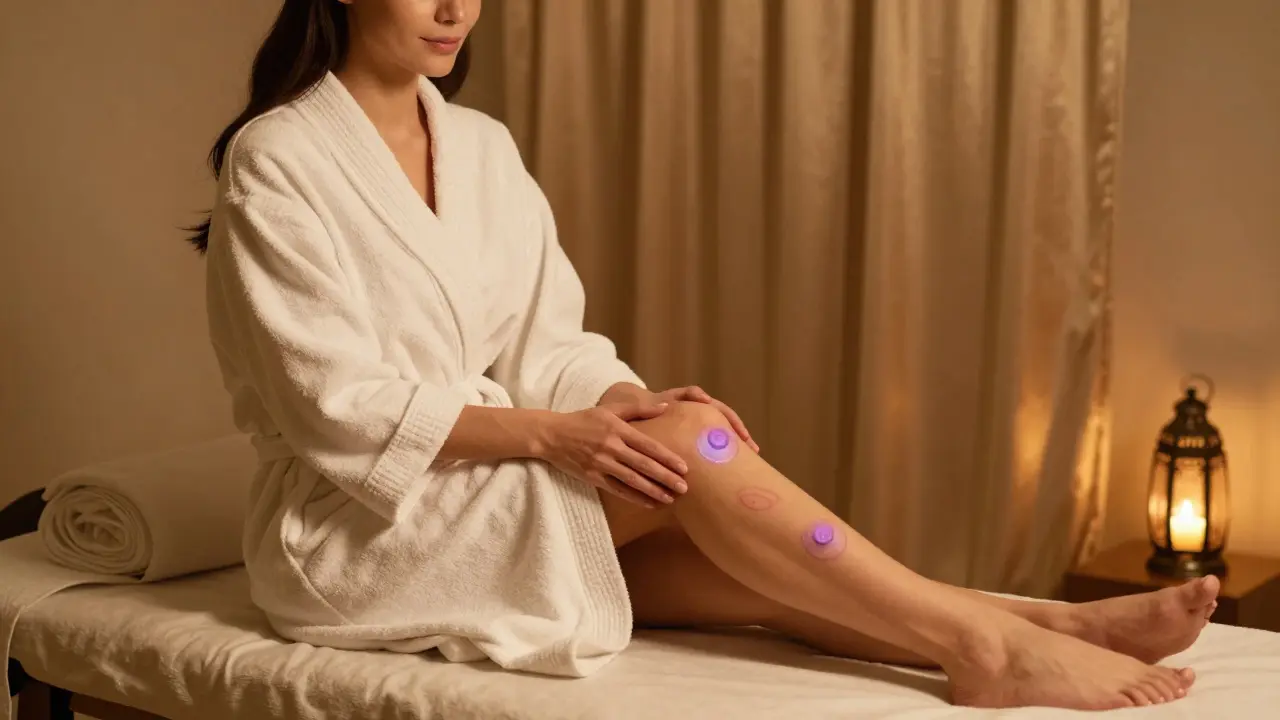
January 21, 2026 AT 08:59MY BACK LOOKS LIKE A RAINBOW AFTER A HURRICANE AND I’M NOT EVEN SORRY. I GOT CUPPED ON MY LEGS AND NOW I LOOK LIKE I LOST A FIGHT WITH A VAMPIRE AND WON. MY FRIENDS THOUGHT I WAS IN A CAR CRASH. I SAID ‘NOPE, JUST WELLNESS.’ THEY SAID ‘THAT’S NOT WELLNESS THAT’S A CRIME SCENE.’ I SAID ‘EXACTLY.’
also i got the full back treatment and now i can touch my toes. i didn’t know i was missing that. also my cat sat on me for 45 minutes after. she knew. she knew.
Kyle Levy
January 22, 2026 AT 07:04Okay, let’s be clear: this article is dangerously misleading. First, you can’t just say ‘capillaries rupture’ and then act like that’s a good thing. That’s microtrauma. That’s not ‘release.’ That’s tissue damage-albeit minor-and it’s being normalized as ‘healing.’ Second, you cite the NIH without a single DOI, citation, or study name. That’s not research-that’s clickbait. Third, you say cupping helps with fibromyalgia and arthritis-where’s the RCT? Where’s the meta-analysis? You’re giving people false hope. Fourth, you recommend home cupping kits? For people who don’t know anatomy? That’s a liability waiting to happen. You could rupture a superficial artery, cause hematoma, or worse-trigger a vasovagal response. And you casually mention ‘no pain’? Some people have hyperalgesia. They’re not ‘being dramatic.’ They’re in real discomfort. And fifth-why are you promoting Dubai as the epicenter of wellness? Are you getting paid? Are you affiliated with a spa? Disclose it. Transparency isn’t optional. This isn’t a blog. It’s a public health advisory-and you’re failing. Please update this with actual citations, contraindications in bold, and remove the poetic fluff. This isn’t poetry. It’s medicine. And medicine needs rigor-not vibes.